
Florida E-Bike Battery Fire Claims: Preserve the Device
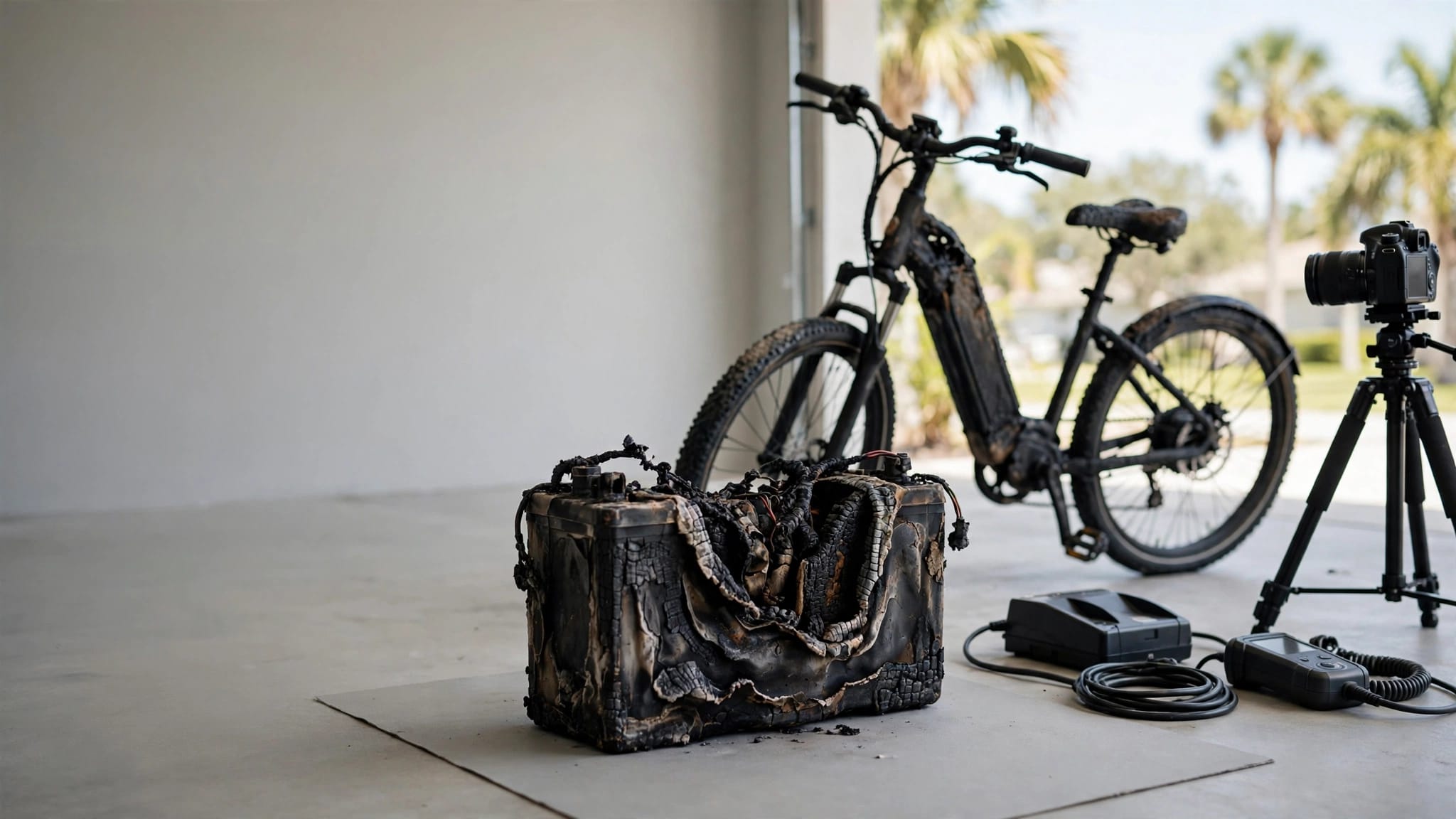
After an e-bike battery fire, protect your health first, then arrange to preserve the bicycle, battery, and charging equipment through qualified professionals. Those items may help establish whether a defect or another unsafe condition caused your injuries.
Burned equipment can disappear during cleanup, insurance inspections, or warranty returns. Preserving physical evidence early gives an investigation a stronger foundation, but it must never require you to handle a dangerous battery.
Start with emergency care and a safe, documented preservation plan.
Key Takeaways
- Call 911 for an active fire, evacuate, and leave damaged batteries to qualified responders.
- Preserve the entire charging system, purchase records, repair history, and original photographs when safely possible.
- Arrange qualified retrieval before cleanup, repairs, salvage, or warranty processing changes the evidence.
- A Florida injury claim needs proof connecting a defect or negligent conduct to your injuries and documented losses.
Put Fire Safety Before Evidence Collection
Lithium-ion batteries can reignite after visible flames disappear. A battery that looks burned out may still present a hazard. Don’t approach it to retrieve a serial number, disconnect equipment, or take close-up photographs.
Follow firefighters’ evacuation and scene-access instructions. Seek prompt medical care for burns, breathing problems, smoke exposure, or other symptoms. Explain the fire exposure and when your symptoms began so providers can document the connection.
Leave retrieval to qualified professionals
An attorney can help arrange qualified retrieval and appropriate custody after responders address the immediate danger. Tell counsel where the bicycle and battery are located and who controls access.
If a landlord, cleanup contractor, insurer, or storage business has the equipment, provide that contact information promptly. Evidence requests shouldn’t interfere with emergency operations or required safety measures.
Separate preservation from ordinary storage
Don’t take a burned battery home, put it in household trash, or send it through routine shipping. Damaged lithium-ion batteries require specialized handling.
Preserving evidence doesn’t mean keeping a burned battery in your garage. Qualified custody can protect the investigation without exposing your household to another fire.
Why the Entire E-Bike System Matters
A fire investigation may need more than the battery. The charger, connections, wiring, bicycle electronics, and surrounding scene can help explain where the fire began and how it developed.
Preserving only one component can leave important questions unanswered.
Keep the battery, charger, and bicycle available
Ask counsel to address preservation of the complete system before anyone separates parts, performs repairs, or processes a warranty return. An investigator may need to compare the battery specifications with the charger and examine connections.
The investigation may also require professional documentation of the outlet, electrical circuit, and surrounding damage. Don’t remove building wiring or fixtures yourself.
Our guidance on preserving a failed product addresses the same concern: repairs and disposal can eliminate evidence needed to investigate a failure.
Document custody and inspection plans
Record who has the equipment, where it went, and when it changed hands. Retain emails, collection receipts, claim numbers, and any photographs taken before removal.
Counsel can coordinate inspection arrangements and address destructive testing before it occurs. Opening a battery pack or testing damaged equipment can change its condition, so an agreed inspection protocol may matter.
If safety authorities require disposal, communicate the evidence concern immediately. Documentation and professional examination may still preserve useful information without delaying necessary safety measures.
Preserve Records That Explain the Fire
Physical evidence answers some questions. Records can establish which product you owned, what equipment you used, and what happened before the fire.
Save originals rather than relying only on screenshots, edited clips, or social media posts.
Identify the product and its history
Keep receipts, online order confirmations, packaging photographs, manuals, warranty communications, and repair invoices. Include records for replacement batteries, chargers, conversion kits, or modifications.
Specific identifiers matter. In July 2026, a CPSC warning about Rad Power Bikes batteries identified models RP-1304, RAD-S1304Y, and HL-RP-S1304. Product records help distinguish a particular battery from equipment with a similar appearance.
A warning or recall can inform an investigation, but it doesn’t establish the cause of an individual fire.
Save the timeline and original recordings
Write down when charging began, where the bicycle stood, and what you noticed first. Distinguish what you personally observed from what someone later told you.
Keep original security video, phone recordings, witness contacts, and the fire department’s incident number. Ask counsel to request footage before recording systems overwrite it.
If the fire followed a collision, preserve the impact evidence too. Our discussion of Florida bicycle crash evidence covers photographs, recordings, and witness information that can help explain an earlier impact.
What an E-Bike Battery Fire Claim Must Prove
An injury doesn’t automatically establish product liability. The evidence must connect an actionable defect or negligent conduct to the fire and your resulting harm.
Several parties may require investigation, but responsibility depends on their role and the facts.
Identify the defect or negligent conduct
Potential defendants may include a manufacturer, distributor, seller, or repair business. A claim might concern a manufacturing defect, an unsafe design, inadequate warnings, or negligent repair work.
A maintenance claim may turn on improper repairs, missed inspections, or ignored warning signs. Preserve service communications and descriptions of earlier overheating, charging interruptions, or damage.
The fire’s timing also matters. The CPSC’s 2017 through 2024 micromobility report identified e-bike fire incidents during charging and while batteries were idle. Whether charging was underway is one investigative fact, not a complete explanation.
Address shared-fault allegations with evidence
An insurer may allege use of an incompatible charger, unauthorized modifications, prior impact damage, or continued use after warning signs. Those allegations need evidence connecting the conduct to the harm.
Under Florida’s comparative-fault statute, assigned fault reduces damages in covered actions. A claimant more than 50% responsible generally cannot recover. The statute includes product-liability actions within its negligence-action framework.
Keep the actual charger records and service history rather than accepting an unsupported fault percentage. An insurer’s proposed allocation isn’t a court finding.
Document Burns, Smoke Exposure, and Financial Losses
The device investigation shouldn’t delay treatment. Medical records must explain the injuries, treatment, and likely future needs independently of the equipment evidence.
Tell providers about burns, breathing symptoms, pain, numbness, sleep disruption, and changes in movement. Also describe prior conditions accurately so the records can distinguish earlier symptoms from fire-related harm.
Photographs taken over time can document how burns heal and whether scarring develops. Keep original images with their date information, but never interrupt treatment or wound care to take them.
Compensation may include supported medical expenses, lost income, reduced earning capacity, and pain and suffering. Future treatment and lasting limitations require medical support.
Keep bills, prescription receipts, rehabilitation records, work restrictions, and pay documents together. A brief record of dressing changes, missed work, and activity limitations can help show effects that don’t appear on a bill.
There’s no reliable settlement amount based only on the fact that a battery caught fire.
Protect Filing Deadlines While the Investigation Continues
Florida’s lawsuit filing-deadline statute generally provides two years for negligence actions. Product-liability claims also require attention to discovery rules and any applicable statute of repose.
A repose period can impose an outside limit tied to the product’s age. The correct analysis depends on the claim, dates, and applicable exceptions.
Insurance negotiations, a pending fire investigation, or a warranty request don’t automatically pause the lawsuit deadline. Preservation efforts and deadline review should proceed together.
At Avard Law Offices, we offer a free initial consultation for Florida personal injury matters. Bring the incident number, available medical records, purchase information, insurer correspondence, and the equipment’s current location.
You don’t need a completed expert investigation before seeking legal help.
Frequently Asked Questions
What if the battery was already discarded?
A missing battery can make a product claim harder, but it doesn’t automatically resolve every possible claim. Preserve photographs, fire reports, receipts, witness information, and communications explaining who discarded it and when.
An attorney can assess what evidence remains and whether other components or records support an investigation.
Should I send the battery back for a refund?
An ordinary warranty return may change custody or lead to disposal before an injury investigation occurs. Tell counsel about the return request before surrendering equipment.
A damaged battery also presents transportation hazards. Any transfer needs qualified safety handling and a documented evidence plan, not routine consumer shipping.
What if my insurer already took the bicycle?
Give counsel the adjuster’s name, claim number, collection date, and storage information. Keep any receipt or authorization you signed.
Counsel can request preservation and coordinate access before repairs, testing, salvage, or disposal. Your insurance policy’s notice and cooperation requirements remain separate from the product-liability investigation.
Can a bystander injured by the fire have a claim?
Potentially. A person injured by smoke, flames, or an attempt to escape may have a claim even without owning the bicycle.
The investigation still needs to establish legal responsibility, causation, and damages. Ownership alone doesn’t decide whether an injured person can recover.
Protect Your Recovery and the Evidence
An e-bike battery fire claim needs a documented connection between the equipment failure, the responsible party, and your injuries. Safe preservation protects the opportunity to investigate that connection.
Get medical care, leave hazardous equipment to qualified professionals, and preserve records before cleanup or routine returns erase useful evidence.
Our team can review preservation needs, potential responsibility, and filing deadlines while you focus on recovery.