
Florida Negligent Security Claims After an Apartment Assault
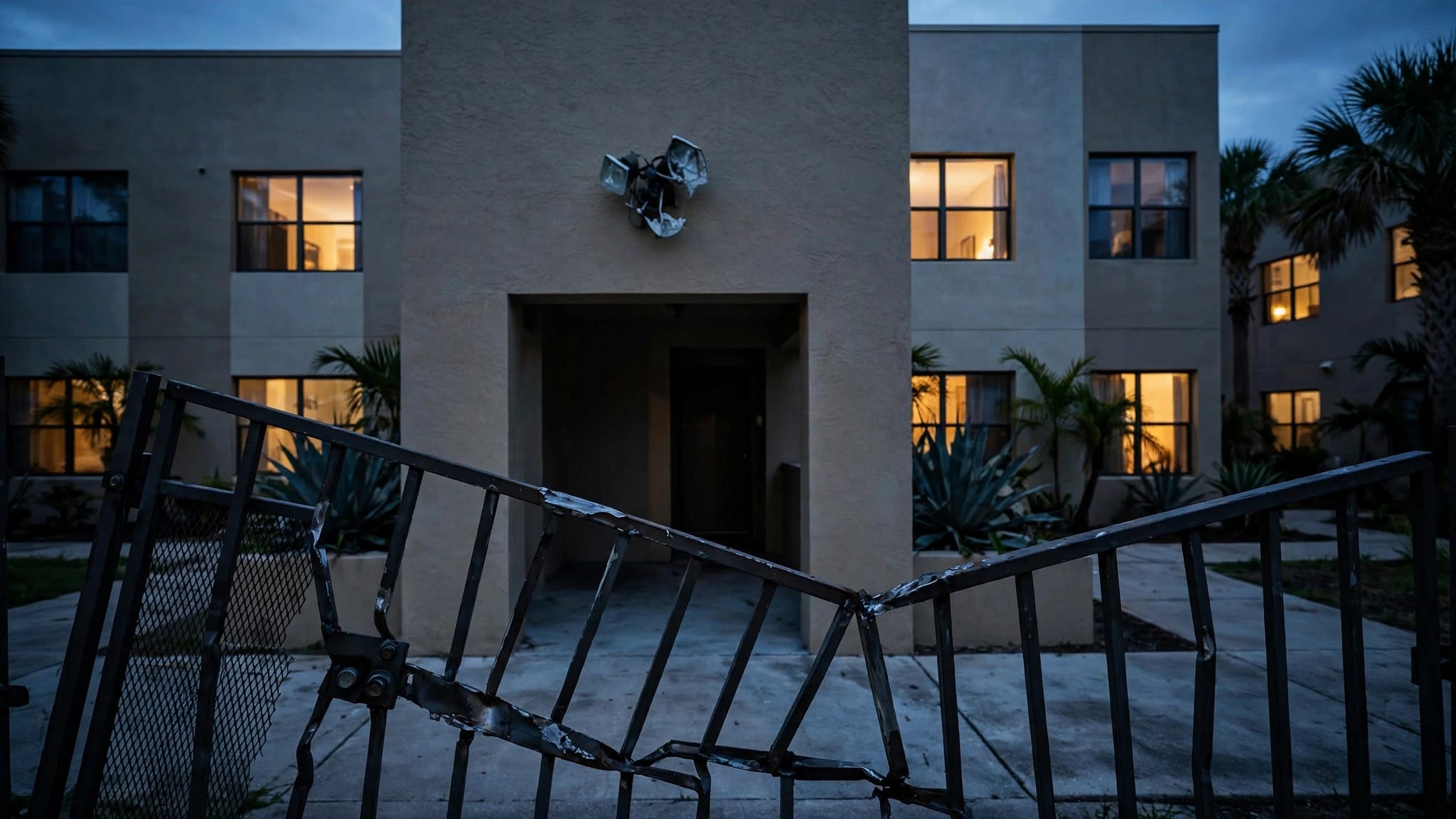
A Florida negligent security claim may allow you to seek compensation after an apartment complex assault if unreasonable security failures contributed to your injuries. The person who attacked you is responsible for the assault, but a property owner or manager may also bear responsibility for preventable security failures.
Evidence of prior warning often matters as much as the condition of the property on the day of the attack. Understanding how those details fit together can help you decide what to do next.
Key Takeaways
- An assault alone doesn’t establish that an apartment complex was negligent.
- Complaints, prior incidents, and repair records can help show whether management had reason to address a risk.
- Florida law requires consideration of the attacker’s fault and provides a potential liability presumption for qualifying multifamily properties.
- Many negligence claims arising after March 24, 2023, have a two-year lawsuit deadline.
- An insurance claim or criminal investigation doesn’t automatically extend the time to file a civil lawsuit.
What a Florida Negligent Security Claim Must Prove
An apartment complex isn’t automatically liable whenever a crime occurs on its property. A negligent security claim focuses on whether someone responsible for the property failed to take reasonable precautions against a foreseeable risk.
You generally need evidence of a legal duty, a breach of that duty, a connection between the breach and your injuries, and resulting damages. Each part matters. A broken gate, for example, is more relevant when evidence connects that failure to how the attacker entered or approached you.
The property’s duty and control
Owners, managers, and other parties may have different responsibilities for the same complex. A lease, management agreement, or security contract can show who controlled an entrance, handled repairs, or responded to complaints.
Your reason for being on the property also matters. Tenants, invited guests, and other visitors may have different legal protections depending on the circumstances.
The link between security and the assault
The claim must connect an unreasonable security failure to the attack. If a gate stayed open after repeated repair requests, access records or witness accounts may help establish how that condition contributed to the assault.
A dangerous condition by itself doesn’t establish causation. Similarly, a security measure that wouldn’t have affected the attack may have little bearing on the outcome. The investigation needs to address both what management should have done and how that action could have reduced the risk.
How Prior Warnings Can Establish Foreseeability
Foreseeability concerns what the property owner or manager knew, or should have known, about the risk before the assault. It doesn’t require proof that management predicted the exact attacker or the precise time of the crime.
Earlier incidents and resident complaints
Reports of assaults, threats, unauthorized entry, or repeated security failures can help establish notice. Resident emails and police calls may also show when management learned of a problem.
The usefulness of a prior incident depends on its facts. Its location, timing, and similarity to the assault may affect how much it shows about the risk at the complex.
Security failures that remained unresolved
Work orders can show whether a lock, light, or access system remained broken after management received notice. Messages between staff and contractors may also reveal delays or repeated failed repairs.
Our discussion of property owner notice in Florida injury claims explains why the timing of a complaint can matter in a premises liability case. In an assault claim, the same question applies: did the responsible party have a reasonable opportunity to act before someone was injured?
Which Apartment Security Measures May Matter?
Reasonable security depends on the property’s circumstances. A measure that matters at one complex may have little connection to an assault at another. The inquiry starts with the location of the attack and the risks management had reason to know about.
Entrances, locks, and lighting
Broken gates, unsecured building doors, and malfunctioning locks can allow unauthorized access. Poor lighting in a parking area or stairwell may also matter if it made a known danger harder to see or avoid.
Evidence should identify the condition before the assault. A photograph taken after a repair, for example, won’t necessarily show how long a gate had been broken. Earlier complaints, maintenance logs, and witness accounts can fill that gap.
Cameras, staff, and response procedures
Cameras can provide evidence and may deter some misconduct, but their presence alone doesn’t establish adequate security. A camera that didn’t record an entrance or whose footage was routinely lost may raise different questions.
Security staffing and response procedures can matter too. A claim may turn on whether management followed up on threats, responded to reports, or assigned someone to address a recurring access problem.
Florida’s Special Rule for Multifamily Properties
Florida Statute section 768.0706 addresses safety measures at multifamily residential properties and creates a potential presumption against liability for qualifying properties.
The statute addresses security features, a crime prevention assessment, and employee training. Among the measures it identifies are exterior lighting and locking devices. It also addresses assessments performed by a law enforcement agency or a designated Florida Crime Prevention Through Environmental Design practitioner.
A presumption can affect how a claim proceeds, but it doesn’t mean every apartment complex is automatically protected. The property’s eligibility and compliance depend on the statutory requirements and the evidence.
For an injured resident, records may show whether the measures existed and operated as required. An assessment alone doesn’t tell the whole story if the property’s practices or physical conditions didn’t match it. Likewise, a missing feature isn’t a substitute for proving that a security failure contributed to the injury.
Evidence to Preserve After an Apartment Assault
Your safety and medical care come first. Call 911 if you’re in immediate danger or need an emergency response. If you seek medical treatment, describe the assault and your symptoms accurately, including emotional symptoms.
Afterward, preserving information can help an attorney investigate before records disappear or conditions change.
Records held by the complex
A written preservation request can ask the owner or manager to retain surveillance footage, access logs, incident reports, work orders, and communications about prior complaints. A lawyer can tailor the request to the location and circumstances.
Send the request promptly. Video may be overwritten, and repairs may change the scene before anyone documents the condition. A preservation request is a practical step; it doesn’t replace filing a lawsuit before the applicable deadline.
Records you can gather
Keep copies of your lease, emails, messages to management, medical records, and photographs of the area. Save any response you received about a broken gate, a threat, or another security concern.
If witnesses are willing to share their names and contact information, preserve those details too. Avoid guessing about facts you didn’t observe. Video or access records may later clarify details you couldn’t see during the attack.
Who Can Be Held Responsible?
The proper defendants depend on ownership, control, and the facts. A property owner may delegate day-to-day work to a management company, while a contractor may handle gates or security equipment. Contracts and records can help identify each party’s role.
The attacker is also part of the legal analysis. Under Florida’s rule for third-party criminal acts, the factfinder must consider the fault of everyone who contributed to the injury in covered cases, including the person who committed the crime.
That allocation matters because the attacker’s share can affect the amount attributed to a property defendant. An arrest or conviction can provide useful evidence, but a civil claim against the property may proceed without waiting for a criminal case to end.
How Shared Fault Can Affect a Claim
An insurer may argue that you ignored a warning, let someone through a gate, or otherwise contributed to the circumstances. Such allegations need evidence. They aren’t a finding that you caused the assault.
Under Florida’s comparative fault rules, an injured person’s share of fault generally reduces recovery in a covered negligence action. A person found more than 50% responsible for their own harm generally cannot recover under the applicable rule. Exactly 50% does not exceed that threshold.
The percentage assigned to an attacker is separate from any percentage assigned to you. An attorney can examine the basis for each proposed allocation and challenge an insurer’s unsupported assumptions.
Compensation Available After an Apartment Assault
A negligent security claim may seek compensation for medical bills, therapy, lost income, and other documented losses. Depending on the evidence, it may also include future treatment, reduced earning capacity, and pain and suffering.
Keep bills, pay records, work restrictions, and notes about changes in your daily life. Medical and mental health records can help connect treatment needs to the assault. If an injury has lasting effects, future losses need support rather than a guess based on today’s expenses.
There’s no standard settlement for an apartment assault. The evidence of responsibility, severity of the injuries, available insurance, and other case facts all affect a claim’s value. Review an offer carefully before signing a release that could end your right to pursue additional compensation.
Florida’s Deadline for Filing a Lawsuit
For many negligence claims that accrued after March 24, 2023, Florida generally allows two years to file a lawsuit. Earlier negligence claims generally followed the former four-year period. Florida’s limitations statute contains the filing periods for different types of claims.
The correct deadline depends on the claim, when it accrued, the defendant, and any applicable exceptions. A wrongful death claim or a case involving a public housing authority may require a separate analysis. Government claims can also involve notice requirements.
An open insurance file, settlement talks, or a pending criminal prosecution don’t automatically stop the civil filing clock. Our discussion of Florida apartment injury deadlines explains why reporting an incident and filing a lawsuit are separate steps.
Frequently Asked Questions
Can a guest bring a negligent security claim?
A guest injured at an apartment complex may have a claim, depending on why they were there, who controlled the property, and the evidence of negligence. A guest doesn’t need to be the tenant named on the lease for an attorney to evaluate the circumstances.
Can I sue if the attacker hasn’t been identified?
An unidentified attacker doesn’t automatically rule out a claim against a property owner or manager. Evidence must still support the property’s negligence and connect it to the assault. Police reports, video, witness accounts, and access records may help establish what occurred.
Does a prior crime have to happen in the same place?
A prior crime doesn’t have to be identical to the assault to be relevant. Its location, nature, timing, and management’s knowledge all matter when assessing whether the risk was foreseeable.
Protecting Your Claim After an Assault
An apartment assault can leave physical, emotional, and financial harm. A negligent security claim depends on evidence that a responsible party had reason to address a risk and failed to take reasonable action.
Our team at Avard Law Offices can review the circumstances, identify records that may matter, and discuss the applicable deadline. We offer a free consultation.