
Florida Tree Limb Injury Claims: Proving Owner Notice
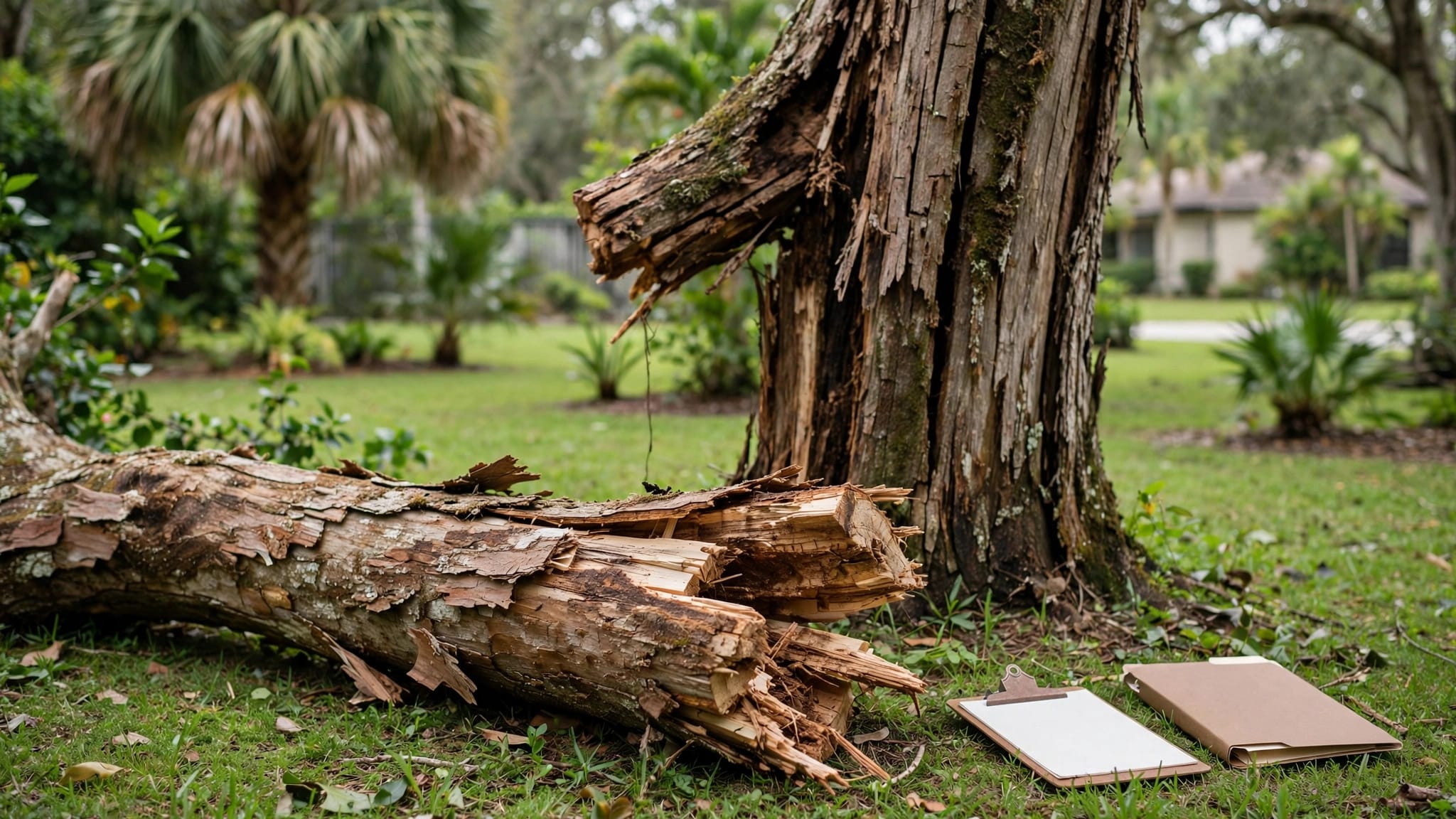
A falling branch can cause serious injuries before you have any chance to react. A Florida tree limb injury claim often turns on what happened beforehand: whether someone responsible for the property knew, or should have known, that the tree was dangerous.
Medical bills and missed work create immediate pressure, but evidence of prior notice can disappear when crews clear the scene. Start by identifying who controlled the tree and what warning signs existed before the limb fell.
Key Takeaways
- A fallen limb and an injury don’t automatically establish property owner negligence.
- Prior complaints, visible deterioration, and inspection records can help prove actual or constructive notice.
- Responsibility may involve an owner, landlord, association, property manager, or tree-service contractor.
- Storm conditions, shared fault, and filing deadlines require separate review, especially when a government entity controls the tree.
What a Florida Tree Limb Injury Claim Must Prove
A claim generally requires proof of duty, breach, causation, and damages. Each element needs evidence beyond the fact that a branch fell.
Ownership and control establish responsibility
Property records identify ownership, but maintenance agreements and leases can reveal who actually controlled tree care. A landlord, condominium association, commercial tenant, or management company may have relevant obligations.
Your reason for entering the property also affects the duty owed. Customers, invited guests, tenants, and trespassers don’t necessarily receive the same legal protections. Florida’s premises liability duty of care framework helps identify those distinctions.
The dangerous condition must explain the injury
The investigation must connect the limb’s failure to an unreasonable act or omission. That may involve neglected deterioration, an ignored warning, or negligent tree work.
However, don’t automatically apply the rules governing store spills. Florida Statutes section 768.0755 addresses slips on transitory foreign substances in business establishments. It doesn’t automatically govern injuries caused by falling limbs.
Medical records must also connect the impact to your injuries and resulting losses.
How Property Owner Notice Affects Liability
Notice concerns what the responsible party knew before the accident. It also affects whether that party had a reasonable opportunity to inspect, warn, restrict access, or arrange appropriate tree work.
Actual notice means someone knew about the danger
A written complaint, maintenance request, arborist’s report, or employee observation may establish actual knowledge. Emails identifying a damaged limb above a walkway can be especially important because they document both location and timing.
Still, a complaint must relate to the condition that caused the injury. A general request for landscaping improvements may say little about a particular branch.
Identify who received the warning and what happened afterward. Records may show that someone ordered work, postponed it, or closed a maintenance ticket without addressing the danger.
Constructive notice concerns what reasonable care would reveal
An owner may deny receiving complaints yet still face questions about an observable hazard. Constructive notice examines whether reasonable care would have revealed the condition before the accident.
Dead branches, visible decay, fungal growth, cracks, and repeated limb failures may warrant investigation. Their appearance alone doesn’t establish liability.
An arborist can assess how long deterioration likely existed and whether it was reasonably detectable. Avard Law’s discussion of prior notice in tree injury claims addresses why that pre-accident history matters.
A photograph of decay after impact doesn’t, by itself, prove that the defect was visible before the limb fell.
Preserve Evidence Before Cleanup Changes the Scene
Your safety and medical care come first. Once you’re safe, early documentation can help preserve details that debris removal and emergency trimming may erase.
Photograph the tree, limb, and surrounding area
Capture the entire tree, the broken branch, and the point where it separated, if you can do so safely. Include nearby walkways, parking spaces, barriers, and warning signs.
Close photographs may show rot, cavities, or damaged wood. Wider views help establish where you stood and whether the branch extended over an area people ordinarily used.
Keep original files and contact information for witnesses. Don’t climb the tree, move heavy branches, or remove material from someone else’s property.
Request records and an opportunity for inspection
A lawyer can send preservation requests for surveillance footage, inspection logs, pruning invoices, work orders, and communications. Requests may also seek to preserve relevant tree material for expert examination when practical.
Earlier photographs and maintenance records can be more informative than the post-accident scene. They may show whether warning signs existed before the break.
At rental properties, landlord responsibility for unrepaired hazards also requires examination of maintenance duties and prior warnings.
However, a preservation request doesn’t give you permission to enter restricted property or collect evidence yourself. Let counsel arrange access and address urgent safety work.
Storms and Tree Work Require Different Investigations
Florida weather often becomes part of the defense. Weather records and maintenance history help determine whether the failure was reasonably foreseeable.
Severe weather doesn’t answer every liability question
A storm can cause a healthy limb to fail without actionable negligence. Yet wind during the accident doesn’t establish that weather was the sole cause.
The investigation should compare weather conditions with the tree’s pre-existing condition. Prior warnings about a damaged branch may remain relevant even when a storm contributes to its failure.
Avoid assuming either that every storm defeats a claim or that visible damage after a storm proves neglect. Both positions require supporting evidence.
Negligent trimming may involve a separate defendant
When a limb falls during tree work, the inquiry may focus on the contractor’s conduct. Cutting methods, exclusion zones, supervision, and warnings can matter.
Contracts and work orders help identify who performed the work and who controlled the area. Recent pruning may also require expert review.
Different parties can have different responsibilities. Hiring a tree company doesn’t automatically resolve the owner’s liability or establish the contractor’s negligence.
Compensation and Shared Fault Affect Recovery
A strong notice argument still needs evidence of injury-related losses. Insurers may also dispute your conduct, the cause of the accident, or the extent of your injuries.
Document medical and financial consequences
A Florida tree limb injury claim may seek compensation for medical expenses, lost earnings, reduced earning capacity, and pain and suffering. Future treatment requires medical support.
Keep imaging results, rehabilitation records, bills, pay information, and written work restrictions. Describe the impact accurately to each treating provider.
Pre-existing conditions don’t automatically defeat a claim. However, records should distinguish earlier symptoms from new injuries or aggravation caused by the branch.
There’s no reliable settlement amount based only on the type of accident. Liability evidence and documented losses determine the claim’s strength.
Fault allegations need evidence
An insurer may argue that you crossed a barrier, ignored a warning, or entered an active tree-work area. Photographs and witness accounts can test those allegations.
Under the comparative-fault provisions in Florida’s negligence statutes, shared responsibility generally reduces damages. In covered negligence actions, a claimant found more than 50% at fault cannot recover.
An insurer’s proposed percentage isn’t a final legal determination. The evidence must support any allocation of responsibility.
Filing Deadlines and Government Property Claims
The lawsuit deadline depends on the injury date, defendant, and type of claim. Reporting the incident to an insurer doesn’t automatically preserve your right to sue.
Private-owner negligence claims generally have two years
For negligence claims accruing after March 24, 2023, Florida’s negligence statute of limitations generally provides two years to file suit. Earlier claims generally fall under the former four-year period.
Exceptions and different claim types require individual review. Don’t calculate your deadline solely from an insurance letter or assume settlement discussions pause it.
A lawyer should assess the deadline while investigating responsibility. Waiting for every maintenance record can consume time needed to prepare a lawsuit.
Public-property claims have separate procedures
A branch falling in a public park or near a public sidewalk may involve a municipality, county, or state agency. First, determine who controlled the tree.
Florida’s government liability statute includes written claim-presentment requirements, sovereign immunity rules, and recovery restrictions. Covered claims generally require presentment within three years and suit within four years, subject to exceptions and other requirements.
Notice must go to the appropriate agency and, where required, the Florida Department of Financial Services. Claims against municipalities and counties are excepted from the general department-notice requirement.
Pre-accident hazard notice and formal claim notice are different. A maintenance complaint may help establish negligence without satisfying the procedure for pursuing a government claim.
Frequently Asked Questions
Can I pursue a claim if the owner denies knowing about the tree?
A denial doesn’t end the investigation. Prior complaints may contradict it, while inspection records and observable deterioration may support constructive notice.
However, the claim still needs evidence that reasonable care would have revealed the danger. Some defects remain concealed even when a tree appears healthy. Expert review can help distinguish an observable problem from a hidden failure.
What if the branch was removed before I could photograph it?
Removal can make proof harder, but other evidence may remain. Witness photographs, surveillance footage, cleanup records, emergency reports, and earlier inspection documents can help reconstruct events.
Tell your attorney who removed the limb and when. Counsel can investigate whether photographs or relevant materials remain available. Don’t assume cleanup eliminates the claim, and don’t enter the property without permission to search for evidence.
Protect Your Claim With an Early Review
A serious injury deserves careful investigation of what the responsible party knew before the branch fell. The strongest claims connect prior warning signs to a failure to act and documented harm.
Seek medical care and preserve the available records promptly. Avard Law Offices offers free case evaluations to review potential responsibility, evidence needs, and filing deadlines.
Early legal review can protect your options while the tree’s condition and maintenance history remain easier to investigate.