
Florida Motorcycle Crashes: When a Driver Pulls Out
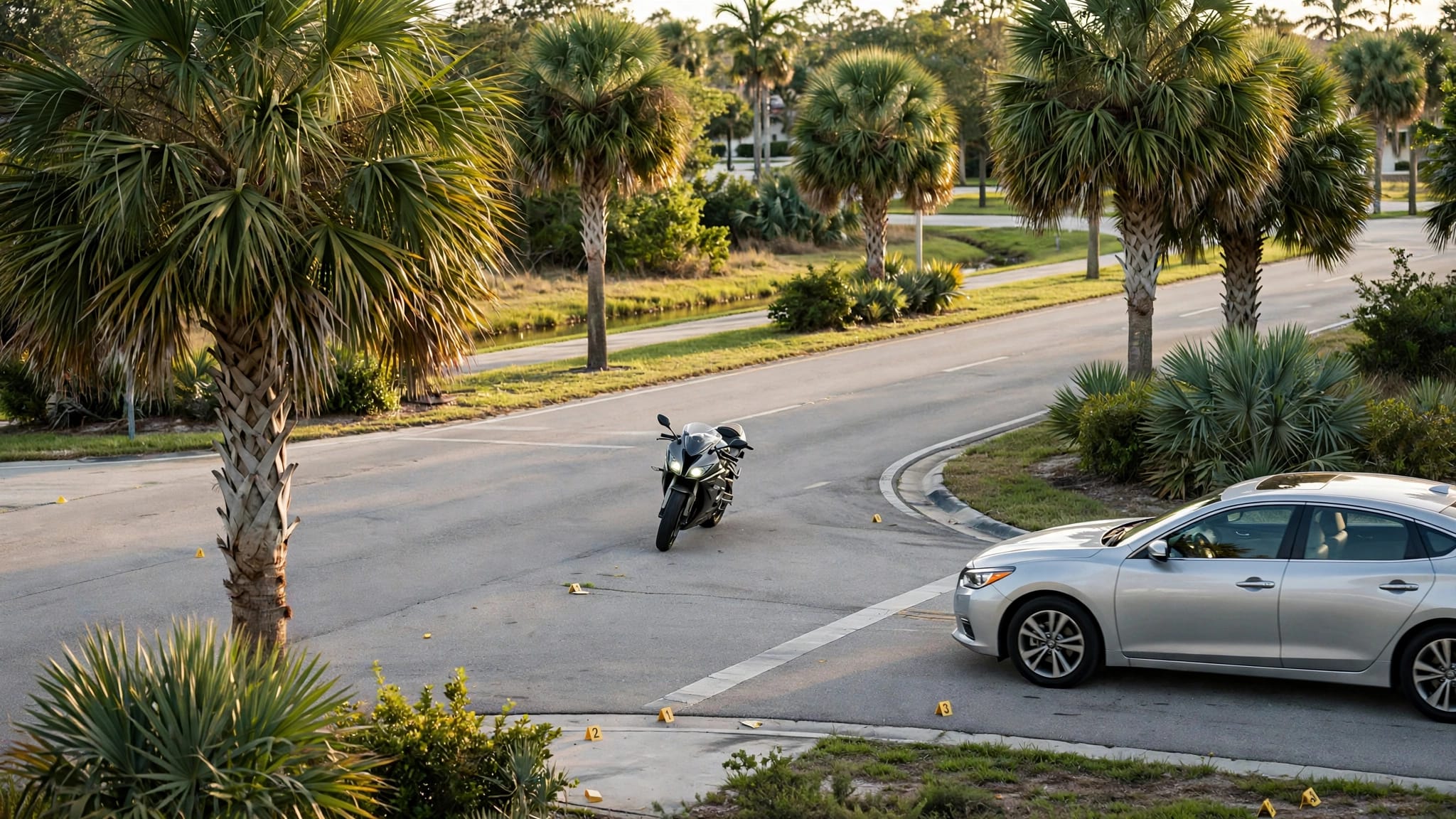
A driver who pulls out from a side street without yielding may be responsible for a motorcycle crash in Florida. Your claim, however, depends on evidence showing how the driver entered the road, where you were, and whether either person’s conduct contributed to the collision.
Florida motorcycle crashes can leave riders facing serious injuries and competing accounts of what happened. The turning sequence often provides the starting point for identifying fault and available compensation.
Key Takeaways for Injured Riders
- A driver entering a main road may have a duty to yield, but the applicable rule depends on the intersection and traffic controls.
- A stop sign doesn’t give a driver permission to pull into the path of an approaching motorcycle.
- Video, witness accounts, vehicle damage, and roadway evidence can help establish how much time each person had to react.
- Florida’s shared-fault rule can reduce compensation or, in some cases, prevent recovery.
- Ordinary Florida personal injury protection generally doesn’t cover injuries sustained while riding a two-wheel motorcycle.
Who Must Yield When a Driver Pulls Out?
Drivers entering a road must pay attention to traffic already using it. The rule that applies depends on whether the driver came from a public side street, a driveway, or another private entrance.
Public Side Streets and Stop Signs
At a stop sign, the entering driver must stop and yield as required before proceeding. Stopping alone isn’t enough if the driver then pulls out when an approaching motorcycle is close enough to create an immediate hazard.
The investigation should establish where the motorcycle was when the driver began moving. A rider may have been visible long before the driver entered the lane, or a building, parked vehicle, or curve may have limited visibility.
At an uncontrolled intersection, other right-of-way rules apply. Traffic signals, signs, road layout, and the vehicles’ arrival times all matter. A right of way also doesn’t excuse a rider from using reasonable care.
Driveways and Private Entrances
A driveway or private road isn’t necessarily governed by the same rule as a public side street. Under Florida Statutes section 316.125, a driver entering or crossing a highway from an alley, building, private road, or driveway must yield to vehicles approaching on that roadway.
That distinction matters when the entrance resembles a street but leads into a shopping center or apartment complex. Our discussion of Florida driveway accident liability covers evidence relevant to those entrances.
What to Do After a Side-Street Crash
Your health comes first. Call 911 if anyone is injured, and follow the instructions of emergency responders. If you can move to a safer location without worsening an injury, get out of the path of traffic.
Get Medical Attention
Seek prompt medical care and tell providers how the collision happened. Describe all symptoms accurately, including headaches, dizziness, numbness, pain, or limited movement. Some symptoms may become clearer after the immediate shock of the crash.
Keep discharge instructions and follow recommended treatment. Medical records can document both the injuries and their connection to the collision.
Preserve What You Can Safely
If you’re able, photograph the vehicles, intersection, traffic controls, skid marks, debris, and any obstruction to a driver’s view. Capture wider images as well as close-ups so the position of each item is clear.
Get the driver’s contact and insurance information, along with names and contact details for witnesses. If injuries prevent you from gathering evidence, tell an attorney or a trusted person where the crash occurred and who may have seen it.
Evidence That Can Show How the Crash Happened
The central dispute often concerns timing: when the driver began pulling out and how close the motorcycle was at that moment. Several types of evidence can help reconstruct that sequence.
Video and Witness Accounts
Nearby businesses, homes, and vehicles may have cameras facing the intersection. Preserve original dashcam or helmet-camera files, including footage before the impact. A short clip of the collision may omit the approach that explains why it occurred.
Ask camera owners to preserve recordings promptly. Some systems overwrite footage automatically. Witnesses can also describe the driver’s stop, the motorcycle’s approach, and any braking or evasive movement.
A witness doesn’t have to see every moment to provide useful information. Someone who noticed where the car stopped or heard braking may help establish part of the timeline.
Roadway and Vehicle Evidence
Damage to the car and motorcycle may help identify the point of impact. Tire marks, debris, final vehicle positions, and road measurements can provide additional context. Still, damage location alone rarely tells the whole story.
Preserve the motorcycle and damaged riding equipment before repair or disposal when possible. An attorney may also seek inspection of a vehicle or preservation of electronic data. Our guide to Florida motorcycle left-turn crash claims explains how timing and physical evidence matter when a driver crosses a rider’s path.
Can the Motorcyclist Share Fault?
Yes. A driver may have failed to yield, but an insurer can still argue that the rider’s conduct contributed to the crash. Common allegations include speeding, an unsafe lane change, distraction, or a failure to brake.
Those accusations need evidence. Ask what supports the proposed fault percentage. Video, roadway measurements, vehicle damage, and witness accounts may challenge an assumption that you had enough time to avoid the car.
How Florida’s Fault Rule Affects Payment
Under Florida’s comparative fault statute, an injured person’s share of fault generally reduces damages proportionately. In most covered negligence actions, a person found more than 50% at fault cannot recover damages.
For example, if your proven damages are $100,000 and you’re found 20% responsible, the award generally falls to $80,000. At exactly 50% fault, the more-than-50% bar doesn’t apply, although the award is reduced.
An adjuster’s proposed percentage isn’t a court finding. Our explanation of Florida comparative negligence addresses how disputed blame can affect an injury claim.
Helmet Use and the Cause of the Crash
Helmet use and the driver’s decision to pull out are different issues. A helmet generally doesn’t explain why a driver entered the motorcycle’s path.
An insurer may raise a separate argument that the absence of a helmet worsened a particular injury. That claim requires evidence connecting helmet use to the harm being disputed. Preserve your helmet if you wore one, and keep it without cleaning, repairing, or altering it.
Insurance and Medical Bills After a Motorcycle Crash
Proving that the driver caused the collision doesn’t automatically identify a source of payment. The driver’s coverage, your own policies, and the nature of your losses all matter.
Why Ordinary PIP Usually Doesn’t Apply
Florida’s ordinary personal injury protection, or PIP, system generally applies to qualifying motor vehicles with four or more wheels. A two-wheel motorcycle falls outside that definition.
The other driver’s fault doesn’t automatically give you PIP benefits for motorcycle injuries. Owning an insured car doesn’t make its ordinary PIP coverage available for injuries sustained while riding the motorcycle. Our guide to Florida motorcycle PIP coverage explains the distinction.
Other Sources of Coverage
The driver’s bodily injury liability insurance may provide compensation, subject to the policy and its limits. Florida’s standard vehicle insurance requirements don’t require every private driver to carry bodily injury liability coverage in every situation.
Your own uninsured or underinsured motorist coverage may also matter, depending on the policy, exclusions, and facts. Health insurance or optional medical-payments coverage may help with bills as well. Coverage for a motorcycle repair is a separate question from payment for bodily injuries.
Documenting the Losses in Your Claim
An injury claim needs evidence of both the collision and the harm it caused. Depending on the facts and applicable law, recoverable losses may include medical expenses, lost income, future care, reduced earning capacity, pain, and disability.
Keep bills, prescriptions, treatment records, and work restrictions. Pay records can document missed income, while self-employed riders may need business records showing interrupted work and resulting losses. Future care and lasting work limitations require support from medical and employment evidence.
Also save repair estimates, towing receipts, and photographs of damaged riding gear. Describe changes to daily activities accurately, such as difficulty sleeping, lifting, or completing job duties. Before accepting a settlement, consider whether your ongoing medical needs are understood. A signed release may end your ability to pursue additional compensation.
Filing Deadlines and Legal Help
For many Florida negligence claims arising after March 24, 2023, the general lawsuit filing period is two years. Florida’s limitation statute sets the general period, but the applicable deadline can differ with the claim, parties, and circumstances.
Settlement discussions and an open insurance claim generally don’t stop the filing clock. Evidence preservation and insurance notice duties may arise much sooner.
At Avard Law Offices, we offer free consultations for personal injury claims. Bring the crash report, photographs, insurance information, medical records, and insurer correspondence you have. You don’t need a complete file before speaking with us.
Frequently Asked Questions
Can I File a Claim if the Driver Stopped First?
Yes. A driver may stop at a sign and still pull out unsafely. Evidence must show whether the driver failed to yield and whether that failure caused your injuries.
What if I Crashed Without Hitting the Car?
You may have a claim if negligent driving forced you to brake or swerve and caused your injuries. Without contact, video, witnesses, and roadway evidence can be especially important. Uninsured motorist coverage may also have separate policy conditions.
Does a Traffic Ticket Decide the Injury Claim?
No. A citation can be relevant, but it doesn’t automatically establish the full facts or the amount of compensation. The claim still needs evidence of fault, injuries, and financial losses.
Should I Give the Other Driver’s Insurer a Statement?
Be truthful and don’t guess about speed, distance, or reaction time. Discuss a recorded-statement request from the other driver’s insurer with counsel. Continue to follow your own policy’s notice and cooperation requirements.
Protect Your Claim After a Driver Pulls Out
A side-street collision turns on what happened before the impact. The driver’s duty to yield matters, and the evidence must show how the vehicles approached and moved through the intersection.
Prompt medical care and preserved records give your claim a stronger foundation. If fault or coverage is disputed, early legal advice can help identify the evidence needed before it disappears.