
Florida Dram Shop Claims After a Drunk Driving Injury
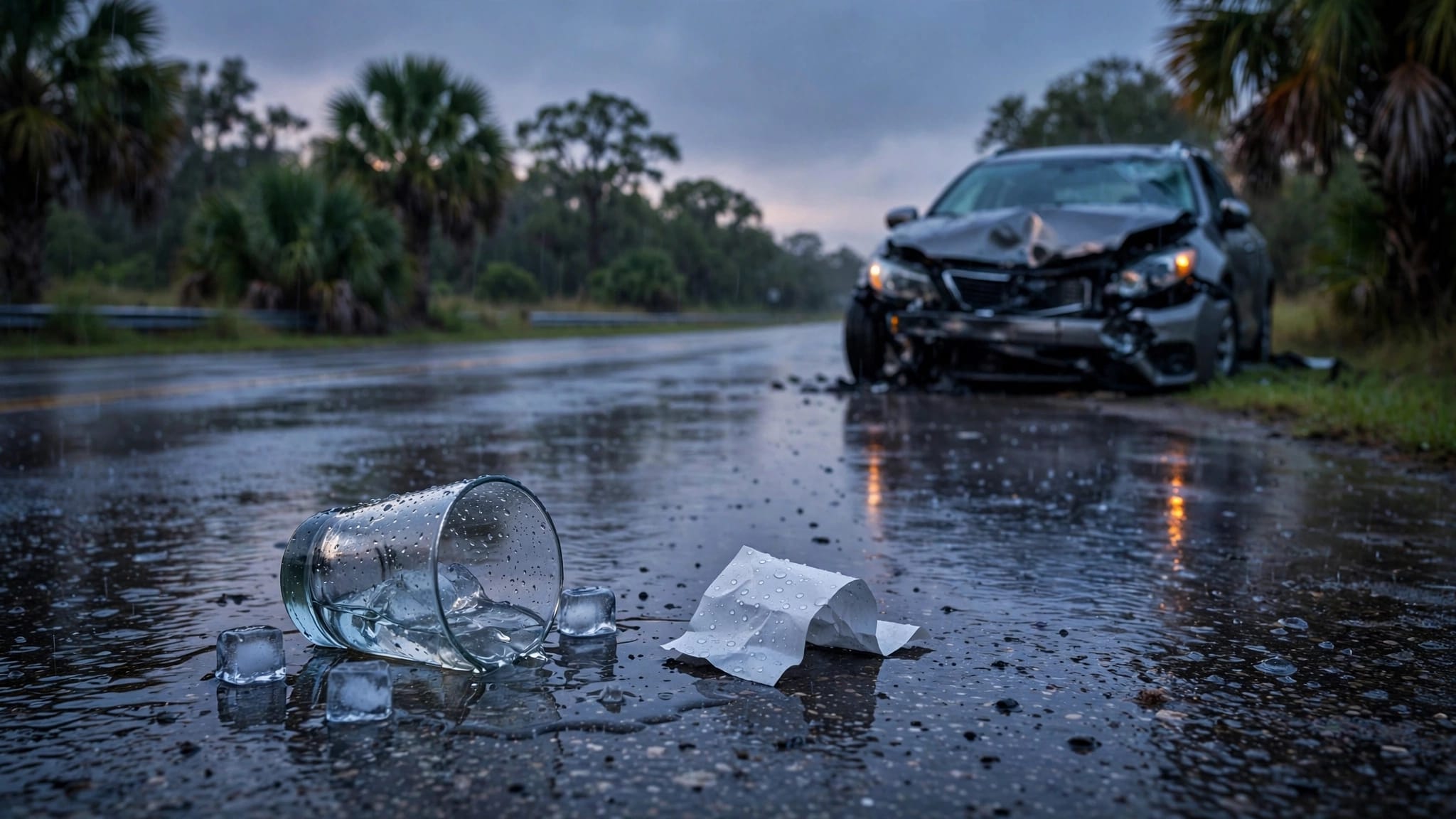
You can pursue Florida dram shop claims against an alcohol provider only in limited circumstances after a drunk driving injury. Florida generally protects providers, with exceptions for unlawful underage service and knowing service to someone habitually addicted to alcohol.
Even when the driver was plainly impaired, a claim against a bar requires evidence of a statutory exception. You also need proof connecting the alcohol service to the intoxication, the crash, and your losses.
Start by separating the driver’s responsibility from the provider’s potential liability.
Key Takeaways
- Serving an intoxicated adult doesn’t, by itself, establish an alcohol provider’s liability under Florida law.
- Underage-service claims and habitual-addiction claims require different evidence.
- Receipts, surveillance recordings, witness accounts, and prior interactions can help establish whether an exception applies.
- A claim against an alcohol provider doesn’t replace your claim against the driver.
- Insurance negotiations and criminal proceedings don’t automatically extend the deadline for a civil lawsuit.
When Florida Dram Shop Claims Can Proceed
Florida’s alcohol-provider liability rules appear in section 768.125. The statute generally protects someone who sells or furnishes alcohol to a person of lawful drinking age against liability for injuries caused by that person’s intoxication.
Two exceptions can permit a claim. Neither makes the provider automatically responsible for every later accident.
Willful and unlawful service to someone under 21
Florida’s lawful drinking age is 21. The underage exception concerns someone who willfully and unlawfully sells or furnishes alcohol to a person below that age.
That includes an 18-, 19-, or 20-year-old, even though the person is an adult for many other legal purposes. A claim requires evidence of the unlawful furnishing and injuries resulting from the recipient’s intoxication.
The recipient’s age alone doesn’t establish who provided the alcohol or whether that service contributed to the collision.
Knowing service to someone habitually addicted to alcohol
The second exception concerns knowingly serving someone habitually addicted to alcohol. The provider’s knowledge matters, along with evidence of habitual addiction.
A person who becomes drunk on one occasion doesn’t automatically meet this standard. Likewise, visible impairment or a high blood alcohol concentration doesn’t, by itself, establish habitual addiction.
Prior interactions and drinking patterns known to the provider may support this exception. However, evidence that establishes impairment at the crash doesn’t necessarily establish what the provider knew earlier.
Evidence That Supports an Alcohol-Provider Claim
An alcohol-provider investigation reaches beyond the roadside. It examines where the driver obtained alcohol, the timing of service, and evidence supporting the applicable exception.
Because businesses may overwrite recordings, preservation deserves early attention. Witness memories can also fade before an insurance dispute becomes clear.
Records concerning underage alcohol service
Useful materials can include receipts, point-of-sale records, surveillance footage, identification-check records, and witness accounts. Messages or photographs may also help identify the gathering or establishment involved.
These records answer different questions. A receipt may establish a purchase, while video may help identify the recipient and timing. Age records address a separate part of the claim.
The investigation should also distinguish alcohol the person consumed at that location from alcohol obtained elsewhere.
Evidence of addiction and the provider’s knowledge
For the habitual-addiction exception, an investigation may examine repeated visits, prior dealings, staff statements, and other lawfully obtained records.
Evidence of a drinking pattern and evidence of the provider’s knowledge are related but distinct. A medical diagnosis unknown to the provider doesn’t establish the provider’s knowledge.
An attorney can request preservation and pursue relevant records through available legal procedures. A preservation request alone doesn’t compel a business to disclose everything in its possession.
A receipt can establish alcohol service without establishing either the customer’s age or the provider’s knowledge of habitual addiction.
Connect the Alcohol Service to the Crash
Meeting a statutory exception is only part of the case. Your evidence must also connect the service to the intoxication and the intoxication to your injuries.
The investigation should explain the driving conduct that caused the collision. Crossing the center line, disregarding a traffic signal, or failing to brake requires evidence beyond the fact that the driver consumed alcohol.
Police observations, testing, dashcam recordings, physical damage, and witness accounts can help reconstruct that sequence. However, an arrest alone doesn’t establish every element of a civil injury claim.
Medical records must then connect the collision to your condition. Tell your providers when symptoms began and accurately describe earlier injuries or similar symptoms. That history can help distinguish a new injury from an aggravated condition.
Our guidance on Florida drunk driving crash claims addresses the broader evidence needed against the driver. A possible provider claim adds another investigation rather than replacing that work.
Compensation and Insurance Require Separate Review
A viable dram shop claim can identify another potentially responsible party. It doesn’t guarantee additional insurance or a particular settlement.
The losses claimed must have support, and each potentially applicable policy requires separate analysis.
Document medical expenses and other losses
Recoverable losses may include medical expenses, lost earnings, future treatment, and reduced earning capacity when supported by evidence. Keep bills, treatment records, work restrictions, and income documentation together.
Pain and suffering may also be recoverable. Claims against a motorist can require proof of Florida’s statutory injury threshold, such as a qualifying permanent injury. That motorist-specific analysis shouldn’t automatically determine the treatment of every claim against an alcohol provider.
Punitive damages require separate legal grounds. They aren’t an automatic addition simply because alcohol contributed to a crash.
Identify coverage without assuming it exists
Potential sources of payment can include the driver’s bodily injury liability coverage, applicable uninsured or underinsured motorist coverage, and an alcohol provider’s liability insurance.
However, policy limits, exclusions, and competing claims can affect payment. A business’s involvement doesn’t establish that its insurer covers the alleged conduct.
Vehicle ownership and employment relationships may also warrant investigation. Those issues can identify additional responsibility, but each requires its own factual and legal basis.
Before signing a settlement release, understand which people and claims it releases. An early payment shouldn’t end claims you intended to preserve.
How Shared Fault Can Affect Recovery
An insurer may argue that you were speeding, distracted, or able to avoid the collision. The other driver’s impairment doesn’t automatically defeat those arguments.
Florida’s comparative-fault statute generally reduces damages according to the injured person’s share of responsibility in covered negligence actions. In those actions, someone found more than 50% at fault for their own harm cannot recover damages.
Exactly 50% doesn’t trigger that bar, although it reduces recovery by half. The legal theory matters when applying these rules to an alcohol-provider claim.
An adjuster’s proposed percentage isn’t a court finding. Recordings, vehicle positions, sight lines, and available reaction time can support or challenge an allegation of shared fault.
Protect the Civil Lawsuit Deadline
Florida’s lawsuit filing deadlines generally provide two years for negligence actions accruing after March 24, 2023. For an ordinary crash-related negligence claim, the collision date usually starts the period.
Wrongful death actions also generally have a two-year filing period, ordinarily measured from the death. The personal representative brings that action for eligible survivors and the estate.
These rules shouldn’t become a single assumed deadline for every possible alcohol-related claim. The claim type, accrual date, defendant, and applicable exceptions affect the analysis.
An open insurance claim doesn’t automatically preserve the right to sue. Nor does an ongoing DUI prosecution stop the civil clock.
Delayed symptoms also don’t automatically restart the deadline. Seek legal review early enough to identify the proper defendants, preserve evidence, and file any required lawsuit while discussions continue.
Frequently Asked Questions
Can a private party host be liable?
Yes. Florida’s underage-service exception can reach a private social host who willfully and unlawfully furnishes alcohol to someone under 21 when the person’s intoxication causes injury.
A gathering at a home doesn’t automatically establish liability. The circumstances of furnishing alcohol and the connection to the injury still matter. Our explanation of Florida social host liability addresses those distinctions.
Do I need a DUI conviction before pursuing compensation?
No. A criminal prosecution and a civil injury claim address different legal questions. A conviction isn’t a prerequisite to pursuing a civil claim.
Civil liability ordinarily uses a preponderance-of-the-evidence standard, meaning the claim is more likely true than not. Nevertheless, the evidence must support the driver’s responsibility and any separate statutory exception asserted against an alcohol provider.
What should I bring to an attorney consultation?
Bring the crash report number, photographs, original recordings, witness contacts, insurance documents, and correspondence. Medical records, bills, work restrictions, and pay information also help.
Include anything identifying where the driver obtained alcohol, such as messages, receipts, or witness information already available to you. You don’t need to complete the investigation before seeking legal help, and missing records shouldn’t delay that conversation.
Protect the Evidence Behind Your Claim
Florida dram shop claims depend on proof of a statutory exception, along with evidence connecting the alcohol service to your injuries. The driver’s impairment alone doesn’t establish the provider’s responsibility.
Early legal review can address both potential liability and the records needed to support it. Meanwhile, your claim against the driver and the civil filing deadline still require attention.
At Avard Law Offices, we offer a free consultation to discuss your injuries and potential claims.