
Can a Florida Repair Shop Be Liable for Brake Failure?
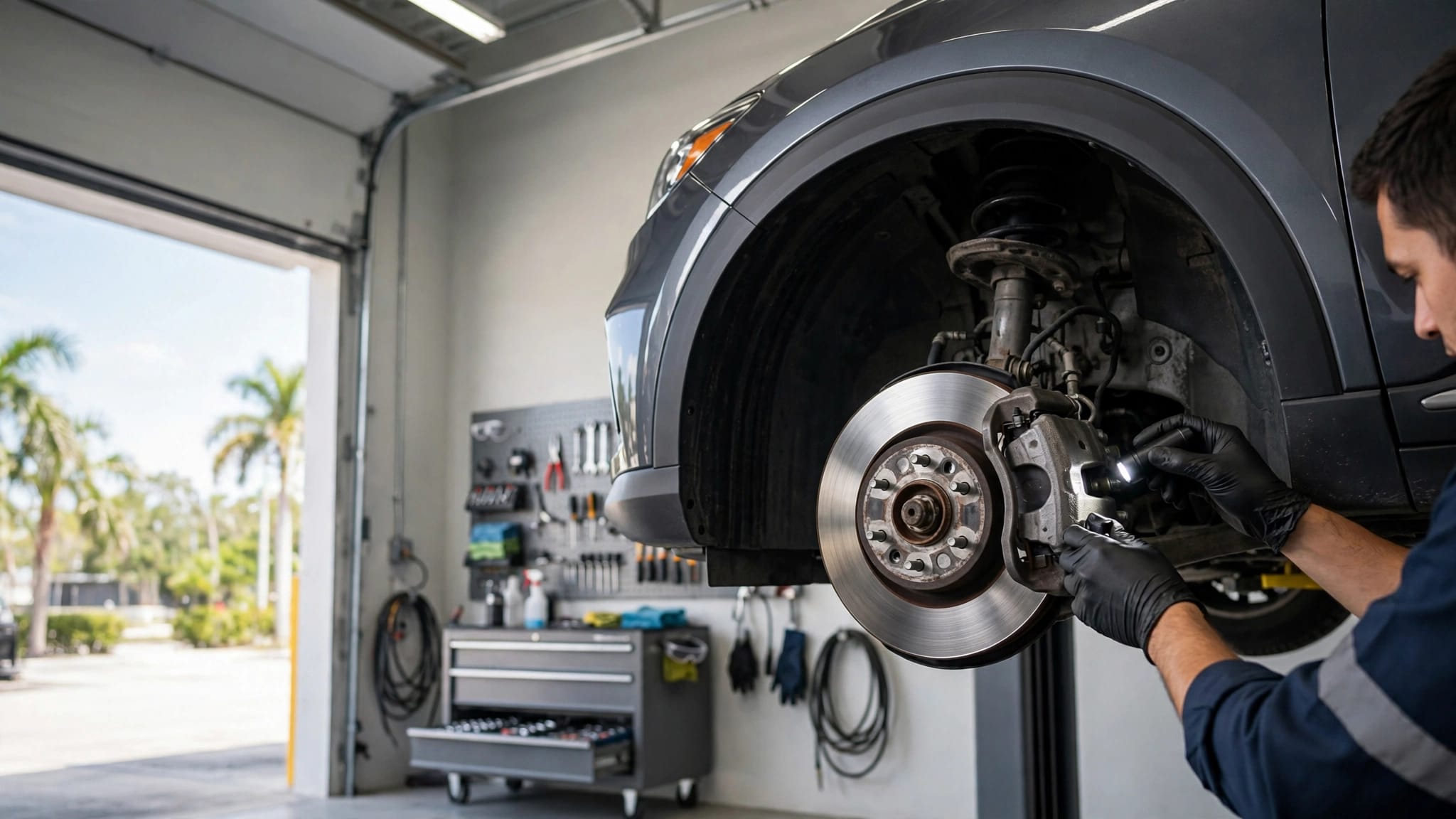
A Florida repair shop can be liable for a crash if negligent brake work caused a failure that led to injuries. The evidence must connect the shop’s conduct to both the brake problem and the collision.
If you or a family member was hurt, you may be facing medical bills while the shop and insurers dispute what happened. Preserving the vehicle and repair records can give you a better chance of establishing the cause.
Key Takeaways
A brake failure after a repair deserves investigation, but its timing alone doesn’t establish the shop’s responsibility. A claim generally needs proof of unreasonable repair work, causation, and resulting losses.
Other parties may also share fault. Florida’s comparative-fault rules can reduce or bar recovery in covered negligence actions, and the lawsuit deadline may arrive while an insurance claim is still open.
When a Repair Shop May Be Liable
A shop that works on your brakes must use reasonable care in performing that work. A negligence claim generally asks whether the shop fell short of that duty and whether its conduct caused your injuries.
The inquiry depends on what the shop was hired to do, what its technicians found, and what happened before the crash.
Brake Work That Falls Below Reasonable Care
A claim may involve an improperly installed component, an incomplete repair, or a brake problem that the shop failed to report within the scope of its work. The repair order can help establish which parts the shop inspected or replaced.
An invoice showing brake service is a starting point. An investigation must still identify the mistake and explain why a reasonably careful shop would have acted differently. The condition of the vehicle before service can matter, too.
The Connection Between the Repair and the Crash
Even when a technician made a mistake, a claim must connect that mistake to the crash and the injuries. That can require evidence about how the brake system failed, when the failure occurred, and whether working brakes would have helped the driver avoid the collision.
For example, an inspection may reveal damage to a brake component. The investigation must distinguish damage that existed before impact from damage the collision itself caused.
Repair Records Can Show What the Shop Did
Repair paperwork can help establish the timeline and narrow the mechanical questions. Keep the original documents if you have them, along with electronic copies.
Estimates, Authorizations, and Invoices
Save the estimate, repair order, final invoice, and any messages about the work. These records may identify the service requested, the parts charged to you, and any recommended work you declined or postponed.
A shop may also have inspection notes, technician worksheets, parts orders, or photographs that aren’t included with your invoice. An attorney can request those records as part of an investigation.
If the repair happened before you bought the vehicle, records from the prior owner or seller may help establish its maintenance history.
Warnings and Follow-Up Visits
Write down any brake symptoms you noticed before and after the service. A soft pedal, unusual noise, warning light, or fluid on the ground may help an investigator identify when a problem began.
Keep records of calls or return visits to the shop. If you reported that the brakes still felt wrong, the date and the shop’s response may be relevant. Describe what you experienced without guessing at the mechanical cause.
How an Investigation Connects Brake Failure to a Crash
A qualified vehicle examiner can inspect the brake system and compare its condition with the repair records. The examiner may look for installation problems, leaks, damaged components, and signs of wear.
That inspection should also consider crash damage and work performed after the collision. A damaged part doesn’t necessarily show when or why it failed.
Physical and Electronic Evidence
The vehicle itself may provide evidence that paperwork cannot. An examiner may want to inspect the brake components in place before anyone removes or replaces them.
Some vehicles also record electronic information that may help reconstruct the moments before impact. The information available depends on the vehicle, the event, and whether the data has been preserved. It should be considered alongside physical evidence rather than treated as a complete account.
Roadway and Witness Evidence
Photographs of vehicle positions, impact damage, and the roadway can help establish how the collision occurred. Witness statements and available video may show traffic conditions or the vehicle’s movements before impact.
In a rear-end collision, the evidence may also involve following distance and the actions of both drivers. Our discussion of Florida rear-end crash claims explains how those disputes can develop.
Preserve the Vehicle Before Repairs or Salvage
After a serious crash, the vehicle may be towed to a storage yard or declared a total loss. Once it is repaired, dismantled, or sold for salvage, important evidence can be harder to examine.
Before authorizing disposal or repair, speak with an attorney about preserving the vehicle and arranging an inspection. Also address storage charges promptly so the vehicle isn’t released or sold while the investigation is being arranged.
If parts must be removed, ask that they be retained and identified. Photographs, a record of who handled the parts, and the dates of any work can help establish their condition and history.
An attorney may send preservation requests to a shop, insurer, towing company, or another party holding relevant evidence. Our guide to preserving a failed tire discusses similar concerns when a vehicle component may explain a crash.
Other Parties May Share Responsibility
A repair shop is one possible source of liability. Depending on the evidence, a claim may also involve a driver, vehicle owner, employer, manufacturer, or parts seller.
A manufacturer or seller may become relevant if a defective brake component caused the failure. A product claim requires its own evidence of a defect and causation. The fact that a part failed doesn’t identify whether the cause was its design, manufacture, installation, wear, or collision damage.
Another driver may also have contributed through unsafe driving. In a vehicle used for work, ownership and the driver’s duties may affect whether an employer has responsibility. Each potential claim depends on the facts and the applicable law.
Florida’s Motor Vehicle Repair Law
Florida regulates repair shops under its motor vehicle repair provisions. The law addresses repair-shop conduct separately from an ordinary negligence claim.
Under section 559.920, unlawful conduct includes willfully departing from or disregarding accepted practices and professional standards. The evidence must support the requirements of the particular statutory provision.
Section 559.921 also provides a remedy for a customer injured by a violation of the repair law. Depending on the case, the prevailing party may be entitled to damages, court costs, and reasonable attorney’s fees. The statute’s customer remedy has requirements that differ from those of a crash-related negligence claim.
A passenger or another injured road user may have a negligence claim even without being the shop’s customer. Their available claims require separate analysis.
How Shared Fault Affects a Brake Failure Claim
A shop or insurer may argue that you contributed to the crash. For example, it may claim that you ignored a warning, continued driving with known brake trouble, or traveled too fast for traffic conditions.
Those allegations should be evaluated against the evidence. A warning light, service record, witness account, or video may help establish what you knew and whether your conduct contributed to the harm.
Under Florida’s comparative-fault statute, an injured person’s percentage of fault generally reduces damages in a covered negligence action. A person found more than 50% responsible for their own harm generally cannot recover. At exactly 50%, that bar doesn’t apply, although the fault reduction does.
An insurer’s proposed percentage is a negotiating position, not a court finding.
Compensation and Insurance After a Crash
A supported injury claim may include medical expenses, lost earnings, future care, and other losses allowed by law. Keep treatment records, bills, pay information, and work restrictions so the claim reflects both immediate costs and continuing effects.
Florida’s personal injury protection coverage may help pay certain covered expenses after a vehicle crash, subject to policy terms and statutory requirements. Liability coverage held by a shop or another responsible party may also be relevant, but coverage depends on the policy and the facts.
Property damage follows a separate path. Save towing, storage, and vehicle repair records. Insurance limits, available coverage, and the evidence of each party’s responsibility can all affect payment.
Before signing a settlement release, consider whether it could affect claims against other potentially responsible parties.
The Deadline to File a Florida Negligence Lawsuit
Florida’s negligence filing statute generally provides two years for an action founded on negligence. For many claims arising on or after March 24, 2023, that is the general filing period.
The applicable deadline can differ with the claim, date, defendant, and other circumstances. Older claims may require a different analysis.
An open insurance claim or settlement discussion doesn’t automatically extend the time to sue. Early legal advice also allows more time to locate records and arrange an inspection before evidence disappears.
Frequently Asked Questions
Can a Passenger Bring a Claim Against the Repair Shop?
A passenger may have a negligence claim if the evidence shows the shop’s conduct caused the crash and the passenger’s injuries. The passenger doesn’t have to be the person who paid for the brake work to pursue an ordinary negligence theory.
The customer remedy under Florida’s repair law has separate requirements.
Does a Crash Report Prove the Brakes Failed?
A crash report can contain useful observations, but it may not establish the mechanical cause of a failure. Vehicle inspection, repair records, witness accounts, and other evidence may be needed to determine what happened.
Can a Claim Continue if the Car Is a Total Loss?
A total loss doesn’t automatically prevent a claim. However, the vehicle may contain evidence needed to prove it. Arrange legal advice and preservation before the vehicle is released for salvage or dismantled.
Protect Your Claim After a Brake-Related Crash
A repair shop’s liability depends on evidence linking its work to the brake failure, collision, and injuries. The vehicle and service records can be central to that investigation.
At Avard Law Offices, we offer a free consultation for people seeking legal help after an injury. We can discuss the crash, the available evidence, and the next steps for your claim.