
Defective Seat Belt Claims After a Florida Car Accident
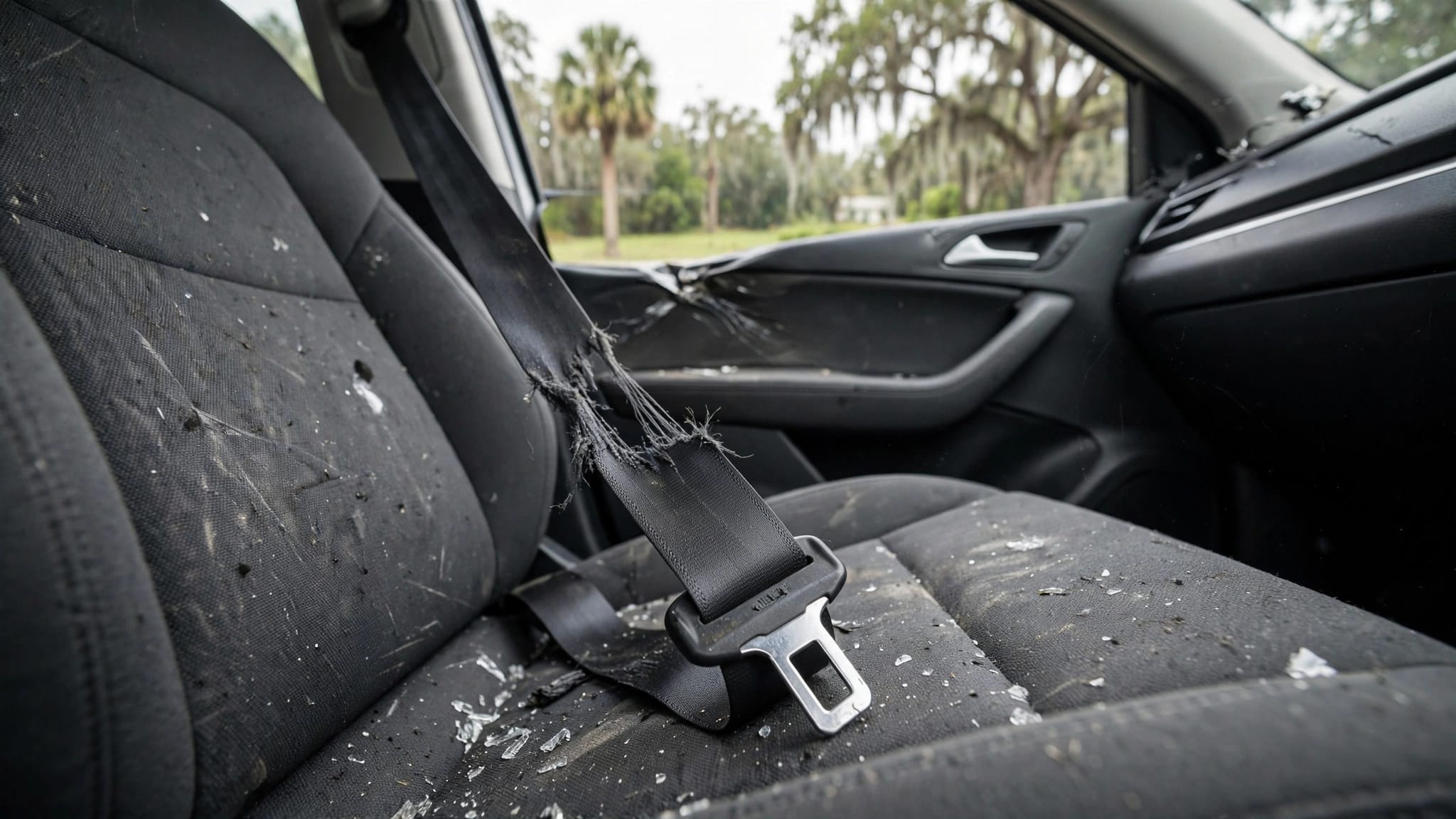
A defective seat belt claim can seek compensation when a restraint failure causes or worsens injuries in a Florida car accident. You may also have a separate claim against the driver who caused the collision.
The difference matters: a product claim focuses on how the belt performed and what injuries a functioning restraint would have prevented or reduced. Preserving the vehicle early can give you a better chance to investigate both questions.
Key Takeaways
- A driver and a vehicle or seat belt manufacturer may face separate claims arising from the same crash.
- A torn belt or an unlatched buckle deserves investigation, but damage alone doesn’t prove a defect.
- Medical records, witness accounts, the restraint system, and crash evidence can help establish what happened.
- Florida PIP benefits, fault rules, and lawsuit deadlines each require separate attention.
How a Seat Belt Can Fail in a Crash
Seat belts have several components that must work together, including the buckle, webbing, retractor, and anchor points. A failure may occur before impact or during the collision.
Buckle and retractor problems
A buckle may not hold the latch plate securely, or a retractor may not lock as expected. If you remember fastening the belt but found it loose after the crash, tell your attorney what you recall.
That observation matters, but it doesn’t establish when or why the belt came loose. First responders may have released or cut a restraint during rescue. An inspection should account for those actions.
Damaged webbing and anchor points
Webbing can tear, or a mounting point can fail. An attorney and qualified experts can examine whether damage resulted from a defect, the forces of the collision, a prior repair, or another cause.
A belt can also leave visible bruising when it restrains an occupant. The presence or absence of a mark alone doesn’t prove whether the belt was worn or worked properly.
What You Must Prove in a Defective Seat Belt Claim
A product-related claim generally requires evidence of a defect and a connection between that defect and the injury. The legal theory may involve a problem with the belt’s design, its manufacture, or the warnings supplied with it.
The investigation also needs to address what happened in the crash. Impact direction, vehicle intrusion, occupant position, and collision severity can affect the analysis.
Connecting the failure to your injuries
A collision can cause serious injuries even when a seat belt works as intended. A defective seat belt claim therefore focuses on whether the alleged failure caused injuries or made them worse.
Emergency records, imaging, and treatment notes can show where you were injured. A qualified expert may compare those findings with damage to the vehicle and restraint system. Depending on the evidence, the analysis may address which injuries a properly functioning belt would have prevented or reduced.
Looking beyond the buckle
The belt is one part of the occupant protection system. Airbags, seats, and interior structures may also be relevant to how an injury occurred.
If an airbag didn’t deploy, our discussion of Florida airbag nondeployment claims explains additional evidence that may need preservation. An airbag staying closed doesn’t automatically mean it was defective.
Who May Be Responsible for Your Injuries?
More than one party may bear responsibility after a crash involving a suspected restraint failure. Each claim requires its own evidence.
The driver who caused the collision
A driver who ran a red light, followed too closely, or otherwise drove negligently may be responsible for the crash. Evidence can include the crash report, photographs, witness accounts, and available video.
A claim against that driver addresses the conduct that caused the collision. It can proceed alongside a product claim when the facts support both.
Companies connected to the seat belt
Depending on the evidence, a product claim may involve the vehicle manufacturer, a seat belt component manufacturer, or another business in the product’s distribution chain. A prior repair may also be relevant if improper work affected the restraint.
A company doesn’t become liable merely because its name appears on a vehicle or component. The claim must connect an actionable problem to the injuries for which compensation is sought.
Preserve the Vehicle Before Repairs or Salvage
The vehicle may contain evidence that can’t be replaced once repairs begin. A total-loss decision doesn’t answer whether a restraint was defective.
Tell your attorney where the vehicle is stored and who controls it. Before repairs, dismantling, or salvage, counsel can request preservation and arrange an inspection. If storage fees are accumulating, address those costs while access to the vehicle is arranged.
Keep the restraint system intact
Photograph the buckle, webbing, retractor area, anchor points, and surrounding interior if you can do so safely. Also keep photographs of the vehicle damage and identification number.
Don’t test the buckle repeatedly or take the belt apart yourself. If a repair shop has removed a component, ask that it be retained. An attorney can coordinate an inspection and address whether other parties should have an opportunity to examine the evidence.
Save records from the crash and treatment
Keep the crash report, original photographs, witness contact information, and towing or storage paperwork. Rescue records may help explain whether responders cut or released the belt.
Some vehicles record crash-related electronic information. Its availability and meaning depend on the vehicle and the event, so it should be considered alongside the physical evidence.
Save medical bills, work restrictions, pay records, and notes about limitations you experience. These records can support both the injury analysis and the value of your losses.
Recalls Can Provide Leads, but They Don’t Prove Your Case
The National Highway Traffic Safety Administration maintains a searchable database of safety issues, including recalls and investigations. A search using your vehicle identification number or its year, make, and model may identify a relevant restraint issue.
Keep any recall notices and records of recall repairs. A notice can help identify a condition worth investigating, while repair records may show what work occurred before the collision.
A recall doesn’t establish that a particular belt failed or caused an injury. Likewise, the absence of a recall doesn’t rule out a defect. You can also report a vehicle safety problem to NHTSA, but a safety complaint doesn’t replace an insurance claim or lawsuit.
How Florida PIP and Other Injury Claims Differ
Florida’s personal injury protection, or PIP, coverage can provide benefits without first proving another driver caused the collision. It is separate from a claim against a driver or product manufacturer.
Under Florida’s PIP statute, qualifying initial medical services generally must be received within 14 days after the crash. Reporting the accident to an insurer doesn’t replace that treatment requirement.
PIP generally provides up to $10,000 in combined medical and disability benefits, subject to statutory conditions and coverage terms. It generally pays 80% of qualifying reasonable medical expenses and 60% of covered lost income, within applicable limits.
Passengers may have different coverage questions depending on their circumstances. Our guide to Florida PIP coverage for injured passengers explains how those benefits can apply.
A separate injury claim may seek supported losses beyond available PIP benefits, including future treatment costs and reduced earning capacity. Pain-and-suffering damages against a motorist generally require a qualifying injury under Florida’s motor vehicle injury threshold. A product claim requires its own legal analysis.
What If an Insurer Says You Weren’t Wearing a Belt?
An insurer may argue that you contributed to your injuries by failing to use an available seat belt. That allegation deserves an examination of the evidence, especially if you remember fastening a belt that later came loose.
Florida recognizes a seat belt defense in appropriate circumstances. The defense must address whether an operational belt was available, whether nonuse was unreasonable, and whether it contributed to the claimed harm. Our explanation of the Florida seat belt defense discusses those requirements.
A crash report entry or an adjuster’s statement isn’t the final word on restraint use. Witness accounts, rescue records, and inspection findings may support or challenge the allegation.
How shared fault affects recovery
Under Florida’s comparative fault statute, an injured person’s share of fault generally reduces damages in a covered negligence action. A person found more than 50% at fault generally cannot recover in that action.
For example, a 20% fault finding would generally reduce $100,000 in proven damages to $80,000 before other adjustments. At exactly 50%, the statutory bar doesn’t apply, though the reduction still matters. The applicable rules depend on the claim and its dates; don’t assume the same analysis resolves every product theory.
Filing Deadlines Require Separate Attention
Florida generally gives two years to file many negligence lawsuits arising after the 2023 change in the law. The applicable deadline can differ with the claim, the date it accrued, and the parties involved.
Product cases require particular care. Florida’s limitations statutes address product liability and may also impose an outside time limit based on a product’s age, subject to statutory rules and exceptions.
An open insurance claim doesn’t automatically stop the lawsuit clock. An attorney can identify the potential claims and deadlines while evidence remains available. Before signing a settlement release, get advice about whether its terms could affect claims against other parties.
Frequently Asked Questions
Can I pursue a claim if I was a passenger?
Yes. A passenger may have a claim against a responsible driver, a product manufacturer, or both, depending on the evidence. PIP coverage and available liability insurance require separate review.
Do I need a recall to bring a defective seat belt claim?
No. A recall may provide useful information, but a claim can depend on inspection findings and other evidence even when no recall exists. A recall also doesn’t prove that the condition caused your particular injuries.
What if the car has already been repaired or sold?
A claim may still be possible. Photographs, repair records, removed components, medical records, and witness accounts can help. Tell your attorney what happened to the vehicle and when. Physical inspection may be more difficult after repairs or salvage.
Can I recover if I was partly responsible for the crash?
Possibly. In a covered Florida negligence action, your assigned fault generally reduces damages. A finding above 50% generally bars recovery under the applicable rule. An insurer’s proposed percentage isn’t a court finding.
Get Help After a Suspected Seat Belt Failure
A defective seat belt claim depends on evidence of both the restraint problem and its effect on your injuries. Early preservation can help protect that evidence before a vehicle is altered or sold.
At Avard Law Offices, we offer free consultations for people seeking help with personal injury claims. We can discuss the crash, the available evidence, and potential next steps.