
Florida Delivery Van Accident Claims for Injured Drivers
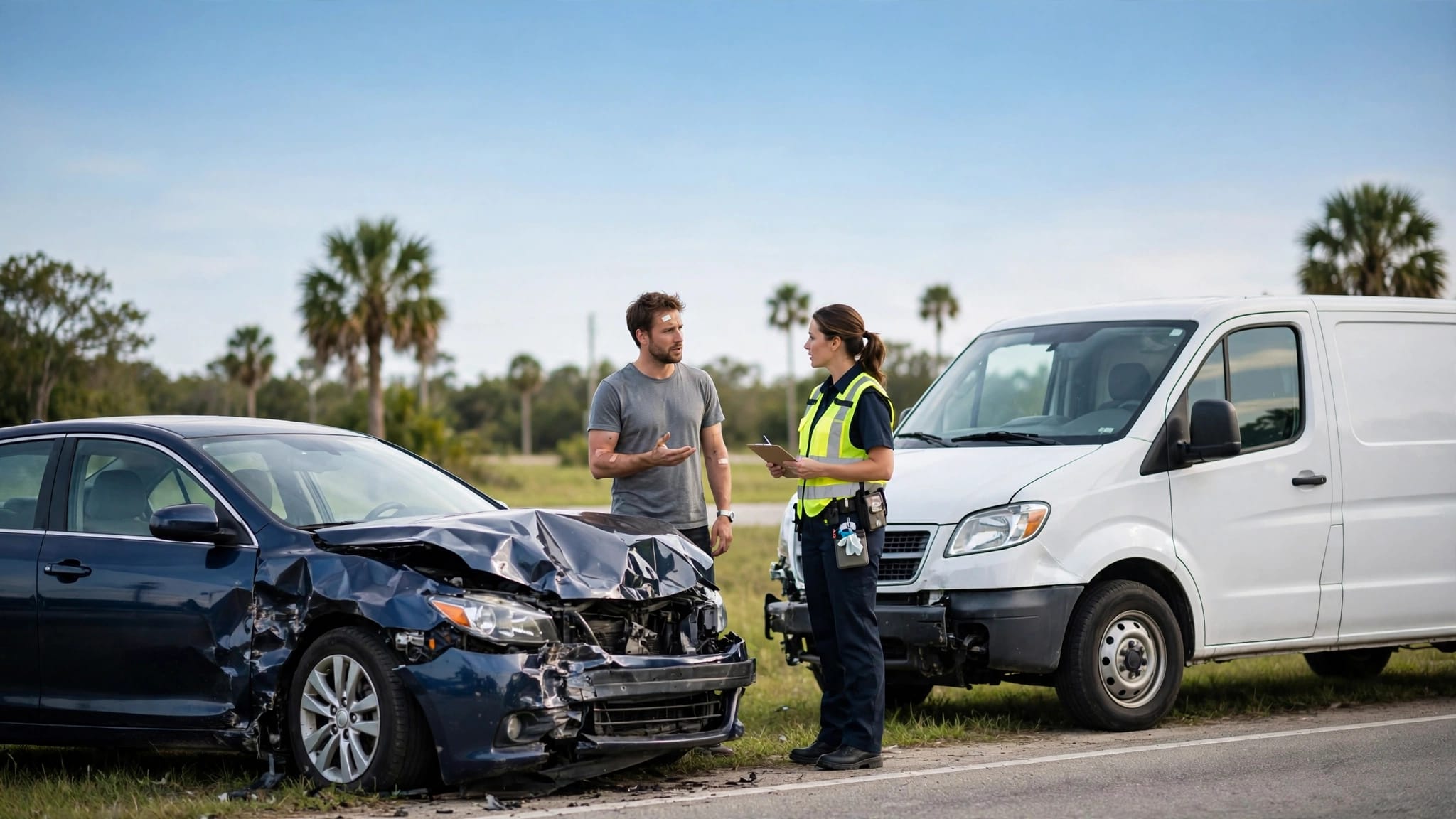
A Florida delivery van accident can leave you facing medical bills, missed work, and questions about who should pay. You may have a claim against the van driver or another responsible party, while your own personal injury protection (PIP) coverage may pay some expenses first.
Delivery crashes can involve a driver, a vehicle owner, and one or more businesses. Identifying their roles is an important part of building your claim.
Key Takeaways
- PIP can pay some medical expenses and lost income regardless of who caused the crash.
- The van driver, an employer, a contractor, or a vehicle owner may be responsible, depending on the evidence.
- Route records, video, and vehicle data may help establish how the collision happened.
- Your share of fault can reduce a recovery or, in some cases, prevent it.
- For many Florida negligence claims, the lawsuit filing period is two years.
What to Do After a Delivery Van Crash
Your health comes first. Call 911 if anyone is injured, follow emergency responders’ instructions, and seek medical care for symptoms after the collision. Tell your provider how the crash happened and describe all symptoms, including headaches, dizziness, or pain that appeared later.
If you can do so safely, photograph the vehicles before they move. Capture damage, license plates, road markings, traffic signals, and anything that may have blocked a driver’s view. Get contact information from witnesses and exchange information with the van driver.
Record the business name on the van, but don’t assume it identifies the driver’s employer. A vehicle may display one company’s branding while another business owns it or employs the driver. Save any delivery paperwork or photographs that could help identify the companies involved.
Report the collision to your insurer and keep the claim number. Give an accurate account, but don’t guess about speed, distance, or an injury that hasn’t been evaluated. If you have dashcam footage, save the original file rather than relying on a shortened clip.
Who May Be Responsible for Your Injuries?
A delivery van crash can involve more than one potentially responsible party. Each claim depends on what that party did, its relationship to the driver, and the evidence connecting its conduct to the collision.
The driver and the driver’s employer
A driver may be responsible for an unsafe lane change, a failure to yield, distracted driving, or another negligent act. For example, a van driver who backs into traffic must still account for approaching vehicles. Our discussion of Florida backing-up accident claims addresses the evidence that can matter in those collisions.
An employer may also face liability when an employee causes a crash while acting within the scope of employment. The driver’s route, delivery assignment, and work records can help establish that relationship. A company may also face a separate claim based on its own conduct, such as negligent hiring or maintenance, if the evidence supports it.
The vehicle owner or another business
The van’s owner may be different from the driver’s employer. Ownership can matter under Florida law, but the available claims depend on the facts and applicable exceptions. Leasing arrangements, delivery contracts, and insurance documents can help identify who controlled the vehicle.
Some drivers work for contractors rather than the company whose name appears on a package or van. A contractor’s involvement doesn’t resolve every liability question. Our guide to Florida company vehicle accident claims explains why employment and vehicle records can matter when a business denies responsibility.
Evidence That Can Explain How the Crash Happened
A crash report is a starting point, but it doesn’t settle civil liability. Compare its diagram and narrative with photographs, witness accounts, and any available video. If you notice an error, preserve evidence that shows the difference.
Video, vehicle damage, and witness accounts
Nearby businesses, traffic cameras, or another motorist’s dashcam may have recorded the van’s movements. Footage may be overwritten, so a prompt preservation request can matter. Note the camera’s location and the name of anyone who tells you a recording exists.
Vehicle damage can also help establish the point of impact. Keep repair estimates and photographs, and note where your vehicle is stored before repairs or disposal. If the sequence remains disputed, an attorney may arrange for an inspection.
Delivery and vehicle records
Route information, dispatch messages, and available GPS data may help establish where the van was going and who directed its work. Maintenance and inspection records may matter if a mechanical problem contributed to the crash.
An attorney can request that relevant businesses preserve records and electronic data. In Florida multi-vehicle crash claims, identifying the sequence of impacts can be especially important when more than one driver may have contributed.
How PIP Works After a Florida Delivery Van Accident
Florida’s no-fault system often makes PIP an early source of payment for an injured motorist. PIP generally pays covered benefits without requiring you to prove that the van driver caused the collision. It doesn’t determine who was at fault.
Medical expenses and the 14-day requirement
Under Florida’s PIP statute, qualifying coverage generally pays 80% of covered, reasonable medical expenses, subject to statutory conditions and limits. Initial treatment must generally begin within 14 days of the crash.
The PIP limit is generally $10,000 when a qualifying provider determines that you had an emergency medical condition. If a qualifying provider determines that you didn’t have one, medical benefits are limited to $2,500. A deductible and other policy conditions can affect payment.
Seek care because of your symptoms, not because you expect an insurer to approve a particular benefit. Keep records of appointments, referrals, prescriptions, and bills.
Lost income and costs PIP doesn’t cover
PIP generally pays 60% of covered lost gross income and earning capacity, subject to the statutory limit and policy conditions. Pay records, work restrictions, and documentation of missed hours can help support that portion of a claim.
PIP doesn’t pay for vehicle repairs or pain and suffering. A claim against a responsible party, or other applicable coverage, may address losses that PIP doesn’t pay. The available options depend on the policies and the facts of the crash.
Compensation Beyond PIP
A claim against a negligent driver or another responsible party may include medical expenses and lost earnings not covered by PIP. It may also include supported future treatment costs or reduced earning capacity. Medical records and professional evaluations can help connect those losses to the collision.
Property damage follows a separate insurance path. The responsible party’s property damage coverage may pay for supported vehicle repairs and related losses, subject to fault and policy limits. Your own collision coverage may also apply, subject to its terms and deductible.
Pain and suffering claims
Florida places restrictions on noneconomic damages in covered motor vehicle cases. Under the motor vehicle injury threshold, a qualifying injury can include permanent injury within a reasonable degree of medical probability, significant and permanent scarring or disfigurement, or significant and permanent loss of an important bodily function.
An emergency medical condition determination for PIP is a separate question. It doesn’t automatically establish that an injury meets the threshold for pain and suffering.
When insurance limits are too low
A commercial vehicle’s involvement doesn’t guarantee enough insurance to cover every loss. Your own uninsured or underinsured motorist coverage may be relevant when a responsible driver’s available coverage is insufficient, depending on the policy and claim.
Our guide to Florida underinsured motorist claims explains how policy limits can affect the available recovery.
How Shared Fault Affects a Claim
The van driver’s insurer may argue that you contributed to the collision. It might claim that you changed lanes unsafely, followed too closely, or had time to avoid the van. Those allegations should be assessed against the available evidence, including vehicle positions and witness accounts.
Under Florida’s comparative-fault law, your assigned share of fault generally reduces damages in a covered negligence action. For example, if your proven damages are $100,000 and you’re found 20% at fault, the reduction generally leaves $80,000 before other applicable adjustments.
A claimant found more than 50% responsible for their own harm generally cannot recover under that rule. At exactly 50%, the bar doesn’t apply, although the damages reduction is substantial. An adjuster’s proposed percentage is a negotiating position, not a court finding.
Florida’s Deadline for Filing a Lawsuit
For many negligence claims accruing after March 24, 2023, Florida’s limitations statute generally provides two years to file a lawsuit. In an ordinary injury case, the claim usually accrues on the crash date.
The applicable deadline can differ for older claims, other legal theories, or cases involving government defendants. Wrongful death claims require separate analysis. An attorney can evaluate which dates and rules apply to your circumstances.
An open insurance claim doesn’t automatically preserve your right to sue. Settlement negotiations and requests for medical records don’t automatically pause the filing period either. Meanwhile, evidence can disappear well before a lawsuit deadline approaches.
Before You Accept a Settlement
An early offer may arrive before you know whether you’ll need further care or have lasting work restrictions. Review the proposed payment against your documented losses and any supported future expenses.
Pay attention to the release that accompanies an offer. Signing it may end claims against one or more parties, depending on its terms. That matters when a driver, vehicle owner, and delivery business may each have a different role in the crash.
At Avard Law Offices, we offer free consultations for personal injury matters. Bring the crash report, insurance information, photographs, medical records, and correspondence you have. You don’t need a complete file before speaking with us.
Frequently Asked Questions
Can I file a claim if the van driver was a contractor?
Yes. A contractor’s status doesn’t prevent a claim against a negligent driver. It can affect which businesses may also be responsible, so contracts, work assignments, and vehicle ownership are important.
Can I recover compensation if I was partly at fault?
You may be able to recover in a covered negligence action if you’re found 50% or less at fault. Your percentage generally reduces the damages. A finding above 50% generally bars recovery under Florida’s comparative-fault rule.
Does PIP pay for damage to my car?
No. PIP addresses covered injury-related benefits, such as medical expenses and lost income. Vehicle repairs generally involve property damage liability coverage, your own collision coverage, or another available source.
Protect Your Claim After a Van Crash
A delivery van injury claim depends on evidence of both the collision and your losses. Medical records, scene photographs, and available business records can help establish what happened and who may be responsible.
Keep the filing deadline separate from the insurance investigation. Early legal review can help identify the parties and preserve evidence while your claim moves forward.