
Florida Dog Bite Trespassing Claims: What Evidence Matters
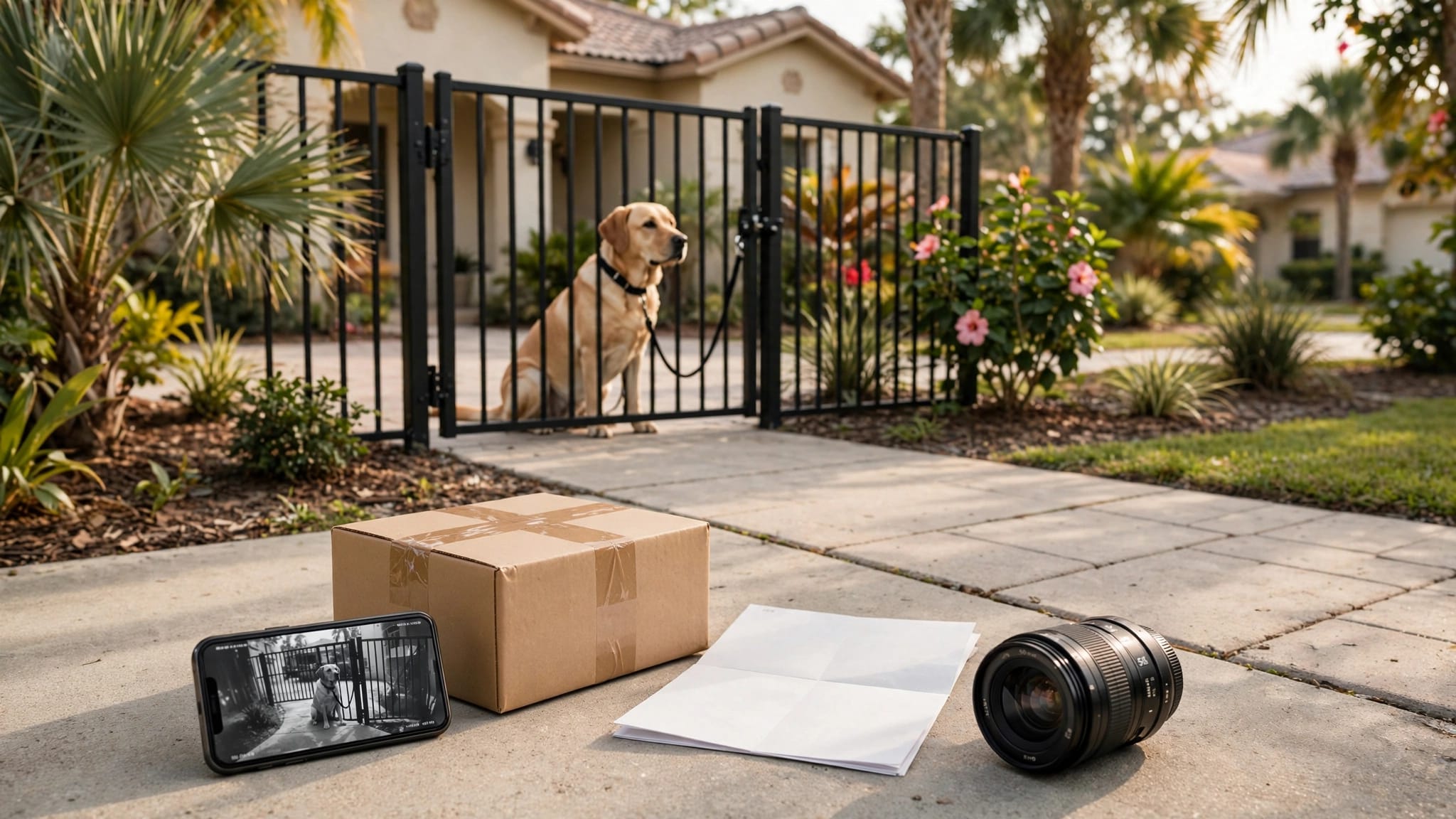
A dog owner may call you a trespasser after a bite, but that accusation doesn’t settle a Florida injury claim. In a Florida dog bite trespassing dispute, the central question is whether you had a legal right to be on property when the dog attack happened.
A closed gate or an angry homeowner can make the situation feel simple. Property lines, shared walkways, delivery instructions, prior permission, and camera footage often tell a different story.
Florida dog bite law begins with where the bite occurred and why you were there. Establishing lawful presence is the first step in answering a trespassing claim.
Key Takeaways
- A Florida dog bite trespassing defense depends on whether you had permission or another legal right to be on the property, not simply on the owner’s accusation after the attack.
- Text messages, delivery records, work orders, lease documents, witness statements, photographs, and camera footage can help establish lawful presence and explain the route you took.
- Shared areas, delivery routes, warning signs, alleged provocation, and the owner’s conduct require a fact-specific review; a sign or trespassing allegation does not automatically defeat a claim.
- Postal workers and some other workers may have statutory or work-related protection, while private delivery drivers should preserve order details, GPS history, delivery instructions, and customer communications.
- Prompt medical care, evidence preservation, incident reporting, and legal review are important because video may disappear, damages can continue to develop, and filing deadlines depend on the claim and injury date.
Florida dog bite law starts with lawful presence
Florida dog bite law begins with Florida Statutes section 767.04, which addresses when an owner may be responsible for a bite. Generally, the strict liability rule covers a bite in a public place or while someone is lawfully on private property, subject to statutory defenses.
The statute’s full language matters because claims involving private property can be limited by defenses and the facts of the person’s presence. Review the official Florida dog owner liability statute for the current wording.
A bite in public usually avoids the trespass question
A sidewalk, public park, street, or other public location generally doesn’t raise a trespass defense based on property access. If a loose dog bites someone there, the owner can’t avoid responsibility by claiming the victim lacked permission to be nearby.
Apartment hallways, shared laundry rooms, parking lots, and common sidewalks require closer attention. A tenant, guest, contractor, or resident may have a lawful right to use those areas even if the owner later objects to their presence.
A dog’s history doesn’t control strict liability
The statute doesn’t require proof of a prior history of aggression. The bite itself, the injury, and whether the victim was permitted to be there are the starting points.
That statutory theory differs from a negligence claim, where prior incidents, complaints, a broken fence, or the owner’s failure to restrain the dog may carry greater weight. Depending on the facts, more than one legal theory may be available.
When an owner says you were trespassing
A trespassing defense depends on facts, not the owner’s label after an attack: “trespasser” is a legal conclusion. Evidence must show why you entered and whether you had a legal right to be on property. It must also show whether you entered or stayed on private property without permission.
An owner may claim trespass because a person crossed a lawn, used a side gate, walked past a posted sign, or approached the wrong door. Yet each detail needs context. Permission or another legal right can establish lawful presence, even without a written invitation.
Evidence that can show you had permission
Permission may come through an express or implied invitation, shown by texts, work orders, ordinary access patterns, or the owner’s conduct. A written invitation isn’t required when those facts explain why you were there.
Useful proof can include:
- Text messages, emails, call logs, app-based delivery instructions, and other delivery records showing you were directed to the address.
- Doorbell-camera footage, security video, vehicle cameras, and photographs showing the entrance, gate, pathway, or warning signs.
- Witness statements from neighbors, passengers, tenants, co-workers, or others who saw the attack.
- Lease records, maintenance requests, visitor logs, and work orders establishing why you were present.
A video may show that a gate stood open, a driveway was shared, or the dog reached into an area visitors commonly used. Those facts can challenge a claim that you entered somewhere forbidden.
Shared spaces require a fact-specific analysis
Many disputes happen in places with blurry boundaries. Shared driveways, breezeways, courtyards, easements, and other common areas require a fact-specific analysis, unlike a locked enclosure.
For example, a tenant’s invited guest may lawfully use a common path even if another tenant owns the dog. A neighbor who regularly takes a customary route with the owner’s knowledge may also have evidence of implied permission.
Landlord conduct can matter in rental cases. If a landlord knew about a dangerous animal and retained control of the bite area, a Florida landlord dog bite claim may deserve review, depending on the lease, notice, and other facts.
Workers, postal carriers, and delivery drivers
Florida’s statute expressly treats a person as lawfully present when entering private property to perform a duty imposed by state law or federal postal regulations. That protection may apply when a dog attack occurs during the work. A postal worker delivering mail has strong statutory protection when approaching a home in the ordinary course of work.
Other workers may also be lawfully present because the homeowner, tenant, business, or property manager requested their service. A work request may support permission, but it doesn’t automatically authorize every route across the property. Utility workers, repair technicians, landscapers, movers, home-health staff, and inspectors often enter for an authorized purpose.
Private delivery drivers need proof of the delivery purpose
Amazon Flex, DoorDash, Uber Eats, Instacart, and similar drivers aren’t named in section 767.04. For these drivers and other private service providers, a work request, order, or delivery instruction may support an express or implied invitation to approach. That invitation doesn’t resolve whether the route taken was authorized.
The route still matters. A driver who follows app instructions to a front porch has a stronger position than someone who bypasses a clear barrier and enters a fenced backyard. Preserve the order screens, delivery notes, GPS history, drop-off photographs, and customer communications.
If a bite happened while working, workers’ compensation issues may arise, along with a claim against someone outside the employer. Florida third-party workers’ compensation claims may apply when another person or business caused the injury.
Warning signs and victim conduct can affect recovery
A homeowner may point to warning signs, an alleged provocation, or conduct that supposedly caused the bite. These defenses deserve careful review, but they don’t automatically end a case.
The statutory requirements for warning signs are specific. A small sign, one blocked by landscaping, or wording that doesn’t include “Bad Dog” may not satisfy them.
A bad dog sign has narrow statutory protection
Section 767.04 provides limited protection for a bite on the owner’s property. A bad dog sign must be prominently placed, easily readable, and include the words “Bad Dog.” This protection doesn’t apply to children under age 6.
It also doesn’t protect an owner if their negligent act or omission proximately caused the injury. Leaving a gate unlatched, allowing a dog to roam, or creating another dangerous condition may still support liability despite the sign.
A sign isn’t a trespassing defense by itself. Lawful presence and the owner’s conduct remain separate factual questions.
Comparative negligence can reduce damages
Under Florida’s dog bite statute, proven negligence by the bitten person may reduce damages when it proximately caused the incident. That comparative negligence analysis should reflect the evidence, not assumptions about the victim’s behavior.
Provoking a dog, ignoring an obvious barrier, or entering after a clear instruction not to do so may become disputed facts. An owner may raise a provocation defense, but it is ordinarily analyzed through the statutory negligence-reduction rule. It isn’t an automatic complete defense. Still, the owner must support the allegation, and a dog owner’s claim that someone “must have provoked” the animal isn’t proof.
Florida’s broader comparative fault statute can also affect negligence-based claims. A lawyer should assess the statutory dog bite claim and any separate negligence theory together.
Protect the evidence after a dog bite
Medical care comes first, especially after deep punctures, facial or hand injuries, heavy bleeding, or signs of infection. Follow medical advice, and keep every record related to emergency treatment, follow-up visits, prescriptions, scar care, counseling, and missed work.
Photograph the wound before and during healing. Also photograph torn clothing, the location, fences, gates, signs, and the route you used to reach the property.
Request video before it disappears
Many residential cameras overwrite footage within days or weeks. Send a written request to the owner, property manager, homeowners association, or nearby business to preserve recordings.
Save original files where possible. Screenshots can help, but original videos preserve timestamps and may show more of the event. Don’t edit, filter, or post video publicly before getting legal advice.
Write down what happened during the dog attack while your memory is fresh. Include the address, time, dog description, owner statements, witness names and contact details, and whether any gate or sign was visible.
Report health and safety concerns promptly
County procedures vary, but a report to animal control or public-health officials may document the incident and help identify the dog. If rabies exposure is a concern, contact a health care provider and county health department promptly. The Florida Department of Health rabies guidance explains why rapid reporting and medical evaluation matter.
Avoid giving a recorded statement to your insurance company before understanding how its questions may affect your claim. An adjuster may ask about your route, location, permission, and alleged provocation.
Damages, insurance, and filing deadlines
A serious bite can create losses in a personal injury claim long after the skin closes. Economic losses may include medical expenses, future treatment, lost wages, and reduced earning capacity, while non-economic damages may include pain and suffering, emotional distress, and scarring and disfigurement.
Homeowners or renters insurance may provide liability coverage, although exclusions, policy limits, breed restrictions, and coverage disputes can affect payment. Learn more about Florida dog bite insurance claims before assuming an owner’s insurance will pay the full loss.
The statute of limitations depends on the legal claim and injury date
Deadlines can be short and may differ based on the legal theory. Negligence-based and statutory liability claims may have different deadlines, so the current text of Florida Statutes section 95.11 should be verified through the official Florida Legislature’s Florida limitations statute source.
Because a dog bite case can involve both statutory liability and negligence, the injury date, legal theory, exceptions, and other case-specific facts can affect the potential deadline. A dog bite attorney can review the claim promptly, while waiting may make surveillance footage, witness memories, and physical evidence harder to obtain.
Frequently Asked Questions
Does calling someone a trespasser defeat a Florida dog bite claim?
No. The owner must support the allegation with facts showing that the injured person entered or remained on private property without permission or another legal right. Messages, delivery records, witness accounts, and video may show lawful presence instead.
What evidence can prove that I had permission to be on the property?
Permission may be shown through texts, emails, call logs, work orders, lease records, delivery instructions, visitor logs, or the owner’s conduct. Doorbell footage, photographs, and witness statements may also clarify the entrance, route, gates, and signs.
Does a “Bad Dog” sign automatically protect the owner?
No. Florida’s statutory protection has specific requirements, including prominent placement, easy readability, and the words “Bad Dog,” and it does not apply to children under age 6. The protection may also be limited if the owner’s negligent act or omission caused the injury.
Are delivery drivers and postal workers treated differently after a dog bite?
A postal worker entering private property to perform a duty imposed by federal postal regulations may receive specific statutory protection. Private delivery drivers are not named in the statute, so order records, app instructions, GPS history, photographs, and customer communications may be important to show an express or implied invitation.
How long do I have to pursue a Florida dog bite claim?
The deadline can depend on the legal theory, injury date, exceptions, and other case-specific facts. Because Florida statutory and negligence claims may involve different rules, review the current limitations statute and speak with a lawyer promptly rather than waiting for evidence to disappear.
A trespass allegation deserves a factual answer
A Florida dog bite trespassing claim may depend on whether someone entered without permission or another legal right. A trespassing defense depends on proof of unauthorized entry, but messages, delivery records, shared access, or video may support a different account.
Strict liability may apply under the statute, but the strict liability rule still requires attention to statutory conditions and defenses. Preserve medical records and other evidence showing where the dog attack occurred, why the person was there, and any warning signs or alleged provocation. Lawful presence often depends on permission, shared access, delivery records, or video, while comparative fault may affect recovery.