
Florida Escalator Injury Claims: Why Maintenance Records Matter
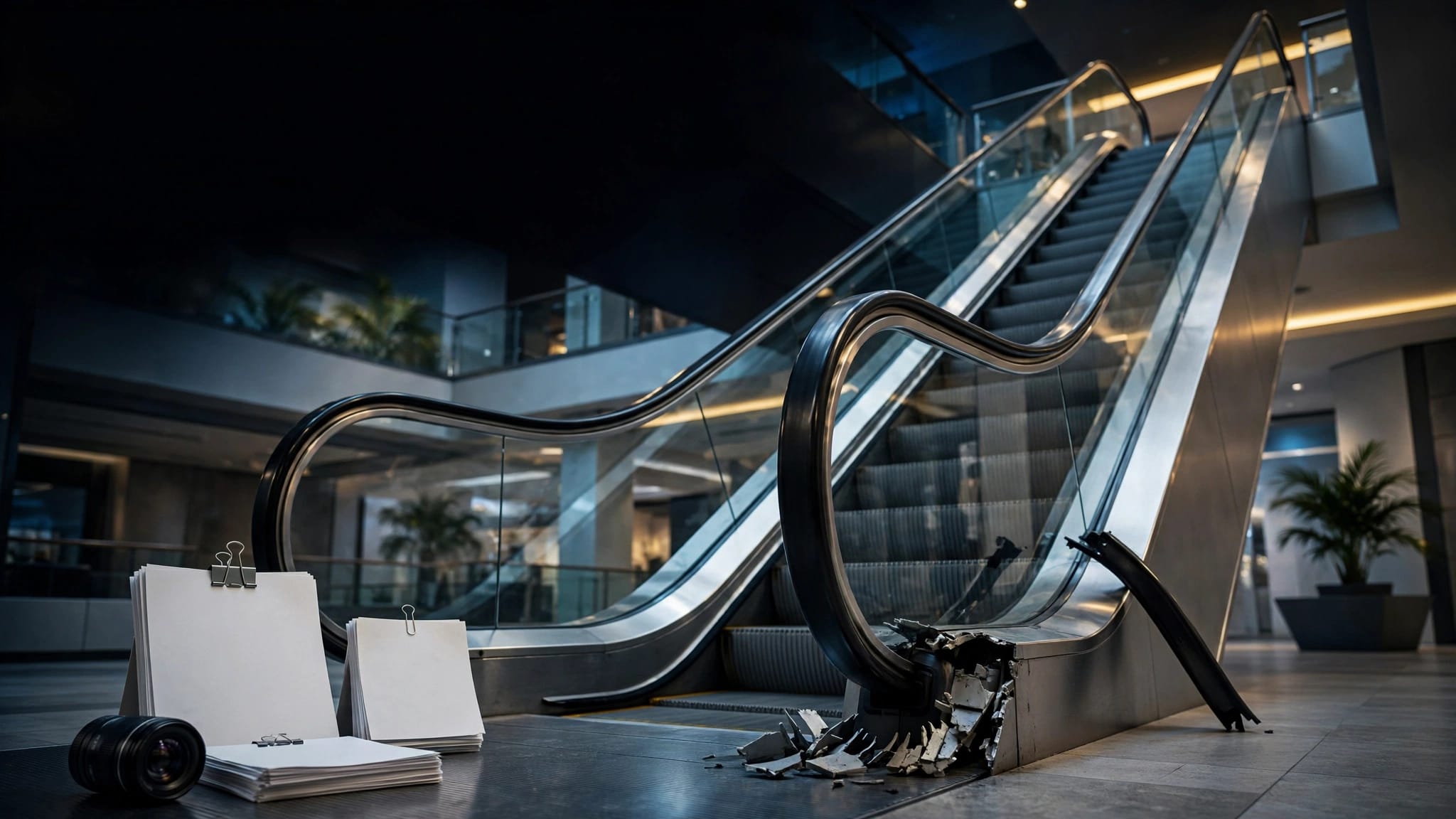
An escalator can turn an ordinary trip to a mall, hotel, airport, or medical center into a serious injury in seconds. Sudden stops, loose steps, trapped footwear, broken handrails, and comb-plate hazards can cause falls, fractures, nerve injuries, and lasting pain.
Florida escalator injury claims often rise or fall on records the injured person never sees: inspection reports, repair tickets, contractor logs, prior complaints, and surveillance video. Those documents can show whether a preventable problem existed before the incident.
Fast action protects proof before footage is overwritten and business records disappear.
How Florida escalator injury claims take shape
Most escalator cases involve negligence and premises liability. The legal question is whether a person or business with responsibility for the escalator failed to use reasonable care, and whether that failure caused the injury.
A serious injury alone does not prove fault. The evidence must connect the condition of the equipment, or the lack of a warning, to the harm suffered.
The malfunction often tells only part of the story
People may describe an escalator as jerking, stopping without warning, moving too fast, making unusual noises, or catching a shoe near the comb plate. Those details matter because they can point investigators toward a mechanical or maintenance issue.
Still, the scene can change quickly. Staff may shut down the escalator, clean the area, or call a service contractor before an injured person has photographs or witness names. The first report might also describe the event too vaguely, such as “guest fell on escalator,” without identifying what the machine did.
Medical records can fill another important gap. Tell the treating provider exactly how the incident happened and describe every symptom, including dizziness, back pain, numbness, hand injuries, or difficulty walking. Follow-up care also documents whether the injury improved, persisted, or required further treatment.
Several companies may share responsibility
The building owner is not always the only party involved. Responsibility may rest with the entity that controlled inspections, repairs, daily operation, or warnings.
Potential defendants can include:
- A mall, store, hotel, hospital, airport, condominium association, or other property operator.
- A property-management company that handled safety complaints and maintenance decisions.
- An elevator or escalator service company hired to inspect, repair, or maintain the unit.
- A manufacturer or installer if a product defect or improper installation caused the problem.
Control matters as much as the name on the deed. A detailed review of Florida premises liability duty of care can help identify which party had a duty to address a dangerous condition.
Maintenance records can reveal a preventable problem
Escalators are not ordinary stairs. They are regulated conveyances with moving steps, drive systems, handrails, safety switches, electrical components, and emergency stop devices. A malfunction may leave a trail in records created long before the injury.
Florida law requires annual inspections of conveyances covered by Chapter 399, including escalators. The state’s annual conveyance inspection requirement also allows action when an elevator or escalator is unsafe or does not comply with applicable requirements.
Documents that can establish notice
A maintenance file may show a single unexpected breakdown. It may also show the same problem occurring repeatedly, followed by incomplete repairs or long delays.
Useful records often include:
- Annual inspection reports and deficiency notices.
- Service and maintenance contracts.
- Repair invoices, work orders, and technician notes.
- Shutdown logs, fault codes, and controller data.
- Prior customer complaints and employee reports.
- Incident reports from earlier falls or entrapments.
- Emails between a property manager and maintenance contractor.
- Reinspection records after a cited problem.
A record stating that a handrail slipped, a step was loose, or a safety sensor failed can be powerful evidence. So can a work order showing that the same part needed repeated repair. The records may show actual notice, meaning someone knew of the hazard, or constructive notice, meaning the condition existed long enough that reasonable inspections should have found it.
A clean-looking escalator is not proof that it was safe. Mechanical defects often appear only in inspection records, repair logs, and technician notes.
State and local records may also exist
The Florida Department of Business and Professional Regulation’s Bureau of Elevator Safety handles oversight involving elevators, escalators, moving walks, and similar conveyances. Bureau inspectors investigate complaints, conduct accident follow-up, and perform safety inspections.
Florida’s sample inspection report directs inspectors to submit completed reports to the Bureau of Elevator Safety within five working days. The bureau also identifies a process for requests involving public records, complaints, forms, and licensing information through its contracted jurisdictions page.
Those records won’t replace the owner’s internal maintenance file. However, they can confirm inspection dates, complaint history, or prior regulatory attention. An attorney can also seek business records from the owner, manager, maintenance vendor, and inspector through formal discovery after a lawsuit begins.
Steps to take after an escalator injury
Your health comes first. Seek emergency care for severe pain, head trauma, bleeding, suspected fractures, numbness, weakness, or a possible spinal injury. Even when the initial symptoms seem manageable, prompt medical evaluation creates a record that connects the injury to the escalator incident.
Avoid accepting a broad explanation from staff before the facts are known. A manager may say the escalator is working normally, while a later repair record shows a fault or shutdown.
Report the incident with clear facts
Ask the property operator to prepare an incident report. Read it before signing if you are able. State the date, time, location, direction of travel, and what you felt or observed.
Keep the description factual. For example, say that the escalator stopped abruptly, shook, caught your footwear, or had a moving handrail that did not match the steps. Don’t guess about the mechanical cause or apologize for falling.
Request the name of the manager, the property owner, and the maintenance company if staff will provide it. Also ask whether the escalator was taken out of service after the injury.
Preserve evidence before it disappears
Video from a store, mall, hotel, or transit facility may record over old files within days. Surveillance footage can capture the escalator’s movement, the victim’s position, employee response, warning signs, and other people who witnessed the incident.
If possible, preserve:
- Photos and video of the escalator, surrounding signs, clothing, and visible injuries.
- Names and contact information for witnesses.
- Shoes, bags, or clothing caught or damaged by the escalator.
- Emergency-room paperwork, prescriptions, imaging results, and therapy notes.
- Receipts, mileage records, pay stubs, and work restrictions.
- A personal record of pain, sleep problems, missed activities, and job limitations.
A preservation letter can demand that the business and its contractors retain video, maintenance records, fault data, incident reports, and the escalator itself in its post-incident condition.
Proving fault requires more than a fall
A defense insurer may argue that the injured person held the handrail incorrectly, wore unsafe footwear, missed a warning sign, carried too many items, or failed to step off properly. These claims are common because they shift attention away from the equipment’s condition.
Strong evidence gives those arguments less room to grow. Video, witness statements, repair history, photographs, and medical records can show what actually happened.
Prior complaints can establish notice
A property owner or maintenance company may claim it had no reason to expect danger. That defense weakens if records reveal recurring reports of sudden stops, uneven steps, unusual vibrations, damaged handrails, or trapped items.
Prior complaints do not need to be identical to matter. A repeated history of mechanical trouble can show that the responsible parties had reason to investigate and repair the escalator before someone was hurt.
The same principle applies when a business repeatedly relies on a maintenance contractor that fails to correct a continuing issue. The Florida escalator injury claims guide explains how inspection and service records can help separate the owner, manager, and maintenance company’s roles.
Comparative fault can change the recovery
Florida uses modified comparative negligence in most injury cases. Under the state’s comparative negligence statute, an injured person who is more than 50 percent responsible for their own harm generally cannot recover damages.
A person found 20 percent at fault may still recover damages, but the award is reduced by 20 percent. That makes evidence especially important when a business argues that the injured rider caused the accident.
A recorded statement given too soon can create trouble. Be truthful, but do not estimate how fast the escalator moved or adopt an adjuster’s version of events. “I don’t know” is better than speculation that conflicts with later video or maintenance records.
Deadlines and special claim issues in Florida
Waiting for every record before seeking legal help can be risky. The evidence may become harder to obtain, and legal deadlines continue to run.
For most negligence actions based on injuries occurring after March 24, 2023, Florida provides a two-year filing period. The current text of Florida Statutes section 95.11 lists the two-year deadline for negligence actions.
Claims involving public property need early review
An escalator at a public airport, courthouse, government building, public transit facility, or school may involve a city, county, state agency, or public authority. Claims against government entities can involve notice requirements, damage limits, and sovereign-immunity rules that differ from ordinary premises cases.
The responsible entity may also be a private contractor operating equipment inside a public facility. Early investigation helps identify every available claim before deadlines or notice periods expire.
Workers may have two possible paths
An employee injured while cleaning, delivering merchandise, providing security, stocking shelves, or working near an escalator may have a workers’ compensation claim against an employer. Workers’ compensation is generally no-fault, so the employee does not need to prove that the employer intended harm.
However, a separate claim may exist against a negligent property owner, maintenance company, manufacturer, or other outside party. Third-party claims versus workers’ compensation can become important when an injured worker’s losses exceed the benefits available through workers’ compensation.
Damages should reflect the full injury
A claim may seek compensation for medical bills, future treatment, lost income, reduced earning capacity, physical pain, disability, scarring, and loss of normal daily activities. The value depends on the injury, the available insurance, the responsible parties, and the proof.
Keep records of practical losses
Medical records establish diagnosis and treatment. Personal and employment records show how the injury changed daily life.
Save pay records, work restrictions, canceled appointments, transportation costs, and receipts for braces, medication, or assistive devices. Write down concrete limitations, such as trouble standing, climbing stairs, driving, lifting a child, or completing job tasks.
Pictures can also matter. Photograph bruising, cuts, casts, mobility aids, and visible changes over time. A single image taken on the day of the incident may not show the full course of recovery.
A Clear Record Gives an Injury Claim Its Foundation
Florida escalator injury claims depend on facts that businesses often control. Inspection reports, repair logs, video, prior complaints, and contractor records can show whether the injury came from a preventable safety failure.
Prompt medical care and careful documentation protect both your health and the evidence. When an escalator injury disrupts your ability to work, move, or care for your family, the maintenance record may tell the story that the scene cannot.