
Florida Negligent Entrustment Evidence After a Teen Crash
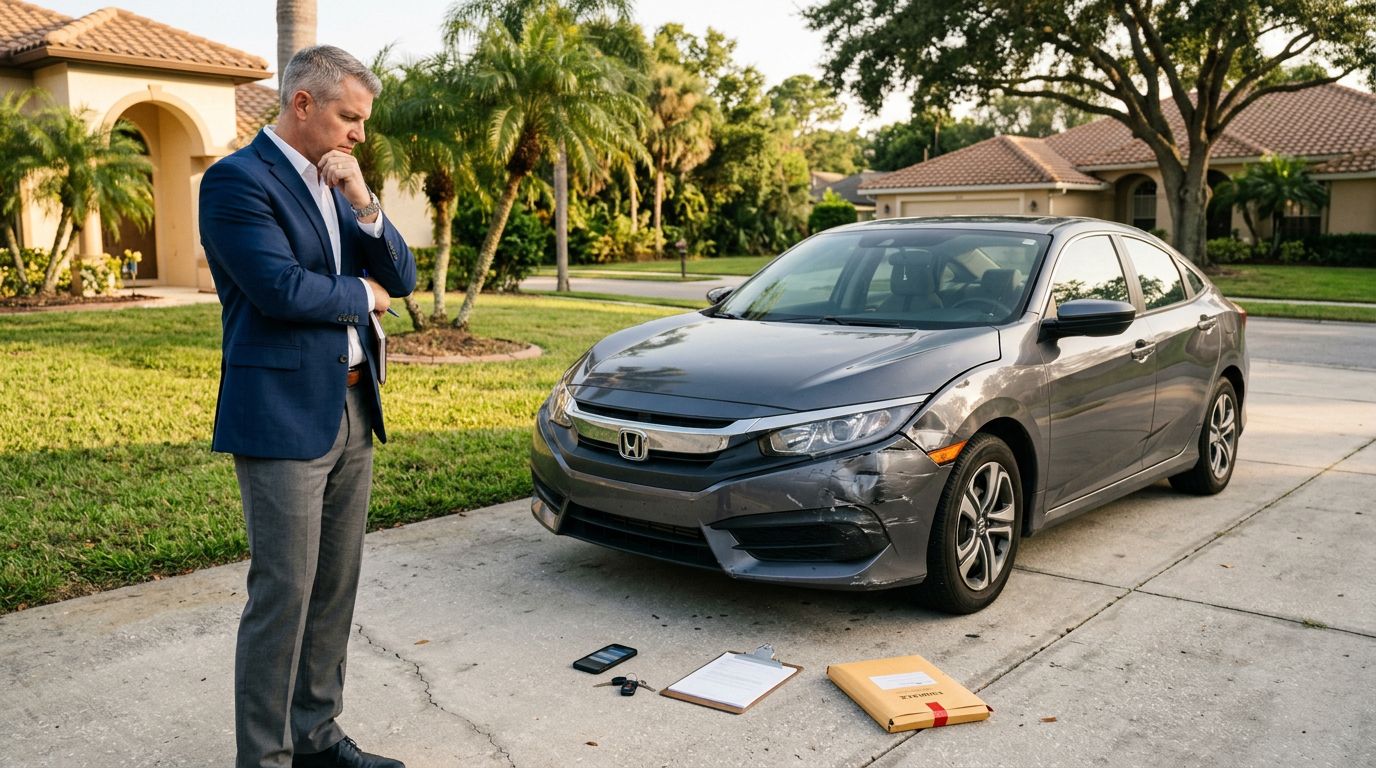
A teen driver crash can create claims against both the teen driver and the person who provided the vehicle. The driver may be liable for negligent operation, while the provider’s responsibility depends on knowledge, permission, control, causation, and damages. In a Florida negligent entrustment case, the central issue is what the provider knew, or should have known, before handing over the keys.
That evidence can disappear quickly. Text messages get deleted, vehicles are repaired, and family members may describe the same events differently. Preserving those records early helps show what the provider knew, whether the teen had permission, and how the crash caused the claimed harm.
Florida recognizes two distinct paths to responsibility for a vehicle owner. The driver’s history, the provider’s knowledge, control of the vehicle, and proof of permission can determine which theory is stronger.
When a Teen Crash Can Create Owner Liability
Florida’s dangerous instrumentality doctrine can impose vicarious liability on a vehicle owner when another person operates the vehicle with permission and causes a negligent crash. This can create vehicle owner liability without proof of the owner’s personal carelessness. The rule is often characterized as strict liability as to the owner, but it isn’t automatic. The claimant still must establish negligent operation, permission, and resulting harm.
That ownership-based theory differs from direct negligent entrustment. A negligent entrustment claim asks whether the owner knew or should have known that the teen driver was unfit, reckless, unlicensed, or otherwise unsafe.
Express permission can be direct, such as a parent giving a teen the keys. Implied permission may arise from a regular family arrangement, access to the vehicle, or a history of allowing the teen to drive. A stolen vehicle usually doesn’t create the same owner liability because the owner didn’t consent to its use.
Ownership also requires more than checking the name on a registration. Legal title, payment, insurance, possession, beneficial ownership, and practical control may all matter. A parent, business, or other person who controls the vehicle’s use may still require review, even when someone else holds the title. Learn more about Florida parent liability for teen driver crashes when the vehicle belongs to a household member.
An injured person may plead both theories in the same case. The dangerous instrumentality doctrine addresses the owner’s responsibility for the driver’s negligence. A negligent entrustment theory addresses the owner’s own decision to provide the vehicle.
Florida Negligent Entrustment: What Must Be Proven
Florida doesn’t place every negligent entrustment issue into one statutory checklist. Courts and litigants generally focus on several common-law requirements:
- The defendant owned, leased, possessed, or controlled the vehicle and had authority to allow its use.
- The defendant entrusted the vehicle to the teen driver, either expressly or through implied permission.
- The teen was an incompetent driver, unfit, impaired, unlicensed, reckless, or otherwise unsafe to operate the vehicle.
- The owner knew, or should have known, about the teen’s unfitness before allowing the use. What the owner knew before handing over the keys helps define the owner’s duty of care.
- The teen’s negligent operation caused the collision and the claimant’s resulting harm. The claimant must also prove legally recoverable damages.
The fourth element often creates the hardest dispute. An owner may admit giving permission but deny knowing about the teen’s conduct. Prior speeding tickets, crashes, DUI incidents, a suspended license, or repeated violations of driving restrictions can support actual or constructive knowledge.
A suspended license is especially useful evidence because it may show both unfitness and notice. Still, that license status alone doesn’t automatically establish liability. The evidence must connect the owner’s knowledge to the decision to allow driving.
The crash itself also matters. A teen’s troubling history doesn’t prove negligent entrustment unless the teen’s negligent driving was a proximate cause of the collision and claimed injuries. A claimant must tie the unsafe entrustment to the crash. The claimant must then prove medical losses, lost income, pain, property damage, or other recoverable damages.
Evidence That Can Prove Negligent Entrustment
A strong claim usually depends on records created before the collision. Evidence gathered after the crash can prove what happened, but earlier records often better show what the owner knew.
Records showing the teen’s reckless driving history
An investigation may include the teen’s driving record, traffic citations, crash reports, license suspensions, probation terms, and restrictions attached to a learner’s permit or intermediate license. Prior incidents involving documented underage drinking, speeding, street racing, distracted driving, or unauthorized passengers may also matter.
The timing, authenticity, and pattern are important. One old ticket may have little value without additional proof. Several recent incidents, repeated warnings, or a license suspension can support an argument that the owner should have recognized the risk.
Messages between family members can reveal direct knowledge. A parent may have written that the teen drove too fast, used a phone behind the wheel, ignored curfew, or lost driving privileges. School records, insurance communications, repair invoices, and prior police contacts may provide additional context. Preserve original messages with dates, sender information, and available metadata.
Social media posts can also matter, but they need verification. A screenshot without the original account information or date may face challenges. Investigators should preserve the source, timestamp, surrounding content, and available metadata. They should also document how the file was obtained and stored to establish its chain of custody.
Proof of permission, ownership, and control
The claim must identify who owned or controlled the vehicle. Useful records may include the title, registration, purchase documents, loan records, insurance applications, maintenance receipts, and household communications about who could use the car.
Permission evidence can include texts about borrowing the car, key access, and regular transportation arrangements. GPS history, telematics data, and statements from family members may provide additional proof. An insurance policy that lists the teen as a household driver may help show expected use, although it doesn’t automatically prove negligent entrustment. Preserve exported GPS or telematics files in their original format, and note when they were obtained.
Restrictions can be just as important. A parent may have prohibited nighttime driving or taken away the keys after an earlier incident. If messages show that the parent restored access despite knowing the teen continued to violate those rules, the evidence may support direct negligence.
A title search can become more complicated when a vehicle belongs to a business, trust, spouse, or leasing company. The person with the financial interest or practical control may differ from the person listed on paper. An attorney can compare registration records with payment, insurance, maintenance, and possession evidence.
Evidence connecting the crash to the injury
Police reports, photographs, witness statements, surveillance video, vehicle damage, event data recorder information, and phone records can help establish how the teen drove. Accident reconstruction may be necessary when speed, lane position, braking, or distraction is disputed. Preserve original photographs, videos, and device data when possible, along with their file dates and collection details.
Medical records should connect the injury to the collision and document treatment over time. Pay records, employment documents, and disability records can support lost-income claims. Preserve damaged property before repairs when possible, and keep receipts for towing, storage, rental transportation, and replacement items.
A claimant should avoid deleting social media posts or guessing about speed. Before giving a recorded statement, a car accident attorney can explain the insurer’s questions and how answers could later be used. Early statements can become evidence in a later dispute over fault or the owner’s knowledge.
Owner Liability Caps, Insurance, and Rental Vehicles
Florida’s statutory caps for certain private vehicle owners are important in a claim. Under section 324.021(9)(b)3, a natural person who loans a vehicle to a permissive user may face liability up to these statutory limits. These limits include $100,000 per person and $300,000 per incident for bodily injury, plus $50,000 for property damage, depending on the facts and applicable law. These bodily injury limits don’t guarantee a particular recovery; the official Florida statute contains the operative language.
The statute also addresses additional economic damages in some cases when the permissive driver lacks $500,000 in combined coverage. Financial responsibility and available recovery may depend on the driver’s limits. Amounts recovered from the driver or insurer may reduce available recovery. The parties involved and type of loss can also affect the outcome.
These limits concern statutory owner liability based on permissive use. A negligent entrustment claim alleges that the owner personally acted negligently by providing the vehicle to an unsafe driver. That is a direct-negligence theory. A claimant may argue that the statutory limits don’t apply in the same way as ownership-based liability. Insurers may challenge that argument, so the complaint and supporting evidence matter.
The full insurance coverage picture may include the owner’s policy, the teen’s policy, household-driver provisions, permissive-use provisions, an umbrella policy, and uninsured or underinsured motorist coverage. Policy language can affect available compensation, even when liability is clear.
Rental and leasing companies require separate analysis. The federal Graves Amendment generally protects companies in the business of renting or leasing vehicles from vicarious liability based only on ownership. That protection doesn’t erase claims based on the company’s own negligent maintenance, negligent hiring, or negligent entrustment. The rule appears in 49 U.S.C. section 30106.
Passenger Claims and Florida Filing Deadlines
An injured passenger can pursue a personal injury claim without driving or controlling the car. The claim may involve the teen driver, the vehicle owner, or multiple insurance policies. If the owner gave permission and the teen operated the car negligently, Florida’s dangerous instrumentality doctrine may apply. Evidence that the owner knowingly entrusted the vehicle to an unsafe teen can support a separate negligent entrustment claim.
A passenger may have claims involving another driver, an employer, or multiple insurance policies. Florida’s no-fault system may provide initial Personal Injury Protection benefits. Pain-and-suffering lawsuits generally require a qualifying serious injury, permanent injury, significant scarring or disfigurement, or death. More information is available about Florida passenger injury claims.
For most negligence-based injury claims arising on or after March 24, 2023, Florida generally provides two years to file a lawsuit. Older crashes may fall under a different deadline. A wrongful death lawsuit, insurance claim, vehicle-damage claim, or government claim may follow separate rules. Review the Florida car accident lawsuit deadline before assuming there is time to wait.
What to Do After a Teen Driver Crash
Start by obtaining medical care and reporting the collision. Then preserve physical and digital evidence, including the vehicle, photos, video, medical records, and communications with the owner or driver. Don’t repair or dispose of important evidence before documenting its condition.
Request policy information, including all potentially applicable insurance coverage. Identify every person or company connected to the vehicle’s ownership, possession, and control. A car accident attorney can send preservation letters, obtain driving records, review policies, interview witnesses, and compare the owner’s statements with messages and prior restrictions.
This owner-liability theory often depends on facts outside the crash report. The report may establish the driver’s conduct, while texts, driving records, household rules, and ownership documents may show what the owner knew before granting access.
Frequently Asked Questions
Does a parent automatically become liable when a teen causes a crash?
No. Florida may impose owner liability under the dangerous instrumentality doctrine when a teen operates the vehicle with permission, but personal negligent entrustment requires proof that the parent knew or should have known the teen was unsafe. The claimant must also prove negligent operation, causation, injury, and damages.
What evidence can support a Florida negligent entrustment claim?
Useful evidence may include driving records, traffic citations, license suspensions, prior crash reports, text messages, household restrictions, insurance records, and proof of who controlled the vehicle. The evidence should show what the owner knew before allowing the teen to drive.
Does a suspended license prove negligent entrustment?
A suspended license can support an argument that the teen was unfit and that the owner had notice of the risk. It does not automatically establish liability because the claimant must connect the owner’s knowledge, permission, the teen’s negligent driving, and the resulting harm.
How long does someone have to file after a Florida teen driver crash?
For most negligence-based injury claims arising on or after March 24, 2023, Florida generally provides two years to file a lawsuit. Older crashes and claims involving wrongful death, property damage, insurance coverage, or a government entity may follow different deadlines.
Conclusion
A teen driver’s crash doesn’t automatically make a parent or vehicle owner personally negligent. Liability turns on permission or control, the teen’s unsafe history, the owner’s pre-crash knowledge, negligent operation, causation, injury, and available damages.
An ownership-based theory may arise under the dangerous instrumentality doctrine when the owner provided or controlled the vehicle. Direct negligent entrustment focuses on the owner’s decision to provide the car despite known risks. Early collection of messages, records, vehicle evidence, and ownership documents can determine whether both theories are supportable.