
Florida Wrong-Way Crash Claims: Using 911 Call Evidence
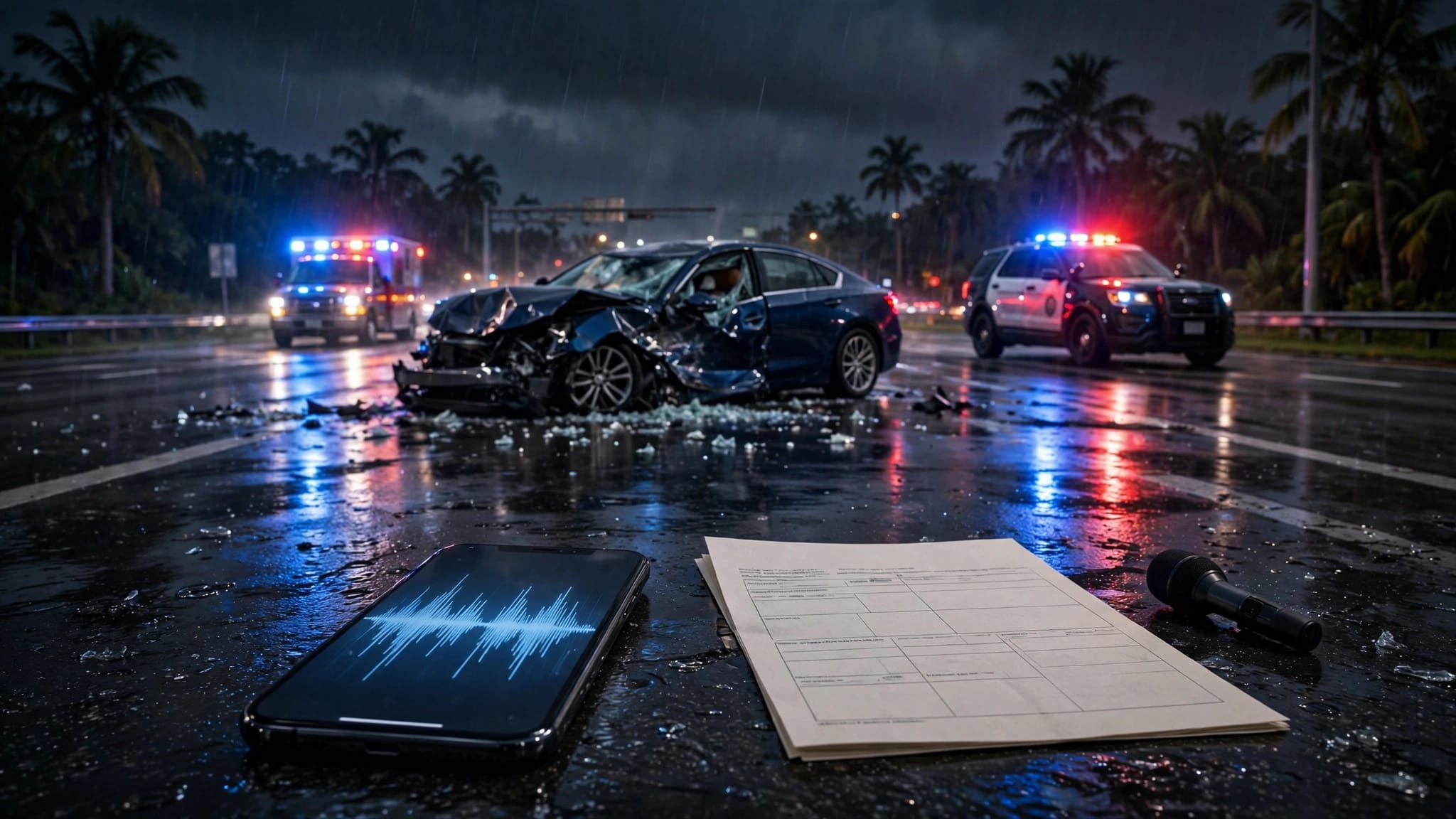
A wrong-way collision can leave little doubt about the danger, yet the insurance claim still depends on proof. In Florida wrong-way crash claims, a 911 call can preserve the first account of a vehicle traveling against traffic before witnesses have time to compare stories.
That recording is only one part of the case. Photos, vehicle damage, dispatch records, medical care, and video often determine whether an insurer accepts responsibility or tries to shift blame.
Fast action protects the records that can explain what happened in the seconds before impact.
Key Takeaways
- A 911 recording may capture an early report of the wrong-way vehicle, its location, direction, condition, or the immediate aftermath.
- Ask for both the audio and computer-aided dispatch records, often called CAD logs. The timestamps can establish when warnings and emergency calls occurred.
- Preserve the original version of any dashcam or phone video. Social media clips and screenshots may omit important details.
- A crash report can identify witnesses and document the scene, but it does not decide civil fault by itself.
- Florida’s modified comparative negligence rule can reduce compensation based on your percentage of fault. A finding above 50% generally bars recovery in most negligence cases.
- Prompt medical care protects your health and creates records that connect the collision to your injuries.
Why Florida Wrong-Way Crash Claims Need More Than an Obvious Fact Pattern
A driver heading into oncoming traffic often appears clearly responsible. However, insurers still investigate speed, lane position, visibility, evasive action, impairment, road design, and the sequence before impact.
Strong cases connect the wrong-way movement to the collision and the injuries that followed. The evidence should tell one consistent story instead of relying on an assumption that the other driver must be at fault.
The scene may show direction of travel
Photograph “Do Not Enter” signs, one-way arrows, exit ramps, lane markings, debris, gouges in the pavement, and each vehicle’s final position. Wide images establish the setting. Close photographs of paint transfer, crushed panels, airbags, and broken glass can help explain the angle and force of impact.
Damage patterns do not decide a case alone. Still, they may support reconstruction evidence when drivers disagree about which vehicle crossed into the wrong lane.
For a closer look at the records that commonly support Florida wrong-way crash claims, preserve the scene evidence before vehicles are repaired or removed.
Insurers may still argue shared fault
The at-fault driver’s insurer may claim you drove too fast, failed to brake, used a phone, drifted from your lane, or had time to avoid the collision. Those defenses can arise even when the other vehicle entered against traffic.
Do not estimate speed, distance, or reaction time when you don’t know the answer. A factual statement is stronger than a guess that later conflicts with video, physical evidence, or electronic vehicle data.
A wrong-way allegation is powerful evidence, but the claim is strongest when independent records confirm where each vehicle traveled and when the danger became visible.
How 911 Audio and Dispatch Logs Can Help
The first emergency call often captures information before memories fade and before drivers speak with insurers. A caller may report a vehicle traveling the wrong direction, identify the roadway or ramp, describe a near miss, or report the collision itself.
That evidence can clarify the timeline. It does not automatically prove negligence, and the caller may have had only a partial view.
The recording can establish an early timeline
A 911 caller may describe a wrong-way car before the impact occurs. If several callers report the same vehicle, their calls can help establish its path and the time law enforcement received warnings.
Audio may also document weather, traffic conditions, a driver’s apparent impairment, or immediate statements made at the scene. The dispatcher can ask follow-up questions that put a location and time on the report.
Listen for details that can be checked against other proof. A reported vehicle color, roadway direction, exit number, or approximate time may lead to video, witnesses, or responding officers.
CAD logs fill gaps the audio cannot
CAD logs are dispatch records created as calls come in. They can show call times, units assigned, updates sent to responders, lane closures, and the reported location of the wrong-way vehicle.
Requesting both records matters because one may contain details absent from the other. The audio may capture a caller’s description, while the CAD log may show when dispatch notified a trooper or when a second call reported a crash.
Personal identifying information may be redacted, and an agency may withhold material connected to an active investigation. Still, the remaining records can provide valuable timing evidence.
Request and Preserve 911 Records Quickly
Start by identifying the agency that received the call. Depending on the location, that may be a city police department, county sheriff’s office, fire-rescue communications center, Florida Highway Patrol dispatch center, or another public safety answering point.
Provide the crash date, approximate time, roadway, county, involved names if known, and incident or case number. Ask for “911 audio,” “CAD or dispatch logs,” call notes, and the agency’s incident number.
Keep the request narrow and clear
A broad request can delay a response. State the approximate time range and exact location, such as an interstate exit ramp, named intersection, or mile marker. Ask whether fees apply and request an estimate before the agency processes a large file.
Keep copies of every request and response. If a recording is unavailable, ask whether the agency can confirm the retention status, the incident number, and whether another agency handled the original call.
A detailed guide on obtaining 911 call audio after a crash can help organize the information needed for a records request.
Preserve private evidence before it disappears
Businesses, apartment complexes, toll facilities, and nearby homes may have cameras that recorded the approach to the crash. Many systems overwrite footage within days or weeks. Write down camera locations, business names, and the estimated time of the collision.
Save original video files, original photographs, and complete phone recordings. Do not rely only on clips shared through text or social media. Those versions may lose metadata, sound, or the seconds before the impact.
An attorney can send preservation letters to request that a business, insurer, or other driver retain relevant video, vehicle data, and physical evidence.
Build a Complete Evidence File
911 evidence gains value when it matches the rest of the record. A clear claim file pairs the first emergency report with physical proof, neutral witnesses, medical documentation, and records from the vehicles.
Florida Highway Safety and Motor Vehicles explains that crash reports are available through the state portal, and its crash guidance for drivers confirms that personal injury protection coverage is generally limited to $10,000 per person per crash.
Review the crash report without treating it as final
A Florida Traffic Crash Report can list vehicles, witnesses, damage, citations, officer observations, and a diagram. Under state reporting rules, a Long Form report must be submitted within 10 days after the law enforcement investigation ends, according to FLHSMV’s crash-reporting FAQ.
Read the report once it becomes available. Check the location, direction of travel, vehicle descriptions, witness names, and diagram. A wrong street, lane, or travel direction can create a serious dispute with an insurer.
A citation may support your position. Yet a ticket does not establish civil liability, and the absence of a citation does not erase negligence. Independent evidence remains important when a report contains an error.
Protect vehicle data and medical proof
Many newer vehicles store event data that may show speed, braking, throttle use, steering input, and seatbelt status during the seconds around a collision. Repairs, salvage, or storage-yard handling can erase or overwrite that information.
Preserving Florida EDR evidence after a car accident may be especially helpful when the other driver denies traveling the wrong way or claims you could have avoided the crash.
Medical records must also track the harm. Tell every provider how the collision happened and report all symptoms, including headache, dizziness, numbness, sleep disruption, and reduced movement. Keep discharge papers, imaging results, prescriptions, therapy notes, work restrictions, receipts, and pay records.
Insurance Rules, Fault, and Filing Deadlines
Florida’s no-fault system may provide early PIP benefits, but PIP does not resolve liability for serious injuries. Treatment generally must begin within 14 days of the crash to preserve PIP benefits, so medical attention should not wait while you collect evidence.
A serious-injury claim may involve the wrong-way driver’s bodily injury coverage, uninsured or underinsured motorist coverage, and other available policies. The facts and coverage limits determine the proper claim path.
Florida’s two-year negligence deadline
For most negligence actions arising from injuries after March 24, 2023, Florida law generally provides a two-year filing period. The date can vary based on the claim type and circumstances, so review the deadline early rather than relying on an insurer’s promise that a claim remains open.
Florida’s current limitations statute lists negligence actions in the two-year category. Settlement discussions and a pending insurance claim do not automatically stop the filing deadline.
Shared fault can change the recovery
Florida uses modified comparative negligence in most injury cases. If you are 20% at fault, the recoverable damages may be reduced by 20%. A person found more than 50% responsible generally cannot recover damages.
The current Florida comparative-fault statute makes each alleged percentage matter. This is why lane position, warning signs, braking evidence, 911 timestamps, and video deserve prompt attention.
Handle Insurer Contact With Care
Report the crash to your own insurer promptly and comply with policy requirements. However, stay with the facts when speaking to the other driver’s insurer. Do not accept its description of the wreck or speculate about facts you have not reviewed.
A recorded statement can become a source of dispute if it includes an estimate about speed, distance, lighting, or fault. “I don’t know” is more accurate than guessing. Before giving a detailed recorded statement to an opposing insurer, consider speaking with an attorney.
Early settlement offers may arrive before medical treatment is complete. A release can end the claim even if surgery, therapy, chronic pain, or lost earning ability becomes clear later. The value of a claim depends on documented losses, available coverage, injury severity, and provable fault.
Frequently Asked Questions
Can a 911 call prove the other driver caused the crash?
A 911 recording can support a claim when it reports a wrong-way vehicle, identifies its location, or captures an immediate description of the collision. However, it rarely proves every issue by itself. Video, damage patterns, dispatch logs, witnesses, and medical records should support the same account.
What if the police report gets the direction of travel wrong?
Preserve evidence that shows the correct facts. That may include dashcam footage, phone video, scene photographs, vehicle damage, 911 records, and witness contact information. An officer may correct factual errors through a supplement, but the broader claim can still rely on independent proof if the report remains disputed.
Should I repair my vehicle before the insurance claim ends?
Photograph the vehicle thoroughly before repairs. If fault is disputed or injuries are serious, keep the vehicle available for inspection until the damage is documented and any needed data is preserved. Repairs or disposal can make it harder to show the impact sequence later.
A Clear Record Can Protect Your Claim
The first 911 call can preserve a critical account of a wrong-way danger, but it works best alongside video, dispatch logs, vehicle evidence, and medical records. Each record should confirm the same basic timeline.
In Florida wrong-way crash claims, prompt preservation leaves less room for an insurer to replace facts with assumptions.