
Florida Apartment Mold Claims: Maintenance Records
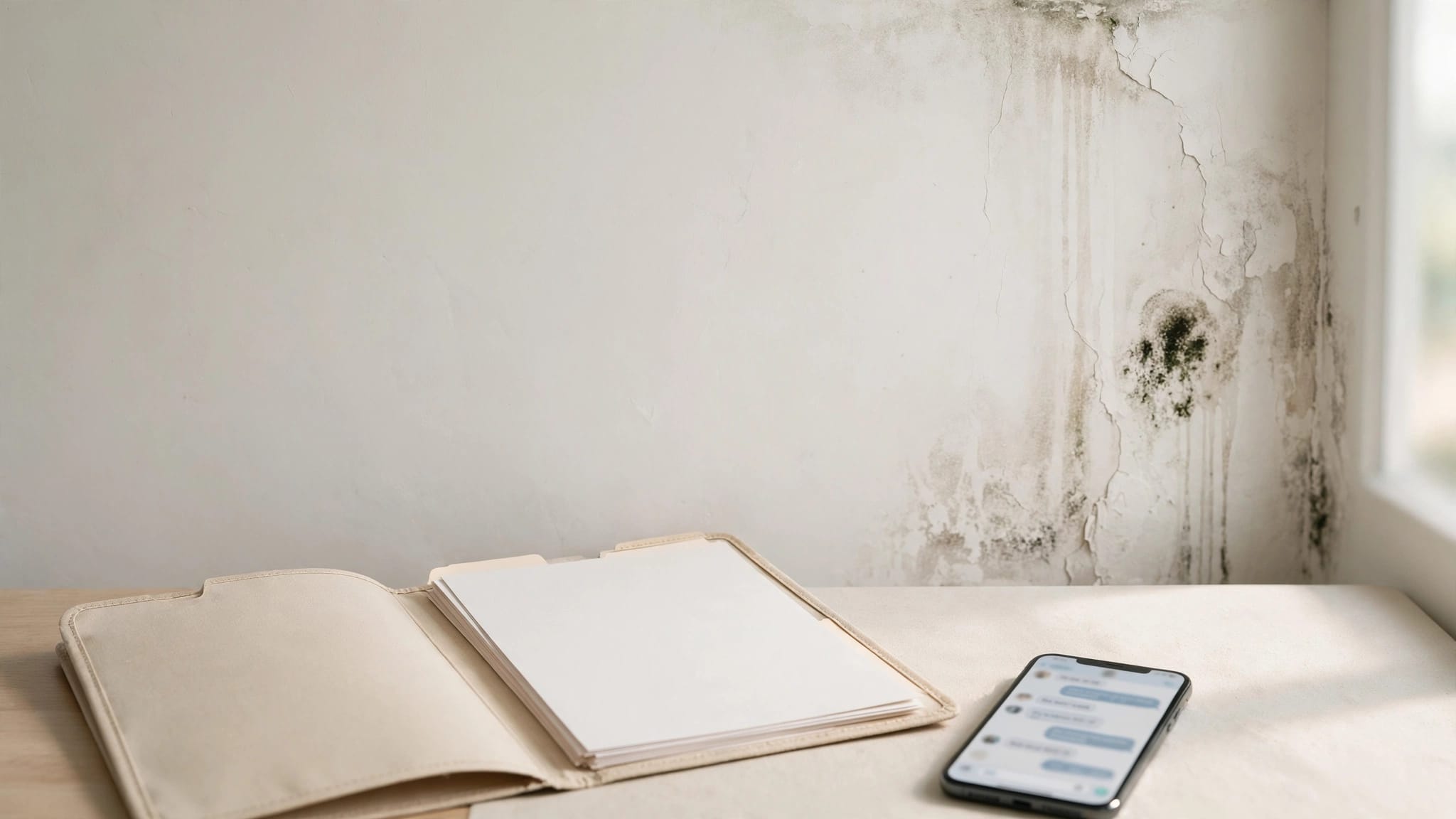
A maintenance ticket marked “closed” doesn’t establish that your apartment’s recurring leak was fixed. Florida apartment mold claims often depend on what management knew, what workers repaired, and whether medical evidence connects exposure to an injury.
If you’re facing health problems and unanswered repair requests, preserve the full timeline, including records created before mold became visible. Start by separating the landlord’s maintenance duties from the evidence needed to pursue compensation.
Key Takeaways
- Dated complaints and repair records can show when management learned about moisture problems and how it responded.
- Visible mold or an environmental test doesn’t, by itself, prove that a landlord caused an illness.
- Keep original photographs, complete messages, medical records, and receipts before repairs or relocation change the evidence.
- Rental remedies and personal injury claims have different requirements, so get legal advice before withholding rent or ending your lease.
What Florida Law Requires of Apartment Landlords
Mold disputes often involve roof leaks, plumbing failures, or persistent moisture. The legal analysis starts with the condition, the lease, and applicable maintenance requirements.
Maintenance duties under section 83.51
Florida’s landlord maintenance statute requires compliance with applicable building, housing, and health codes. Where those codes don’t apply, section 83.51 identifies duties involving structural components and plumbing.
The statute doesn’t expressly mention mold. However, water intrusion may implicate those duties, local codes, or lease obligations.
Responsibility also depends on who controlled the moisture source. A property manager may handle complaints, while a contractor performs repairs. Leases and service agreements help clarify each party’s role. Avard Law’s discussion of Florida premises liability duties addresses why control matters.
Written notice and the seven-day provision
Under Florida’s rental termination provisions, certain material failures can support termination if they continue for seven days after delivery of the required written notice. The notice must describe the noncompliance and state the tenant’s intention to terminate.
That provision isn’t a universal seven-day mold-removal deadline. Its requirements and exceptions need review before you act.
An ordinary maintenance request may establish notice without satisfying every requirement for a rental remedy. Don’t assume reporting mold authorizes you to stop paying rent.
How Maintenance Records Support a Mold Claim
Maintenance records can connect a complaint to an inspection, repair decision, or unresolved leak. Their value depends on the details, not simply the number of tickets.
Complaints establish what management knew
Save emails, texts, portal submissions, and acknowledgment messages. Include attachments and complete conversations rather than isolated screenshots.
A report identifying water dripping above the bedroom window gives more useful notice than a general request for maintenance. Preserve the date, location, recipient, and ticket number.
Earlier reports from neighbors may also matter when they concern the same roof, plumbing line, or moisture source. However, a complaint about another building doesn’t automatically establish knowledge of your unit’s condition.
Avard Law’s guidance on landlord failure-to-repair claims explains how recurring hazards and unanswered requests can support notice evidence.
Repair histories show what workers actually addressed
Trace each request through assignment, inspection, work performed, and any follow-up. Technician notes and contractor invoices may explain whether workers corrected a leak or treated only the affected surface.
Compare the repair location with your complaint. Work in a shared hallway may not resolve moisture inside your apartment.
A closed work order records an administrative status. Technician notes, photographs, and later complaints help establish whether the underlying condition remained.
Repeated callbacks can be important, but they don’t automatically prove negligence. Also, repairs after an injury face evidentiary limits; a later repair isn’t automatically an admission of fault.
Getting Records From Owners, Managers, and Agencies
Different record holders may have different parts of the history. An owner’s file may omit technician notes held by a plumbing company or messages received by management.
Request private records and preservation separately
Ask for existing work orders, inspections, repair photographs, contractor invoices, and communications concerning your unit and the suspected moisture source. Identify the address, unit number, relevant dates, and affected rooms.
Private landlords don’t automatically have to provide every requested document voluntarily. An attorney may obtain appropriate records through formal discovery if litigation proceeds.
A preservation request has a separate purpose: protecting evidence against deletion or disposal. It can identify electronic maintenance histories, messages, reports, and repair photographs. Keep proof of delivery.
Search public files by address and date
City or county building departments may hold code-enforcement complaints, inspection reports, permits, and correction notices. Request existing records using the street address and a defined date range.
Check whether a report covers your apartment, a common area, or another building. Its inspection date also limits what it establishes.
A clean inspection doesn’t rule out a later leak or hidden condition outside the inspection’s scope. Likewise, a citation can support the maintenance history without proving that mold caused a particular illness.
Public-records requests don’t replace requests to preserve private maintenance files.
Medical Evidence Must Match the Exposure History
An environmental finding and a medical diagnosis answer different questions. A claim needs evidence connecting the relevant apartment conditions, the alleged failure, and documented harm.
Give your clinician an accurate timeline
Tell your treating provider when you moved in, when moisture or mold appeared, and when symptoms began. Mention repairs, time spent away, and any changes during those periods.
Keep visit notes, referrals, testing results, prescriptions, and follow-up records. For a child, preserve relevant pediatric records and recommended evaluations.
Describe symptoms accurately without deciding their cause yourself. Asthma, allergies, infections, and other exposures may require medical consideration. Improvement away from home can be relevant, but it doesn’t establish causation by itself.
Understand what environmental testing can establish
The Florida Department of Health doesn’t recommend routine mold testing or sampling to determine whether a mold problem exists or identify its type.
Testing may still have a role in a case-specific professional assessment. Its usefulness depends on the question, location, collection method, and timing.
Review whether samples came from your bedroom, a hallway, or another unit. A report prepared after extensive repairs may describe different conditions than those present earlier.
Avard Law’s guidance on Florida mold injury evidence addresses the separate questions of notice, control, causation, and loss. Neither a positive sample nor visible growth replaces competent medical evidence.
Preserve the Apartment Timeline Without Delaying Safety
Get medical attention and address urgent hazards first. You don’t need to remain in an unsafe space to protect a potential claim.
When it’s safe, photograph entire rooms before taking close views of stains, wet materials, or damaged surfaces. Keep original files with date information intact. Record odors in dated notes, since photographs can’t capture them.
After a phone conversation, write down who participated and what was discussed. Then send a factual written follow-up. Avoid guessing how long a hidden leak existed.
The Florida Department of Health recommends indoor humidity below 60%. Its storm-cleanup guidance also recommends drying wet materials promptly, ideally within 24 to 48 hours. These are prevention recommendations, not automatic legal deadlines.
Don’t disturb suspected mold to collect evidence yourself. If materials must be removed for safety, photograph them first when practical and retain available contractor documentation.
Before moving, save portal records, the lease, move-out communications, and relocation receipts. Access to a tenant account may end after the tenancy.
Document Losses and Review Filing Deadlines Early
Maintenance records establish only part of a Florida apartment mold case. A personal injury claim generally requires proof of duty, breach, causation, and damages.
Preserve medical bills, treatment expenses, wage records, and documented work restrictions. Keep receipts and photographs for damaged belongings or relocation costs. Their recoverability depends on the claim and supporting evidence; expenses aren’t automatically reimbursed because mold was present.
Tenant conduct can also affect responsibility. Section 83.51 contains limits concerning conditions caused by negligent or wrongful conduct of tenants or certain occupants. Preserve facts about ventilation, access for repairs, and the source of moisture rather than assuming either side caused it.
Many Florida negligence claims have a two-year filing period. The applicable deadline depends on the claim, relevant dates, defendant, and exceptions. Public housing cases can raise additional government-claim requirements.
An open ticket, records request, or insurance discussion doesn’t automatically pause a filing deadline. Seek legal review before waiting for a complete maintenance file.
Frequently Asked Questions
Does visible mold mean I have a personal injury claim?
Visible mold documents a condition that needs attention. A personal injury claim also needs evidence of a legal duty, a failure to meet it, causation, and damages. Illness and landlord responsibility require separate analysis.
What if management painted over the affected wall?
Keep earlier photographs, complaints, and the dates of the work. Ask for contractor notes and records showing whether workers addressed the moisture source. Painting changes what a later inspection can observe, so the earlier history matters.
Can an attorney help if the landlord won’t release records?
An attorney can identify likely record holders, send targeted preservation requests, and evaluate available methods for obtaining documents. Formal discovery may be needed. A refusal to provide records voluntarily doesn’t, by itself, establish negligence.
What should I bring to a case evaluation?
Bring your lease, complaint history, photographs, available repair reports, medical records, and expense documentation. Include a dated account of symptoms, repairs, and any move. You don’t need every landlord record before asking for advice.
A Strong Claim Starts With a Reliable Timeline
A ticket marked “closed” is one entry in a larger history. Matching dates and locations across complaints, repairs, photographs, and medical records gives an attorney a firmer basis for evaluating responsibility.
Protect your health while preserving that history. Seek timely legal review so missing records or unresolved maintenance requests don’t delay an assessment of your rights.