
Florida Construction Injury Claims: General Contractors
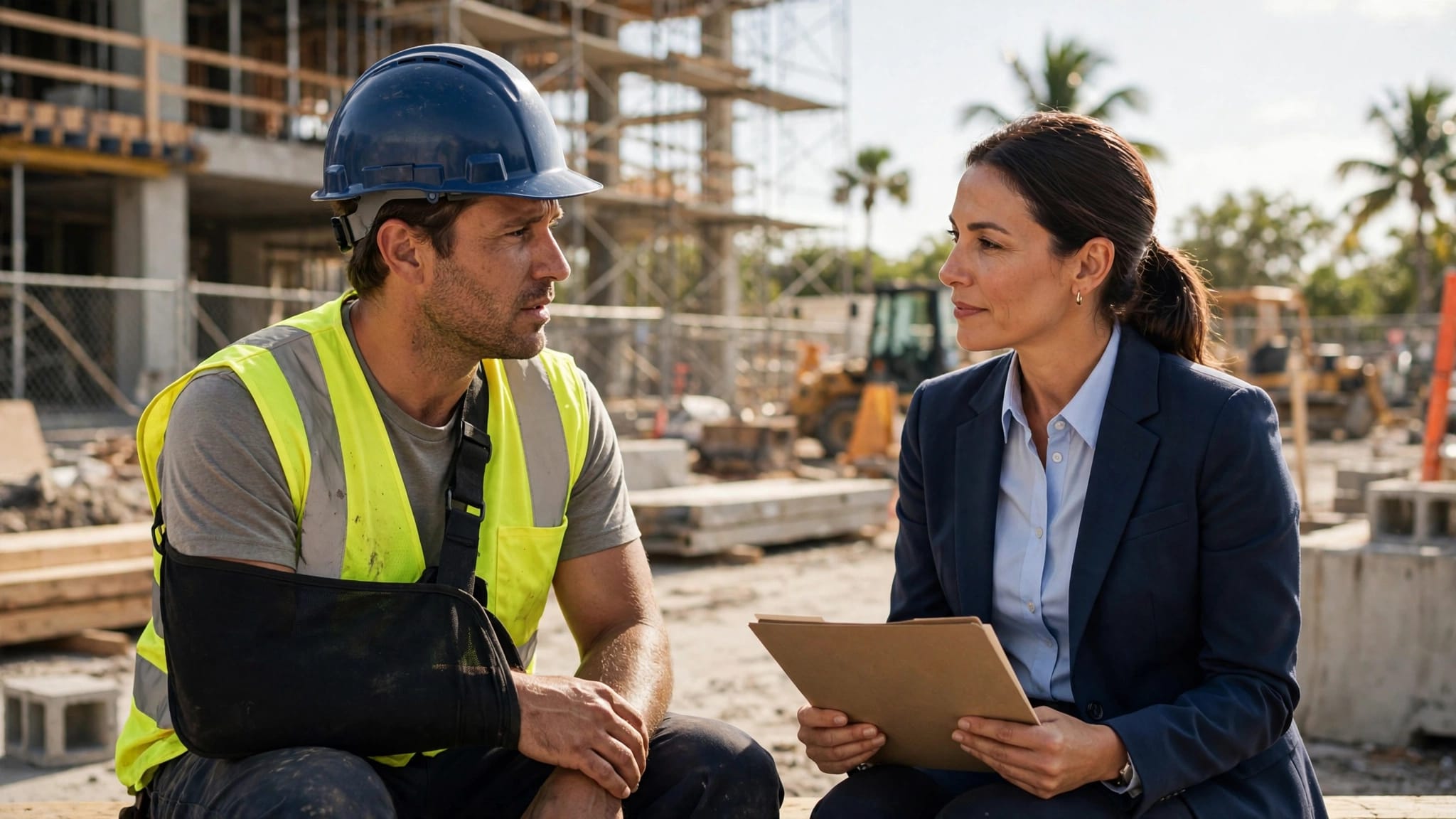
The general contractor’s name on a construction project doesn’t automatically make it a defendant you can sue. Florida construction injury claims often turn on workers’ compensation immunity, even when another company issued your paycheck.
If you’ve been hurt, medical bills and missed work demand answers before coverage disputes end. Your options depend on the contractual chain, insurance coverage, and evidence of legal fault. Start by identifying whether Florida law treats the general contractor as your employer.
Florida construction injury claims start with employment status
A construction site may have a property owner, general contractor, and several subcontractors. Those business relationships help determine which claims you can pursue.
When a general contractor is a statutory employer
Your employer isn’t always limited to the company that hired you. Under Florida Statutes section 440.10, a contractor that sublets part of its contractual work can become responsible for workers’ compensation coverage for subcontractor employees.
That responsibility can make the general contractor a statutory employer. When required coverage is secured, workers’ compensation immunity can protect it against an ordinary negligence lawsuit.
The inquiry centers on the contractual chain: the contractor’s obligation to another party and its delegation of that work. A project title or property ownership alone doesn’t establish statutory-employer status.
Documents that clarify your working relationship
Relevant records include the main construction contract, subcontract agreements, payroll records, insurance policies, and exemption documents. These records help establish who employed you and which companies had coverage obligations.
Also preserve hiring messages, work assignments, and communications about who paid and supervised you. A “1099 contractor” label doesn’t resolve every coverage question.
Avard Law Offices explains workers’ compensation eligibility for contractors, including why construction workers should examine the actual working relationship. Don’t assume you lack benefits simply because someone called you an independent contractor.
When workers’ compensation immunity may not apply
Florida’s workers’ compensation exclusivity law generally replaces covered employer liability with workers’ compensation benefits. A negligence lawsuit requires a legal basis for proceeding outside that protection.
No statutory-employer relationship or missing required coverage
A general contractor that isn’t your employer or statutory employer may face a third-party negligence claim. You must still prove a legal duty, a breach, causation, and damages.
Failure to secure required compensation can also affect immunity. However, an uninsured subcontractor doesn’t automatically make the general contractor subject to suit. The contractor’s obligations and available coverage require separate review.
For coverage disputes, Avard Law Offices discusses claims involving uninsured employers. Missing paperwork and an actual failure to secure required coverage are different problems; either deserves investigation.
The narrow intentional-tort exception
Florida sets a demanding standard for an intentional-tort claim against an otherwise protected employer. The exception requires clear and convincing evidence of deliberate intent to injure, or satisfaction of the statute’s virtual-certainty requirements.
The second route involves prior similar accidents or explicit warnings, employer knowledge, worker unawareness, and deliberate concealment or misrepresentation that prevented an informed judgment.
Ordinary carelessness doesn’t meet that standard. Even dangerous conduct requires analysis under the statutory requirements. Serious injuries alone don’t prove an intentional tort or remove workers’ compensation immunity.
What a negligence case against a general contractor requires
Once immunity is addressed, the investigation turns to the contractor’s conduct. An injury on its project doesn’t, by itself, prove liability.
Connect the contractor’s conduct to the accident
A negligence case requires evidence of a duty owed to you and conduct that breached that duty. It must also connect that conduct to your injury.
Construction contracts, work assignments, incident records, and witness accounts can help identify the responsible company. However, no single document automatically establishes liability.
For falls, falling materials, or equipment incidents, investigators need the sequence of events and each company’s role. A contractor’s presence at the site doesn’t answer those questions. The evidence must support a recognized legal claim against that particular defendant.
Prove the medical and financial consequences
Medical records must connect the accident to the injuries for which you seek compensation. Prompt treatment also creates a record of symptoms before memories fade or accounts change.
Describe symptoms accurately, including limitations that develop after the initial visit. If you had an earlier back, shoulder, or knee condition, explain the difference between your prior symptoms and current problems.
Work restrictions, missed-shift records, and pay information document lost income. For lasting injuries, medical opinions may support future care needs and reduced earning capacity. Avoid guessing at future losses without supporting evidence.
Workers’ compensation and a third-party claim cover different losses
Workers’ compensation generally provides benefits for covered work-related injuries without requiring proof of employer negligence. Those benefits may include authorized medical treatment and wage-replacement payments under Florida law.
However, workers’ compensation doesn’t ordinarily compensate pain and suffering. It also doesn’t necessarily replace every dollar of lost earnings.
An eligible third-party injury claim can seek broader damages, including pain and suffering, medical expenses, and lost earning capacity. Recovery still depends on liability, proof of losses, and applicable legal limits.
Avard Law Offices explains third-party claims for injured workers and how they can exist alongside workers’ compensation. Florida construction injury claims require coordination when both routes are available.
The workers’ compensation carrier may assert reimbursement rights against a third-party recovery. Therefore, a settlement must account for benefits already paid and any applicable lien.
A third-party settlement offer needs a net-recovery review. Carrier reimbursement, fees, and costs can change what remains for the injured worker.
Accepting benefits doesn’t automatically establish that every other company is immune. Likewise, receiving benefits doesn’t automatically create a separate negligence claim. Each defendant’s legal relationship to the worker requires its own analysis.
Preserve construction-site evidence before conditions change
Construction projects change daily. Equipment moves, crews finish their assignments, and temporary structures disappear. Evidence preservation should begin while responsibility is still under investigation.
Keep the records you can safely obtain
Photograph the accident location and relevant equipment when you can do so safely and lawfully. Keep original files with their date information intact.
Save the incident report, witness contact information, work instructions, and messages about the accident. Write down who received your injury report and when.
Identify witnesses by employer as well as name. Workers employed by different companies may know different parts of the event.
Don’t enter restricted areas or handle damaged equipment to gather proof. Tell your attorney where the equipment is and who controls it.
Request records held by other companies
Relevant evidence may include surveillance footage, daily project logs, inspection records, equipment maintenance files, and earlier incident reports. Contracts and insurance records also help resolve immunity questions.
An attorney can identify the companies holding those materials and send targeted preservation requests. A request doesn’t guarantee that records exist, but early action helps identify what needs protection.
Compare the company’s incident account with photographs, medical records, and witness statements. Conflicts deserve investigation rather than an assumption that the first written report is complete or correct.
Reporting and lawsuit deadlines are separate
Florida construction injury claims can involve more than one deadline. Reporting an accident, seeking compensation benefits, and filing a negligence lawsuit are separate steps.
Report the injury and review the benefits deadline
Florida generally requires injured employees to notify their employer within 30 days, subject to statutory exceptions. Report the injury promptly and keep written confirmation.
The Florida Division of Workers’ Compensation’s injured worker FAQs explain that late reporting can jeopardize a claim. Employers generally must report an injury to their carrier within seven days after learning about it.
A Petition for Benefits has a separate deadline, generally two years after you knew or should have known the injury was work-related. Authorized treatment and benefit payments can affect the calculation. An accident report isn’t the same as filing a petition.
Calculate the civil deadline without waiting for negotiations
For many negligence claims accruing on or after March 24, 2023, the general lawsuit filing period is two years. Florida’s statute of limitations lists negligence actions in that category.
The correct date depends on the claim, accident date, defendant, and other circumstances. Older incidents and claims involving government entities require separate review.
Settlement discussions, an open insurance file, and pending records requests don’t automatically pause the filing period. Don’t wait for treatment to end before checking the deadline.
Shared fault and settlement terms can affect recovery
A contractor or insurer may argue that your actions contributed to the accident. Those allegations require evidence, just as your allegations against the contractor do.
Under Florida’s comparative fault statute, damages generally decrease by the injured person’s percentage of fault. In negligence actions subject to the modified rule, a person more than 50% responsible for their own harm cannot recover.
That rule concerns civil negligence recovery. It doesn’t convert workers’ compensation into a fault-based benefits system.
An adjuster’s proposed percentage isn’t a court finding. Review whether photographs, work instructions, and witness accounts support the allegation.
Before signing a settlement release, identify the parties and claims it covers. Also review future treatment needs, wage losses, and reimbursement obligations. An early payment can resolve claims before the full medical picture is clear.
What an attorney should review before pursuing the contractor
A useful consultation addresses both workers’ compensation and potential third-party liability. Bring your accident timeline, employer information, medical records, incident report, and insurer correspondence.
The review should answer these questions:
- Does the general contractor qualify as your statutory employer, and was required compensation coverage secured?
- If immunity doesn’t apply, what evidence supports a negligence claim against that contractor?
- Which reporting and filing deadlines apply, and what evidence needs immediate preservation?
An attorney should also identify other potentially responsible parties without assuming every project participant can be sued. The available claims may differ for a subcontractor, equipment supplier, property owner, or outside driver.
Avard Law Offices offers free case evaluations for injured Floridians. Early review can clarify the claim path before missing records, disputed coverage, or a release complicates your options.
Protect your claim by resolving immunity first
A general contractor’s involvement doesn’t settle whether you can sue. The strongest starting point is the employment and coverage analysis, followed by evidence of fault and documented losses.
Workers’ compensation and a third-party lawsuit follow different rules. Preserve site evidence and check both sets of deadlines early.
Before accepting a settlement, obtain a review of the contractor’s legal status, available claims, and reimbursement obligations.