
Florida Theme Park Injury Claims: An Evidence Checklist for Visitors
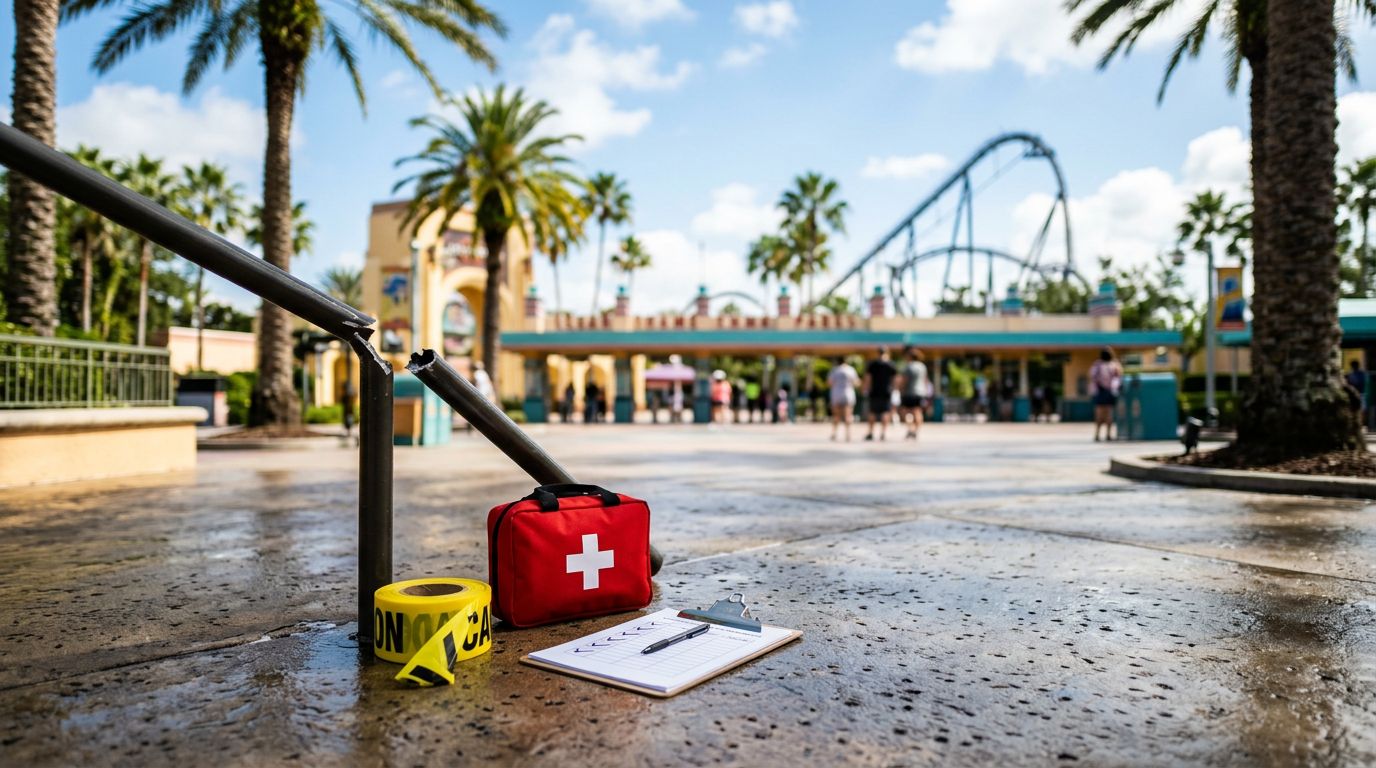
A day at a Florida park can change in seconds. One loose handrail, a wet walkway, a ride that stops hard, and your vacation turns into doctors, paperwork, and pain. If you’re dealing with a Florida theme park injury, the details you collect early often decide what happens later.
Evidence fades fast in parks. Staff rotate, crowds move, cameras overwrite, and cleanup happens quickly. The good news is you can take simple steps to protect yourself and preserve proof, even while you’re still shaken up.
Below is a practical evidence checklist built for visitors, with a focus on what insurers and lawyers typically look for in a claim.
What to do in the first hour after a theme park injury
First, put your health first. If you hit your head, feel dizzy, or have serious pain, ask for medical help right away. If paramedics come, accept evaluation when you can. Early medical notes can connect your symptoms to the incident, which matters later.
Next, report the incident to the park. Do it as soon as you’re safe. Ask where the park documents injuries and request that a report is made. If they’ll give you a copy, take it. If they won’t, write down the report number, the name of the employee who took it, and the time.
Then preserve the scene like it’s going to disappear, because it will. Use your phone to capture wide shots (where you were), mid-range shots (the hazard), and close-ups (the defect, spill, broken latch, missing sign). If your injury involved a ride, photograph the ride name, your seat area if possible, posted warnings, height requirement signage, and any “out of service” messages.
Collect witness information before people scatter. Get names, phone numbers, and a one-line note about what they saw. If someone is willing, record a short statement on your phone. Keep it simple and factual.
Finally, keep what you can. Wristbands, tickets, receipts, locker keys, even a map with your route can help confirm time and location.
If you only do two things, get medical care and document the scene. Everything else becomes harder if those are missing.
Once you’re stable, you can start building a clean evidence file.
Florida theme park injury evidence checklist (what to collect and why)
Think of evidence like pieces of a puzzle. A single photo rarely tells the full story. A strong claim usually shows four basics: what happened, who had control, what safety step failed, and how you were harmed. Florida courts often frame personal injury cases around duty, breach, causation, and damages. If you want a deeper, official look at how Florida negligence claims are analyzed, see the Florida courts’ resource, Personal Injury Claim benchguide outline (PDF).
Here’s a visitor-focused evidence set that supports those basics. Use it as a quick reference.
A simple way to organize your proof is by category:
| Evidence type | What to collect on-site | Why it matters |
|---|---|---|
| Scene photos and video | Hazard, lighting, signage, crowd flow, weather, distances | Shows conditions before they change |
| Ride details | Ride name, car/row/seat, operator booth, posted rules | Ties the incident to a specific attraction |
| Incident report info | Report number, staff names, time, location | Creates an official record that it happened |
| Witnesses | Names, numbers, short statement, where they stood | Independent support if the park disputes facts |
| Your condition | Photos of visible injuries, torn clothing, blood, swelling | Captures early symptoms and severity |
| Medical response | First aid notes, EMS info, discharge papers | Connects treatment to the event |
| Purchases and access | Tickets, wristbands, parking, hotel booking | Confirms you were there and when |
After you leave the park, add context that supports safety standards. Florida regulates many amusement attractions, and the rules can affect what the park must do. For the official statute text, review Florida Statutes Chapter 616 (including 616.242 on amusement rides). You don’t need to cite laws yourself to gather evidence, but it helps to know that ride safety duties are not just “best practices.”
If you’re thinking about legal help, it also helps to talk with attorneys who handle these cases often, because parks and insurers move fast. This overview on Florida amusement park accident attorneys explains common causes, injuries, and liability paths in plain language.
How to keep your evidence usable for an insurance claim or lawsuit
Having evidence is one thing. Keeping it credible is another. Insurers look for gaps, edits, and missing time periods. Parks often have strong documentation systems, so your goal is to match that with clean records of your own.
Start with a timeline. Write down the day’s schedule while it’s fresh: when you arrived, what you rode, when you ate, and when you got hurt. Add details that sound small but anchor the story, such as a parade time, a receipt timestamp, or a weather change. A timeline stops a defense from turning the day into a blur.
Next, protect your original files. Save photos and video in at least two places (for example, your phone and a cloud folder). Avoid filters and heavy edits. If you must mark up an image, keep a separate copy of the original.
Medical documentation deserves extra care. Follow up with a doctor even if the park’s first aid station helped. Some injuries show up later, like concussions and soft tissue damage. Keep discharge papers, referrals, prescriptions, and mileage to appointments. Also keep a short daily journal with pain levels, sleep problems, and activities you can’t do. Two sentences a day is enough, as long as it’s consistent.
Track financial losses in real time. Save receipts for medications, braces, rideshares, and hotel changes. If you missed work, ask for a simple written wage statement from your employer showing dates missed and pay rate.
Be careful with statements. If an adjuster calls, stay factual. Don’t guess distances, speeds, or how long something took. If you don’t know, say you don’t know. Also avoid posting details on social media while the claim is open. A smiling photo can be used out of context.
Last, act quickly when requesting park-held evidence. Surveillance video can be overwritten, and ride logs may not be retained forever. A lawyer can send a preservation request to reduce the chance that key records vanish.
Conclusion
A theme park injury claim isn’t built on emotion, it’s built on proof. When you document the scene, lock down witness info, and keep medical and expense records, you give your case a strong foundation. Even if you’re unsure who’s at fault, collecting evidence early keeps your options open. If you’ve suffered a Florida theme park injury, treat your phone, paperwork, and medical follow-ups like a safety net, because later you’ll be glad it’s there.