
Florida Dog Knockdown Injuries: How to Prove a No-Bite Claim
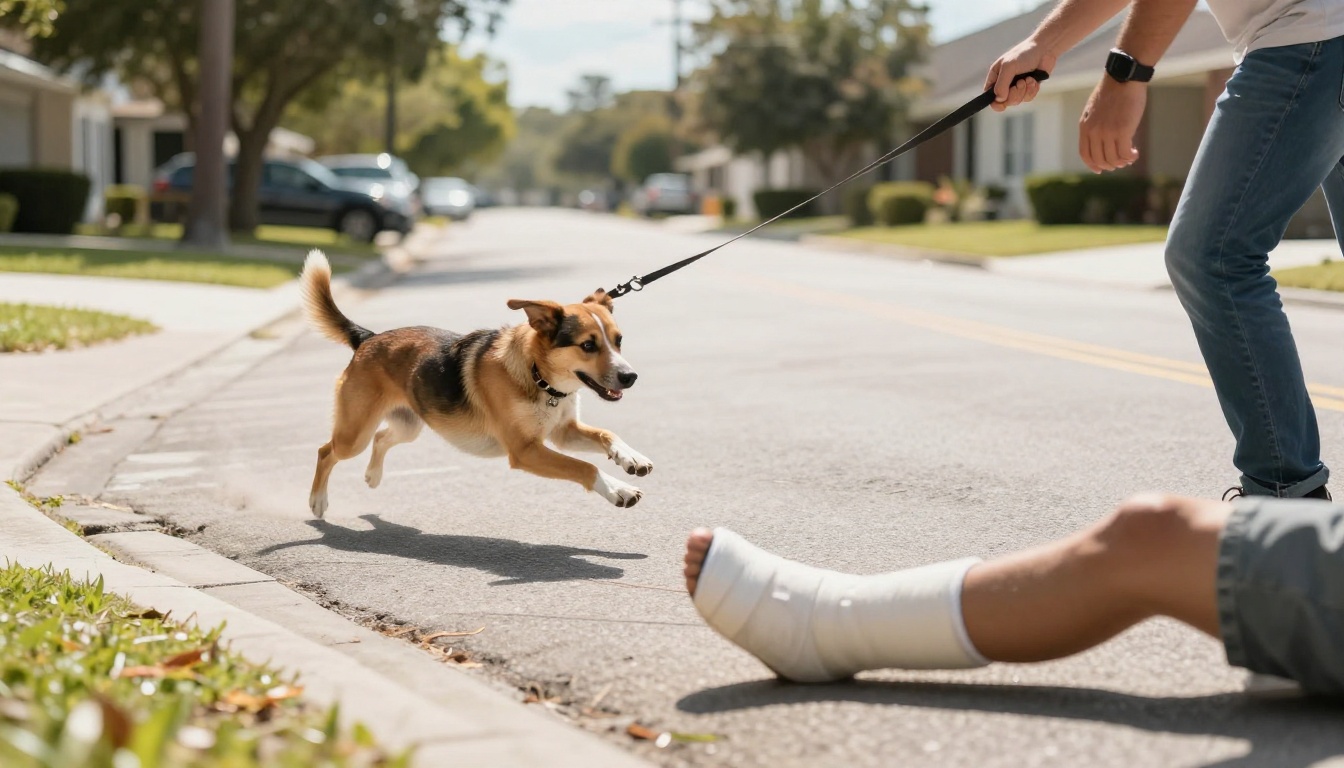
A dog doesn’t need teeth to cause a serious injury. One jump, one charge, or one tangled leash can end with a broken wrist, a concussion, or a hip fracture. For Florida dog knockdown injuries, the biggest fight is often about proof, not pain.
When there is no bite mark, insurers often act like the fall was random bad luck. That isn’t the full story. If a dog caused the fall, Florida law may still support a claim. What matters most is building a clear chain of evidence before the facts start to fade.
Why no-bite dog injury claims are different in Florida
Florida treats bite cases and no-bite cases differently. For bites, Florida Statutes section 767.04 creates a strict-liability rule in many situations. If you were bitten in public, or while lawfully on private property, the owner’s prior knowledge often doesn’t matter.
Knockdown cases are more fact-heavy. They may involve Florida Statutes section 767.01, negligence principles, or both. In plain language, you need more than proof that a dog was nearby. You must show the dog’s actions caused the fall, and that the fall caused your injury.
This quick comparison helps:
| Injury event | Main legal focus | What usually must be shown |
|---|---|---|
| Bite | Section 767.04, strict liability | Bite, lawful presence, damages |
| Knockdown without bite | Section 767.01 and fault-based proof | Dog caused the fall, owner failed to control risk, damages |
Insurers push harder in no-bite cases because the story is easier to blur. They may say you slipped, stumbled, or had a health issue that caused the fall. They may also argue the dog never touched you, or that the contact was too light to cause real harm.
No bite doesn’t mean no case. It means the case needs cleaner proof of cause.
Think of it like a row of dominoes. If you can show the dog tipped the first one, the rest of the damage makes sense. Location still matters too. So do leash rules, fencing, and whether you had a right to be where the incident happened. If the event also involved a bite, Florida dog bite attorneys can compare both claim paths and look for every source of recovery.
The evidence that proves Florida dog knockdown injuries
In a no-bite case, causation sits at the center. That means showing the dog set the fall in motion. Think of the proof like puzzle pieces. One piece may look small. Put enough together, and the picture gets hard to attack.
Start with the scene. Photos of the sidewalk, yard, stairs, leash, fence, gate, and torn clothing can explain how the fall happened. Video is even better. Doorbell footage, store cameras, and phone clips often decide these claims because they freeze the moment before stories change.
Next, lock down the medical timeline. Go to urgent care, the ER, or your doctor as soon as you can. Tell them exactly what happened. Many good cases weaken because the first chart says only “fell” or “mechanical fall” with no mention of the dog. That gap gives the defense room to rewrite the event.
A strong file often includes the same records to show your personal injury attorney in any injury case, plus dog-specific proof, such as:
- Witness statements: Names, numbers, and quick written summaries while memories are fresh
- Animal control records: Prior complaints, vaccination records, and any dangerous-dog history
- Owner admissions: Texts or comments like “he always jumps” or “she got loose again”
- Physical proof: Bruises, scrapes, broken glasses, torn sleeves, or a damaged phone
- Loss records: Bills, missed work, therapy visits, prescriptions, and travel to treatment
As of March 2026, Florida’s newer dangerous-dog rules from 2025 can also matter. If the dog had already been declared dangerous, records about secure enclosure, microchipping, and required insurance may help show the owner failed to control a known risk.
Consistency wins these cases. Your photos, report, medical notes, and witness accounts should all tell the same basic story.
Defenses, deadlines, and the steps that protect your claim
Most no-bite claims don’t fail because the injury was minor. They fail because the defense creates doubt. Adjusters often argue that the dog never touched you, you fell on your own, you provoked the dog, or your back, knee, or shoulder problem existed before the incident.
Fast action cuts down those arguments. First, get treatment and follow your doctor’s plan. Next, report the incident to animal control or the local agency that handles dog complaints. Then, ask nearby homes or businesses to save video before it disappears. Security footage can vanish in days, sometimes sooner.
Be careful with insurance calls. A casual line like “I guess I just slipped” can damage a strong case. So can social posts that make the injury look minor. Keep a simple log of your pain, appointments, work missed, and limits at home. That day-to-day record helps show the real effect of the fall.
Deadlines matter too. Florida injury claims have filing limits, and the exact date can depend on the facts. Review the Florida injury claim deadline rules early, because waiting can cost you evidence even before it costs you the claim.
Don’t let the lack of a bite shrink the value of the case. A knockdown can lead to surgery, rehab, lost wages, and lasting pain. Older adults and children often suffer the worst harm. In many cases, compensation may include medical bills, future care, lost income, and pain and suffering.
A dog-related fall can feel chaotic, but a strong claim is built in an orderly way. Get treatment, report the event, save every piece of proof, and move quickly. For Florida dog knockdown injuries, the best cases are the ones backed by clear facts from the first photo to the final medical bill.