
Florida Pool Chemical Burn Claims and the Logs That Prove Them
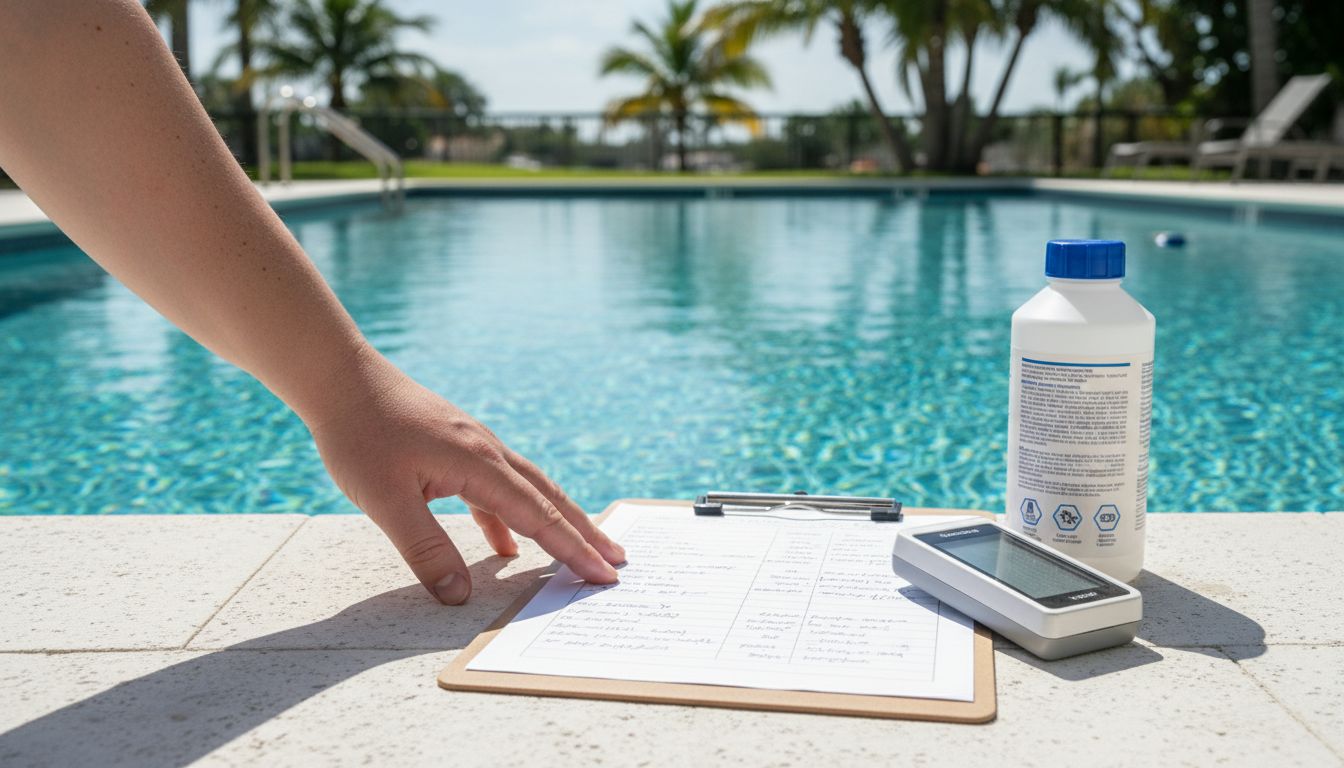
A pool burn can start as a red patch and turn into weeks of pain. When chemicals are mixed wrong, left unchecked, or not diluted properly, the injury can be preventable.
If the injury happened at a Florida hotel, condo, apartment, or public pool, the maintenance paper trail can matter as much as the water itself. Logs may show who tested the pool, what the readings were, and whether anyone fixed a problem after earlier complaints.
That is why these claims often turn on records, not guesses. The key is knowing what to look for before the paper trail disappears.
When a Florida Pool Chemical Burn Becomes a Claim
A pool chemical burn claim usually starts with a simple question, who controlled the pool area and the chemicals? That can be a property owner, a manager, a condo association, a hotel operator, or a service company. For a broader look at who owes safety duties, see Florida premises liability duty of care.
Florida’s pool safety rules still focus on sanitation, testing, and chemical control. The Florida Department of Health’s Public Swimming Pools page explains that public pools are subject to inspections, safety standards, and chemical safety rules. The state rule set also requires proper testing and approved chemicals, which is spelled out in Rule 64E-9.004.
That matters because a burn claim is not only about pain. It is also about whether the operator kept the water in a safe range. If chlorine, acid, or another treatment was overused, or if the pool sat with bad readings for too long, the case may point to negligence.
Private pools can create claims too. If a homeowner, host, or property manager knew about a chemical problem and did nothing, that can support a negligence claim. The same basic rule applies across settings, control brings responsibility.
Why Maintenance Logs Matter More Than Memory
Memory fades fast. A log does not, at least not if it was kept honestly. That is why maintenance records are often the strongest proof in pool injury cases.
The same idea appears in proving notice in Florida hotel slip falls, where records can show how long a hazard existed. In a chemical burn case, the log can show who tested the water, what the numbers were, and whether anyone skipped a required check.
Here is the kind of paper trail that can move a claim forward:
| Record | What it can show | Why it matters |
|---|---|---|
| Daily chemical test log | Chlorine, pH, and other readings | Shows whether the water was in a safe range |
| Service or repair ticket | Broken feeders, pumps, or dosing systems | Helps prove the operator knew about a defect |
| Complaint email or text | Prior reports from guests, tenants, or staff | Shows notice before the burn happened |
| Incident report | First response, witness names, and timing | Locks down the story before details change |
A clean, consistent log can help a defense. A missing, altered, or incomplete log can help a claim. That difference often decides whether the pool operator can explain the burn away.
A pool operator’s paper trail can matter more than its explanation.
Evidence to Preserve After the Burn
The first step is medical care. Chemical burns can get worse after the first sting, especially if the skin keeps reacting. After that, the focus shifts to proof.
Take photos as soon as you can. Capture the burn itself, the pool area, any chemical containers, warning signs, and the water condition if it still looks unsafe. If your swimsuit, towel, or cover-up has chemical residue, keep those items.
When the pool is part of a condo, HOA, or apartment community, recordkeeping often runs through the property manager. In those cases, condo maintenance logs in fall claims can help show who had the job and whether they did it. The same records can matter in a chemical burn case, because they may reveal the person or company responsible for testing and treatment.
Keep these items together:
- Medical records and discharge papers
- Photos of the burn and the pool area
- Names of staff, witnesses, and other guests
- Receipts for treatment, medication, and travel
- Any incident report number or written statement
- Messages about prior complaints or warnings
If you can, ask that the pool logs, vendor records, and camera footage be preserved right away. Many properties recycle records fast. Once that happens, the best evidence may be gone.
What a Strong Claim Needs to Show
A good case usually comes back to four points. First, someone had a duty to keep the pool safe. Second, the pool was not safe. Third, the operator knew or should have known about the problem. Fourth, the unsafe condition caused your burn.
Maintenance logs help with all four points. They can show duty through job assignments, unsafe conditions through bad readings, notice through repeated complaints, and causation through timing. If the records show a chemical spike right before your injury, that can be powerful.
Still, logs do not stand alone. They work best with photos, medical records, witness statements, and service documents. Put together, those pieces can show the story clearly.
Conclusion
Florida pool chemical burns are not just bad luck. They often trace back to poor testing, weak oversight, or skipped maintenance. The logbook can tell that story if it was kept, and it can expose the gap if it was not.
When the injury happens, move fast. Get medical care, save the proof, and preserve the records before they disappear. In a pool injury claim, the paper trail is often the hardest part to argue with.