
Florida HOA Clubhouse Slip and Fall Claims: Proving Notice
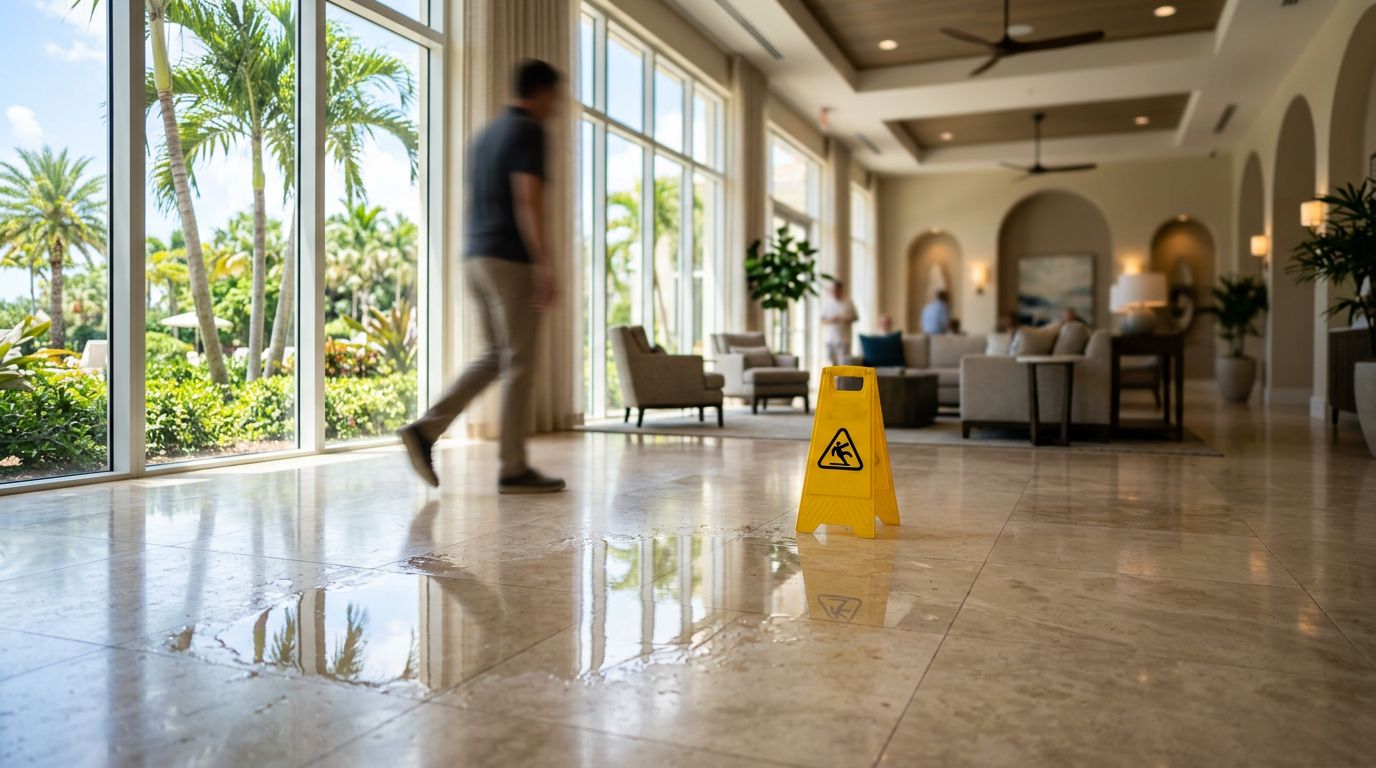
A wet clubhouse floor can turn into a legal fight in seconds. In a Florida HOA slip and fall case, the hardest question is often not how badly you were hurt. It is whether the association knew about the hazard, or should have found it during routine checks.
Clubhouses see heavy foot traffic, drinks, pool water, cleaning, and events. That mix can create a strong claim, but only if the proof lines up. The best cases connect the fall to a clear hazard, a real notice trail, and documented losses.
Why the clubhouse question is really about control
An HOA clubhouse is usually a shared space, so control matters. The association may own it, manage it, or hire a vendor to clean and inspect it. That detail changes the proof, because the right defendant is often the party who had responsibility for the area on the day of the fall.
That duty is where Florida premises liability duty of care starts. The law expects the person or entity in charge of the space to act reasonably and fix or warn about known hazards.
The same control issue appears in Florida condo fall claims, because responsibility often turns on who handled repairs, inspections, and maintenance records. A clubhouse claim works the same way. If the HOA ignored a broken tile, a wet lobby, or poor lighting, that history can matter a lot.
Actual notice vs constructive notice in Florida fall claims
Florida slip and fall cases often turn on one question, did the HOA know, or should it have known, about the danger? The actual or constructive knowledge rule is explained in Florida Statute 768.0755, which is a useful reference for how slip cases are evaluated.
A fall claim can rise or fall on the notice proof.
Actual notice means someone on the HOA side knew about the hazard. That could be a staff report, a resident complaint, a maintenance email, or a prior fall in the same spot. If a manager saw the puddle and did nothing, that fact is powerful.
Constructive notice is different. It means the hazard existed long enough, or happened often enough, that the HOA should have found it through ordinary care. A leaking ceiling, a repeated mop-water problem, or a worn floor near the snack area can support that kind of proof.
In practice, the notice fight is often simple to describe and hard to prove. The HOA may say the spill happened moments before the fall. The injured person may say the floor had been wet for some time. The evidence decides which story wins.
The evidence that matters after the fall
Clubhouse cases often turn into a paper chase. The scene gets cleaned, the water dries, and people forget what they saw. That is why the first hours matter so much. If video exists, a quick evidence preservation letter can help keep it from being erased.
Here is the kind of proof that often matters most:
| Evidence | What it can show | Why it matters |
|---|---|---|
| Photos or video | The wet floor, broken tile, lighting, or warning signs | Locks in the scene before cleanup |
| Incident report | Time, place, and who responded | Shows the HOA knew about the fall |
| Witness names | How long the hazard was there | Can support actual or constructive notice |
| Maintenance logs or emails | Prior complaints, inspections, and repairs | Can prove the HOA had notice |
| Shoes, clothing, and medical records | Slippery residue and injury link | Connects the fall to real harm |
The takeaway is simple. A claim gets stronger when the hazard, the notice, and the injury all line up in one clean timeline. Without that timeline, the HOA may argue the fall was sudden and impossible to prevent.
What compensation can include
If liability is proven, the case can include more than the first ER bill. A serious clubhouse fall may involve follow-up visits, therapy, missed work, and future treatment. For a closer look at those losses, see Florida slip and fall damages.
Damages in a Florida HOA slip and fall claim often include:
- Medical bills from the first visit through follow-up care
- Lost wages if the injury kept you off the job
- Future care for surgery, rehab, or pain management
- Pain and suffering tied to the injury itself
Timing also matters. Florida injury claims have filing deadlines, and delay can weaken a case fast. The longer you wait, the harder it becomes to find witnesses, preserve video, and tie the hazard to the fall. If you want the deadline rules in one place, review Florida injury filing deadlines.
Florida’s comparative fault rules can also reduce recovery if the HOA argues you ignored a visible warning or failed to watch your step. That is why early proof matters. It gives context before the other side shapes the story.
Conclusion
A clubhouse fall is rarely about the fall alone. It is about what the HOA knew, what it should have known, and what the records show happened before cleanup.
The strongest Florida HOA slip and fall claims usually have the same backbone, clear notice proof, solid photos or video, and records that tie the hazard to the injury. When those pieces are missing, the case gets harder fast. When they are in place, the claim becomes much stronger.