
Florida Testicular Torsion Misdiagnosis and Ultrasound Delays
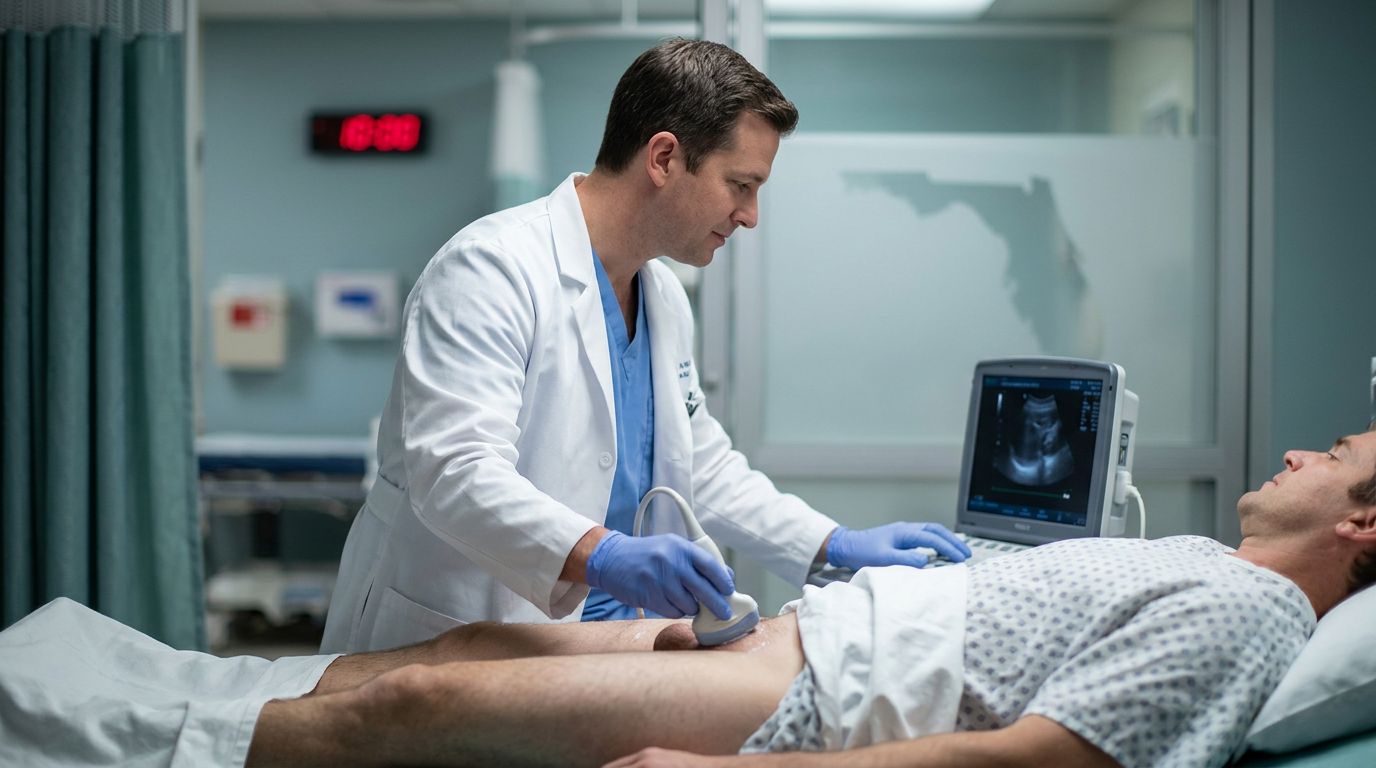
A sudden groin pain can become a race against the clock. With testicular torsion, the first few hours can decide whether the testicle survives.
Yet patients in Florida still get told it is an infection, a strain, or pain that will settle on its own. Others wait on an ultrasound while blood flow keeps dropping.
When that happens, the chart matters as much as the bedside exam. The notes, timing, and test results can show whether the care was careful or careless.
Why testicular torsion is a race against time
Testicular torsion happens when the spermatic cord twists and cuts off blood flow. Once that blood supply stops, tissue starts to die fast.
The pain often comes on suddenly. It may hit one side, and it can bring nausea, vomiting, or a heavy feeling in the scrotum. Some patients wake up with it. Others feel it during sports or after a small twist.
The problem is simple. The body does not wait for a full schedule.
A scan can help, but it cannot replace a rushed exam when the symptoms are classic.
That is why torsion is treated as a surgical emergency. The goal is not to calm the pain. The goal is to restore blood flow before damage becomes permanent.
For a plain-English look at the legal side of a careless medical error, what medical malpractice means in Florida is a useful place to start.
How misdiagnosis happens in Florida emergency rooms
Testicular torsion is easy to miss when staff look only at the wrong clues. The pain may seem like a stomach bug, kidney stone, groin pull, or infection. In some cases, the patient is young, embarrassed, or unable to explain the pain well.
That is where mistakes begin.
Common errors include:
- A rushed exam that skips the scrotum entirely.
- A diagnosis of epididymitis or infection without a proper workup.
- No urology consult, even when the pain started suddenly.
- A discharge with pain medicine and no clear return plan.
Busy emergency rooms add another layer of risk. A provider may focus on the most common causes of pain instead of the most dangerous one. That can be dangerous when the symptom pattern points to torsion.
Children and teens are especially vulnerable. They may describe belly pain instead of testicular pain. Parents may not know the right questions to ask. As a result, the emergency can hide in plain sight.
Florida families often search for answers after a missed diagnosis because the harm is so stark. A wrong diagnosis can send the patient home. A delayed diagnosis can send the patient straight to surgery, but too late to save the testicle.
For a closer look at that distinction, Florida misdiagnosis and delayed diagnosis rules explain why the facts matter.
Ultrasound delays that can cost a testicle
Ultrasound is useful in torsion cases, especially Doppler ultrasound. It can show reduced or absent blood flow. However, it is not magic.
A scan only helps if it happens fast enough, and if someone reads it correctly. Delays can happen when the technician is unavailable, the patient must be transported, or the radiology read takes too long. Sometimes the delay starts earlier, because the scan is used as a gate before anyone calls urology.
That approach is risky.
A review of malpractice cases found that many initial ultrasounds were false-negative, which means they missed torsion. Other reports found that ultrasound use added hours before surgery in some patients. Those hours matter because the window for salvage shrinks fast.
| Situation | Better response | Risky response |
|---|---|---|
| Sudden one-sided scrotal pain | Immediate exam and urgent escalation | Treating it like routine pain |
| Strong signs of torsion | Fast imaging or surgery when needed | Waiting for a slow scan |
| Negative ultrasound, but symptoms still fit torsion | Re-check the patient and keep torsion on the table | Sending the patient home too soon |
The takeaway is plain. A test result should support judgment, not replace it. When the exam points to torsion, a delay for imaging can do the damage the scan was supposed to prevent.
When a missed torsion becomes medical malpractice
A bad outcome alone does not prove malpractice. Florida law looks at whether the provider acted as a careful provider should have acted in the same situation.
That means the legal questions are specific. Did the doctor examine the patient properly? Did the provider recognize the red flags? Was the urology consult delayed without reason? Was the ultrasound ordered too late, or relied on too heavily?
If the answer to those questions shows a clear gap in care, the case may involve negligence. What medical malpractice means in Florida helps explain the basic standard.
The next issue is proof. Florida cases often turn on timestamps, not memory. Triage notes, nurse entries, imaging requests, radiology reports, discharge instructions, and transfer records can tell the story better than anyone’s recollection.
The law also treats misdiagnosis and delayed diagnosis differently in some cases, so the timeline has to be read with care. The Florida medical malpractice law guide breaks down the state’s pre-suit process and proof rules.
Florida does not publish a clean statewide number for torsion misdiagnosis. So each case depends on the records, the exam, and the delay.
What families should do after a delayed diagnosis
The first days after a missed torsion diagnosis matter. The medical team may already have moved on, but the paper trail is still there.
Start with the records. Ask for the ER chart, the ultrasound report, the radiology images, and the discharge paperwork. If surgery happened later, get the operative report too.
Then write down the timeline while it is fresh. Note when pain started, when care was sought, what the patient said, and when each test was ordered. Those details can fade fast.
Keep an eye on follow-up care as well. If pain comes back, swelling worsens, or the diagnosis still does not make sense, get urgent medical attention.
A short list helps here:
- Save every record and bill.
- Write down names, times, and phone calls.
- Keep text messages about the symptoms.
- Do not guess at dates later.
- Ask about legal deadlines early.
The first week can also shape the legal path. Early actions after a Florida med mal case explains why prompt record collection and review matter so much.
One more point matters here. Florida has strict filing deadlines for medical negligence claims, so waiting can close the door even when the care was poor. The clock is part of the case, not an afterthought.
Conclusion
Testicular torsion is the kind of emergency that punishes delay. A missed exam, a slow ultrasound, or a false sense of safety can turn a treatable problem into permanent loss.
That is why the real issue is often timing. The chart shows what the team knew, when they knew it, and what they did next.
When a case involves sudden pain, a delayed scan, and a lost testicle, the details usually tell the truth. In those cases, time is not just a medical issue. It is the heart of the claim.