
Florida Dog Bite Claims for Delivery Drivers at Homes
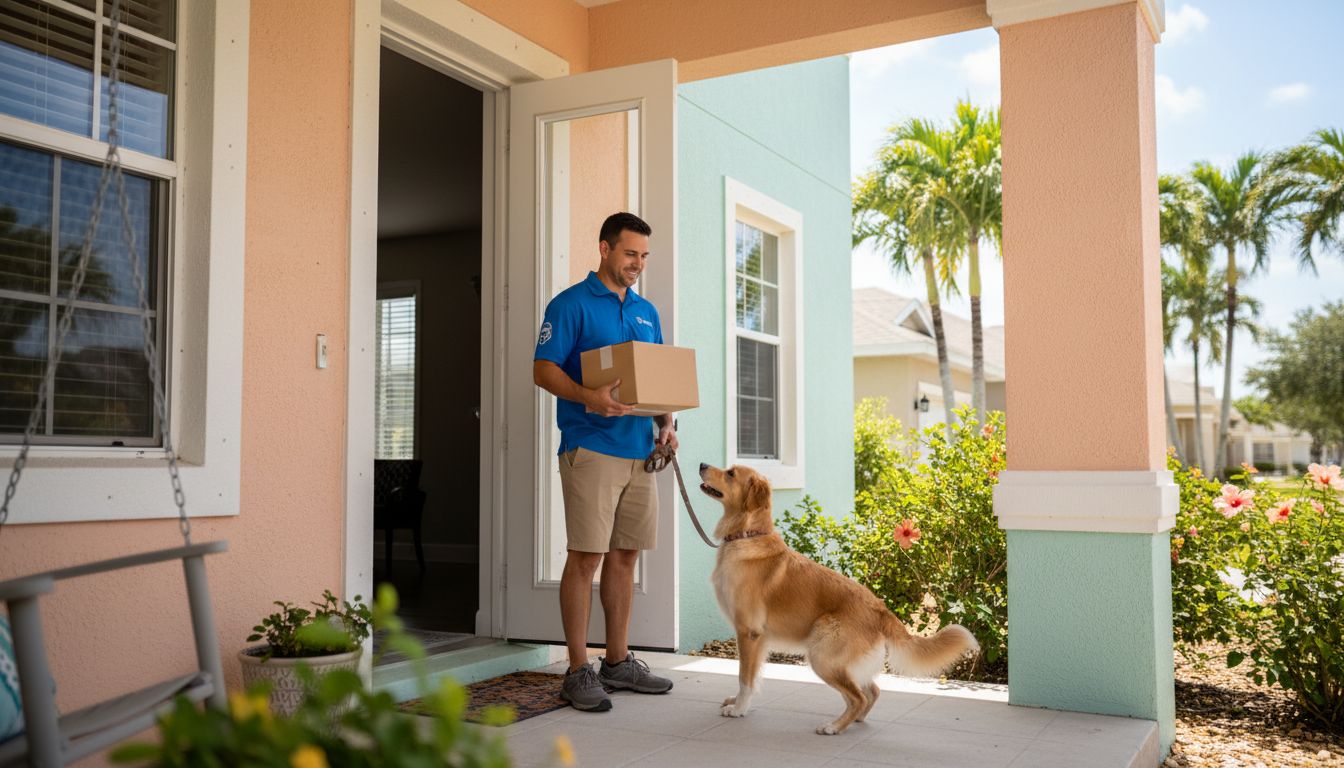
A home delivery can turn dangerous in seconds when a dog gets loose at the door. For delivery drivers, a bite can mean medical treatment, missed shifts, and a claim that depends on small facts.
Florida law gives injured drivers a path to compensation, but the details at the front step matter more than many people expect. Who was there, why they were there, and what happened before the bite can shape the whole case.
Why delivery drivers usually have a strong claim at the door
Delivery drivers are at a home because their job requires it. That matters, because a driver who is making a lawful stop is not the same as a trespasser.
Florida dog bite claims often turn on whether the driver was lawfully on the property. If the driver was walking to the porch, waiting at the door, or placing a package where the homeowner expected it, the law usually gives the driver a real starting point.
A dog does not need a long history of attacks before a claim exists. In many cases, the bite itself is enough to trigger liability questions. That is why Florida dog bite strict liability law is so important for delivery work at homes.
Lawful presence is the pivot point in many Florida claims.
Recent Florida reports in 2026 showed how serious these injuries can become, even when the dog had no obvious attack history. A driver may face puncture wounds, deep tissue damage, infection, or scarring after one stop.
The core issue is simple. The homeowner invited the delivery to happen, and the dog still has to be controlled.
What Florida dog bite law says about a home delivery
Florida Statute 767.04 says a dog owner is liable when a dog bites someone in a public place or while that person is lawfully on private property. The statute also says a person is lawfully on private property when performing a duty imposed by law. That language fits many delivery stops at homes, and the official text is here: Florida dog bite statute.
That rule matters because it focuses on the bite, not just the dog’s past. A homeowner cannot always avoid responsibility by saying the dog never bit anyone before.
Still, every case has defenses. Provocation can reduce or block recovery. So can a claim that the driver went somewhere they had no reason to be. The facts around the porch, gate, screen door, or side yard can matter more than people realize.
A delivery driver who was told to leave a package at the door is usually in a stronger position than someone who wandered into a fenced area without permission. The difference may be small in real life, but it can matter in a claim.
Damages that can follow a bite at a house
A dog bite can leave more than a wound. It can leave weeks of treatment, a missed paycheck, and fear that does not fade fast.
Common losses in Florida dog bite claims include:
- Medical care for the ER, stitches, infection treatment, follow-up visits, and surgery
- Lost wages when the injury keeps the driver off the route
- Future treatment for scar care, therapy, or later procedures
- Pain and suffering for physical pain, stress, and loss of sleep
If the driver is an employee, workers’ compensation may help with some losses. A civil claim against the dog owner can often reach other damages too. That is where homeowners insurance for Florida dog bites becomes important, because the policy is often the first place payment comes from.
A simple comparison helps show how the pieces fit:
| Possible source | What it may cover | Why it matters |
|---|---|---|
| Workers’ compensation | Medical care and part of lost wages | Helps if the driver is covered as an employee |
| Homeowners or renters insurance | Medical bills, wage loss, and settlement value | Often the main payment source |
| Civil claim against the owner | Broader damages, including pain and suffering | Can address the full harm |
The point is not to force every loss into one bucket. The point is to match each loss to the right source.
Evidence that supports a Florida dog bite claim
Good evidence can keep a claim from turning into a guessing game. The best time to collect it is right away.
The dog bite medical records checklist is a useful reminder of what usually matters most, because the medical file ties the bite to the injury.
Start with these items:
- ER or urgent care records
- Photos of the wound and the scene
- A picture of torn clothing or damaged gear
- The dog owner’s name and address
- Witness names and phone numbers
- Delivery app data, route notes, or time stamps
- Animal control or police reports
Photos are especially useful. A porch, gate, leash, or screen door can look very different an hour later. Blood can be cleaned up. A dog can be moved. A witness can leave. That is why fast documentation matters.
Photos and records matter early, because the scene changes quickly.
Do not wait to get medical care while trying to build a paper trail. Treat the injury first, then keep the records. Both matter.
Insurance and landlord issues after a bite at a home
Many home bites begin with an insurance question. The dog owner may have a homeowners policy or a renters policy, and either one may be the first source of coverage.
That does not mean the insurer will pay without a fight. Policies can have limits, exclusions, and coverage disputes. Some claims settle quickly. Others slow down when the insurer argues about provocation, trespass, or the size of the wound.
Rental homes add another layer. When the bite happens at a house or apartment that someone rents, the owner of the dog is still usually the first person to look at. But the landlord may become part of the picture if the landlord knew about the dog and had the power to act. For a closer look at that issue, see Florida landlord dog bite liability.
That split matters because the tenant, landlord, and insurer may each try to push responsibility elsewhere. A delivery driver should not have to sort that out alone while healing.
The stronger the records, the harder it is for each side to blur the facts. A clean timeline, a clear medical file, and proof of where the bite happened can keep the claim grounded.
Conclusion
A bite at a front door can look small at first, then turn into missed work and a long recovery. For delivery drivers, Florida law can support a claim when the driver was lawfully on the property and the dog owner failed to control the animal.
The strongest cases usually rest on prompt medical care, good photos, and records that show the full cost of the injury. When those pieces are in place, the claim is much harder to dismiss.