
Florida Dog Bite Claims in Public Parks and Dog Runs
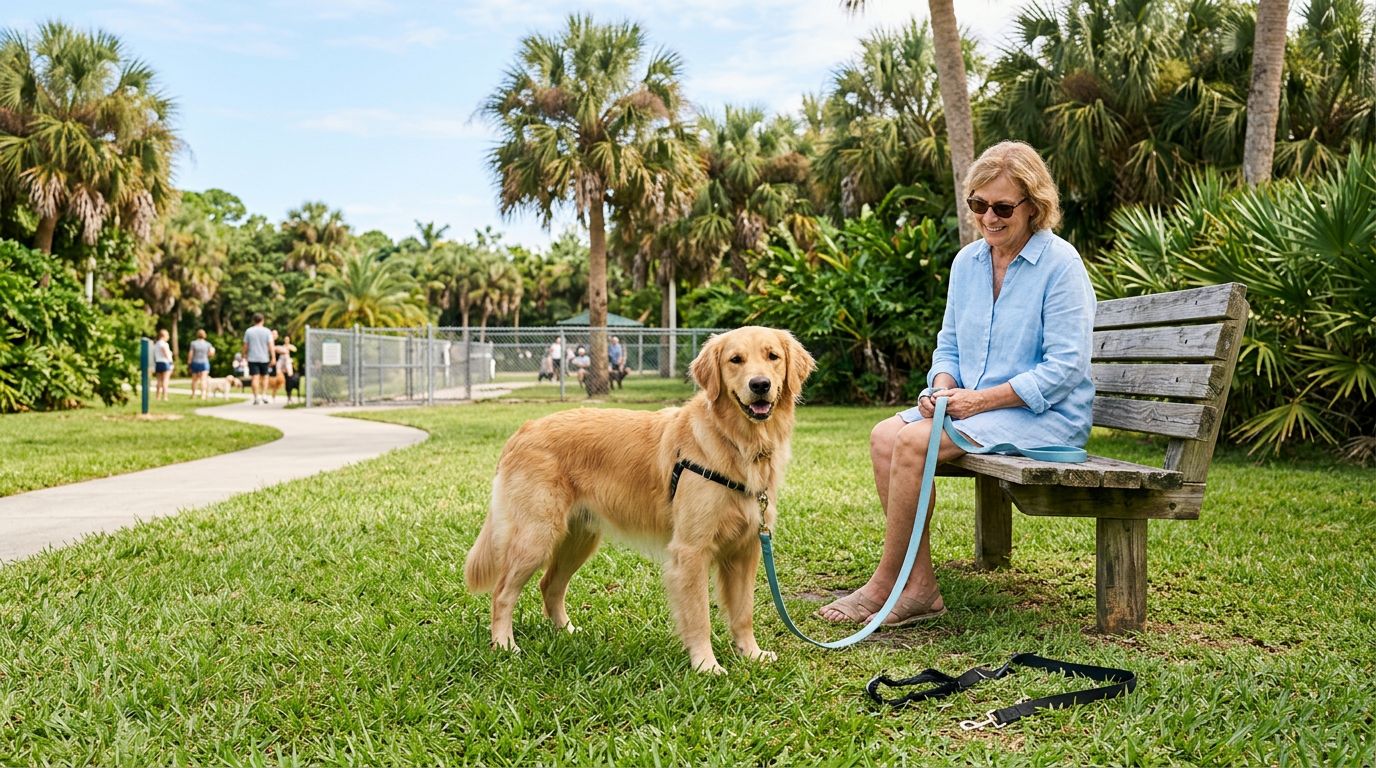
A dog bite in a park can turn a normal outing into a mess of pain, bills, and unanswered questions. When the attack happens at a public park, a city dog run, or a fenced off-leash area, the location matters, but it does not erase the owner’s duty.
In Florida, the law often gives injured people a path to compensation even when the dog had no bite history. The harder part is proving what happened, who controlled the dog, and whether any park rules were ignored. That is where the details start to matter.
How Florida law handles bites in public parks
Florida law is direct on this point. Under Florida Statute 767.04, a dog owner can be liable when the dog bites someone in a public place or while the person is lawfully on private property.
A public park is a public place. So is a county trail, a city green space, or a walkway inside a public recreation area. If the bite happened there, the owner usually cannot escape responsibility by saying, “The dog never did this before.”
That rule is why Florida dog bite strict liability rules matter so much. In many cases, you do not have to prove the owner knew the dog was dangerous. You usually need to show that the bite happened, you were lawfully there, and the dog owner had control of the animal.
A park setting does not wipe out liability. It usually strengthens the need to ask who failed to control the dog.
Florida law can still reduce damages if the injured person’s own negligence helped cause the bite. For example, that can matter if someone provoked the dog, ignored a closed gate, or entered a restricted area. Even then, the claim may still be valid.
What makes dog runs and dog parks different
Dog runs create their own problems because they are built for off-leash play. That setup helps dogs burn energy, but it also brings more contact, more noise, and more room for mistakes.
A bite at a dog run may happen in a split second. One owner opens a gate at the wrong time. A leash gets tangled. A small dog gets rushed by a larger one. The scene can feel chaotic, but chaos does not mean there is no case.
Here’s a quick comparison of the most common situations:
| Setting | Common problem | Why it matters |
|---|---|---|
| Public park | Off-leash dog on a walkway | It can show the owner ignored park rules |
| Fenced dog run | Broken latch or gate | It can point to poor control or bad maintenance |
| Private dog park | Crowding or weak supervision | It can raise questions about operator responsibility |
The takeaway is simple. The location changes the proof, but it does not remove the duty to control the animal. A leash sign, a posted rule, or a fenced enclosure is not decoration. It is evidence.
Crowded dog runs also create another issue. People often focus on their own dogs and miss warning signs from someone else’s animal. That is why witness statements and scene photos are so useful. They can show whether the dog was already agitated, whether the gate was open, or whether the owner was paying attention.
A bite at a city dog park can also involve local rules. Some parks require permits, some require proof of vaccination, and some have clear leash or muzzle rules outside fenced areas. Those rules do not replace state law, but they can support the claim.
Evidence that can make or break the claim
Evidence fades fast after a park bite. People leave. Dogs get moved. Staff clean the area. Then the file starts to shrink.
The strongest claims often start with a few basic facts:
- Photos of the injuries, the dog, and the scene
- Witness names and phone numbers
- The dog owner’s name, tag number, or park membership info
- A copy of any park, police, or animal control report
- Medical records from the first visit and follow-up care
That last item matters more than many people expect. A wound can look minor at first, then turn into an infection, scar, or surgery. Early records help show how serious the injury really was. They also help tie the bite to the treatment.
A Florida dog bite medical records checklist can help keep that paper trail organized. In a bite claim, the medical record is often the backbone of the case.
The first ER note often carries more weight than a memory weeks later.
If you went to urgent care, the ER, or your family doctor, keep every bill and discharge sheet. Keep follow-up visits too. If a doctor prescribed antibiotics, pain medication, stitches, or a tetanus shot, those details matter.
When the city, county, or private operator may share blame
In many park cases, the dog owner is the main target. Still, the park operator, property manager, or government entity may also matter.
That becomes important when the attack happened because of a broken fence, a failed latch, a missing warning sign, or a known hazard that never got fixed. A private dog park that ignores repeated complaints can face different exposure than a public park with a clean record.
Government claims are harder. Cities and counties often have notice rules, damage limits, and strict deadlines. So if a bite happened at a city park, don’t wait to ask how those rules apply. Missing a deadline can hurt an otherwise strong case.
The dog’s history can matter too. Florida’s dangerous dog law, Florida dangerous dog law, deals with attacks or bites by dogs that have already been classified as dangerous. If the dog had prior incidents, that history may help show the owner knew the risk and failed to control it.
That is one reason people often need help early. A lawyer can sort out whether the claim belongs against the owner, the park operator, the city, or all three. If you need a closer look at that question, speak with Florida dog bite attorneys who handle these cases every day.
What compensation can cover after a park bite
A bite in a park can lead to more than a trip to the ER. Some injuries heal fast. Others leave scars, nerve pain, infection, or a long fear of dogs.
Compensation may include:
- Emergency room care and follow-up treatment
- Stitches, surgery, or wound care
- Infection treatment and medication
- Lost wages if you missed work
- Scar treatment or future medical care
- Pain, suffering, and emotional harm
Children often need extra attention after a dog attack. So do people with hand, face, or arm injuries. Those wounds can affect daily life in a way that a simple bill does not show.
Insurance companies often try to narrow the claim to the first medical visit. That misses the real picture. A bite can affect sleep, work, exercise, and confidence in public spaces. If a doctor recommends future care, that should stay in the file.
The same is true for photos of healing. A wound that closes in a week may still leave a lasting mark. If the attack happened at a park or dog run, the setting may be public, but the harm is personal.
Conclusion
A dog bite at a public park or dog run does not become less serious because it happened outdoors. Florida law still looks at who controlled the dog, where the bite happened, and what proof exists.
The best claims are built early. Photos, witness names, medical records, and park reports can turn a confusing scene into a clear case. If the bite happened in a Florida park, fast action matters more than guesswork.
A careful review with Florida dog bite attorneys can help you see the path forward before records disappear and memories fade.