
Florida Workers’ Comp for Ankle Fractures After a Fall
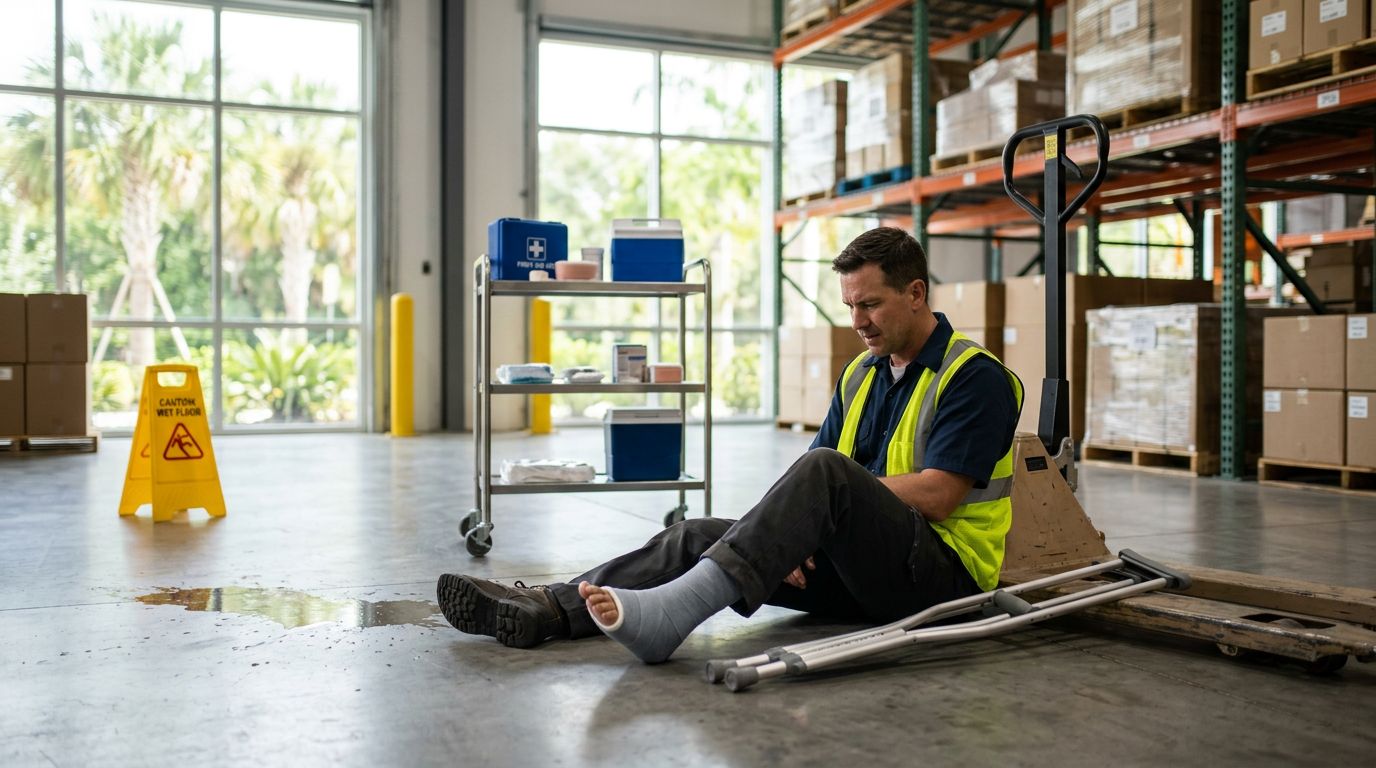
A broken ankle at work can change your week in one second. One missed step, one slick floor, one bad ladder, and now you’re dealing with pain, X-rays, and lost income.
In Florida, workers’ comp for an ankle fracture should cover more than the first hospital visit. Still, claims often get tripped up by late notice, the wrong doctor, or weak records. The rules matter early, so it’s worth getting them right from day one.
What Florida workers’ comp should cover after a work fall
If you fracture your ankle in a workplace fall, Florida workers’ compensation usually applies as long as the injury happened during your job. Fault usually doesn’t decide the claim. What matters is whether the fall arose out of your work and happened in the course of employment.
Most benefits fit into three categories. Florida’s benefits available to injured workers explains the basics in plain terms.
| Benefit type | What it may cover |
|---|---|
| Medical care | Authorized doctor visits, imaging, surgery, casts, medication, and physical therapy |
| Lost wages | About 66 2/3% of your average weekly wage if the doctor says you can’t work |
| Impairment income | Possible payments after maximum medical improvement if you have a permanent rating |
The short version is simple: treatment and wage loss are usually the first fight, not whether a broken ankle is a “real” injury.
Medical care is broad, but there is a catch. After emergency treatment, follow-up care usually must go through an authorized provider chosen by the employer or carrier. That’s why these ER coverage and follow-up rules matter so much after a serious fall. If you treat outside the approved network without permission, the carrier may refuse to pay.
Wage benefits also follow strict timing rules. Under Florida’s compensation timing and limits statute, disability pay usually starts on the eighth day if you miss more than seven days of work. If you stay out more than 21 days, the first week is usually paid too. As of April 2026, temporary disability benefits can continue up to 104 weeks, or until you reach maximum medical improvement.
If your ankle never gets back to normal, permanent impairment may matter. The state’s impairment income calculator gives a useful estimate once an authorized doctor assigns a rating.
What to do right after an ankle fracture at work
A Florida workers’ comp ankle fracture claim often turns on what happens in the first 24 to 72 hours. Swelling, pain, and medication can blur details, so clear records help more than people expect.
Start with four steps:
- Report the fall to your employer right away, then confirm it in writing.
- Get medical care, and ask who the authorized workers’ comp doctor is.
- Save photos of the hazard, your shoes, and the area where you fell.
- Keep every paper, discharge note, work slip, and mileage record.
Florida generally gives you 30 days to report the injury, but waiting is risky. Fresh facts are easier to prove, and delayed notice gives the carrier room to argue. For a closer look at timing, review these Florida workers’ comp deadlines.
Written notice matters because memories shift fast. A short email or text should include the date, time, place, how you fell, and what body parts hurt. Don’t limit the report to “ankle pain” if your knee, hip, or back also took the impact. Those details can matter later.
Report the fall quickly, then treat with the authorized doctor. Those two moves prevent many avoidable disputes.
Also, follow the treatment plan. If the doctor orders a boot, imaging, or therapy, go. Missed appointments give insurers an easy argument that you weren’t hurt as badly as claimed. If your employer offers light duty, take the paperwork seriously. Light-duty disputes often affect wage benefits, even when the ankle fracture itself is obvious.
Why broken ankle claims still get denied or underpaid
A fractured ankle sounds straightforward. In practice, insurers often challenge the claim around the edges.
One common issue is proof. If nobody saw the fall, the case isn’t over. Florida doesn’t require an eyewitness in every case. What matters is consistent reporting, prompt treatment, and medical records that match the event. These points often decide unwitnessed Florida workers’ comp claims, including solo falls in stockrooms, stairwells, and parking areas tied to work duties.
Another issue is prior health history. If you’ve had ankle sprains, arthritis, balance problems, or old leg injuries, the carrier may argue the work fall was not the major contributing cause of your need for treatment. As of 2026, carriers are pressing hard on medical documentation, so the doctor’s chart needs to connect the fracture and the need for care to the work accident.
Settlement questions also cause confusion. There is no reliable official “average settlement” for a broken ankle under Florida workers’ comp, and state agencies do not publish a standard payout for this injury. Value depends on facts such as surgery, hardware placement, infection risk, time out of work, permanent restrictions, and whether you receive an impairment rating.
Some cases involve more than workers’ comp. If a contractor, property owner, or equipment maker caused the fall hazard, a separate injury claim may exist. That doesn’t replace workers’ comp, but it can affect the full recovery picture.
Conclusion
A work-related ankle fracture should lead to medical care and wage benefits, but the result still depends on how the claim is handled. Fast notice, authorized treatment, and solid records carry real weight in Florida.
Broken bones may show up clearly on an X-ray, yet disputes still grow around deadlines, doctors, and lost-pay calculations. The strongest position comes from treating every early step as evidence, because proof drives the claim almost as much as the injury itself.