
Herniated Disc After a Florida Car Crash: A Cape Coral Guide to Proving Your Injury
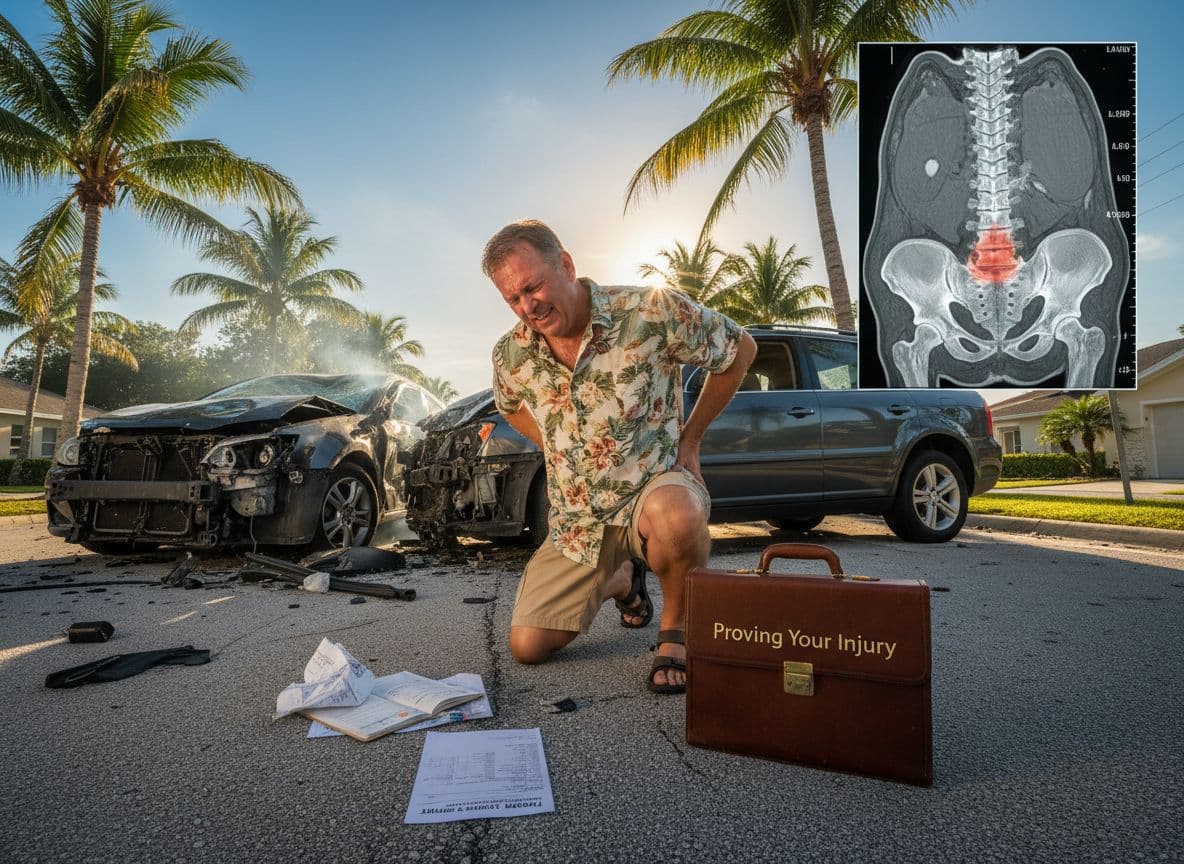
Your car is finally towed, but your back still feels like it is on fire. The adrenaline is wearing off, and now every bump in the road sends a sharp bolt through your spine.
If this sounds familiar, you may be facing a herniated disc car accident injury. In Florida, and especially around Cape Coral, proving that injury and its impact on your life is the key to a fair settlement.
This guide walks through how herniated disc claims work, what evidence you need, and how a local personal injury attorney can protect your rights.
Understanding A Herniated Disc After A Car Accident
Think of the discs in your spine like small shock absorbers between the bones. In a crash, your body whips forward and back. That sudden force can cause a disc to bulge or tear, pushing the soft center out against nearby nerves.
Common symptoms after a herniated disc car accident include:
- Sharp or burning pain in your neck, back, or down a leg or arm
- Numbness, tingling, or weakness in a limb
- Pain that gets worse when sitting, bending, or lifting
Sometimes pain is mild at first, then grows over days or weeks. Insurance companies love to use that delay against you, so early medical care and clear records matter a lot.
MRI scans, physical exams, and nerve tests often confirm the diagnosis. Those test results will later become core pieces of evidence in your injury claim.
Florida No Fault Rules And The Permanent Injury Threshold
Florida uses a no fault system for car crashes. Your own Personal Injury Protection (PIP) coverage usually pays up to $10,000 of medical bills and part of your lost wages, no matter who caused the crash.
For many back and neck injuries, PIP is nowhere near enough. To go beyond PIP and claim money for pain and suffering from the at‑fault driver, your herniated disc must meet Florida’s “serious injury” threshold. For most disc cases, that means a doctor must say you have:
- A permanent injury within a reasonable medical probability, or
- A significant and permanent loss of an important bodily function
In plain terms, the injury must leave lasting limits on how your body works. Ongoing pain, nerve damage, loss of motion, or the need for long‑term treatment can all support this.
Here is how payment usually breaks down:
| Source of payment | What it generally covers |
|---|---|
| PIP on your own auto policy | Initial medical bills and part of lost wages |
| At‑fault driver’s bodily injury coverage | Remaining medical bills, full wage loss, pain and suffering, future needs |
If your records do not clearly show a permanent injury, insurers will argue hard to keep your claim inside PIP only.
Essential Evidence To Prove Your Herniated Disc In Cape Coral
In a herniated disc case, proof is everything. Pain alone is not enough, even if it is real and intense. You need a body of evidence that fits together like puzzle pieces.
Strong evidence often includes:
1. Consistent medical treatment
Go to the ER or urgent care right after the crash if you feel pain. Follow up with your primary doctor, orthopedist, or neurosurgeon. Attend physical therapy. Missed appointments and long gaps in care give insurers an excuse to say you are not really hurt.
2. Imaging and specialist opinions
MRI results that show a bulging or herniated disc are powerful. So are reports from spine specialists that explain how the disc is pressing on nerves and why that explains your symptoms. A written opinion that your injury is permanent can be a turning point in your case.
3. Pain and limitation documentation
A simple daily journal can be very effective. Note your pain level, sleep problems, flare‑ups, and activities you can no longer handle, like lifting a child or sitting through a full work shift.
4. Work and income records
Pay stubs, tax returns, and employer notes about missed time or job changes show how the injury affects your ability to earn a living. If you had to switch to lighter duty or part‑time work, that should be documented.
5. Photographs and crash evidence
Photos of vehicle damage, skid marks, and your visible injuries help show the force of the collision. Police reports and witness statements also support your version of events.
If your herniated disc keeps you from working for at least a year, you may also need to think about long‑term benefits. Resources on Social Security disability for herniated disc can help you understand that separate process.
Connecting The Crash To Your Herniated Disc
Insurers often argue that a disc problem existed before the wreck or came from something else, like heavy lifting at work. Your job is to show that the crash caused the disc injury, or at least made a quiet problem much worse.
These points help connect the dots:
- You had little or no similar pain before the crash
- Symptoms started soon after the collision, even if they worsened over time
- Imaging from before and after the crash (if it exists) shows a clear change
- Doctors state in their records that the car accident caused or aggravated the disc
Pre‑existing back issues do not ruin your claim. Florida law still allows recovery for the added harm the crash caused. The more clearly your doctors explain this in writing, the harder it is for the insurance company to deny it.
What A Herniated Disc Case May Be Worth In Cape Coral
There is no single “average” payout for a herniated disc. Values change with the severity of the injury, the treatment you need, and the insurance available. Some cases settle within policy limits after injections and therapy. Others involve spine surgery and long‑term disability, which often raises the value.
For a sense of how injury type affects outcomes, you can review Cape Coral car accident settlement ranges for herniated disc. Those examples will not predict your exact result, but they show how factors like surgery, permanent pain, and work limits shape negotiations.
In general, your claim can include:
- Past and future medical bills
- Past and future lost wages or reduced earning ability
- Pain, suffering, and loss of enjoyment of life
Florida uses modified comparative negligence. If a jury decides you were partly at fault, your recovery is reduced by that percentage. If you are more than 50 percent at fault, you may recover nothing from the other driver.
How A Cape Coral Personal Injury Attorney Strengthens Your Claim
Trying to handle a serious spine injury claim alone is like walking into a chess match two moves behind. The insurance company knows the rules and uses them.
A local personal injury attorney can:
- Collect and organize all medical records, imaging, and bills
- Work with your doctors to get clear, written opinions on permanency
- Protect you from unfair recorded statements and lowball offers
- Hire experts, when needed, to explain your injury and future costs
- Track the two‑year statute of limitations for filing a lawsuit in Florida
A firm that handles back and disc cases regularly in Lee County courts understands how local adjusters and juries view these injuries. That insight helps in setting realistic expectations and pushing for full value.
If you want focused help from lawyers who handle car crashes and other injury claims across South Florida, you can reach out to Cape Coral personal injury lawyers at Avard Law Offices.
Moving Forward After A Herniated Disc Car Accident
A herniated disc can turn a simple drive across Cape Coral into the start of a long, painful chapter. You do not have to face the medical and legal fallout alone.
Gather your records, follow your treatment plan, and speak with a qualified lawyer as soon as you can. Strong medical proof, clear documentation, and experienced legal guidance give you the best chance to be treated fairly for your spinal injury.
This article is general information, not legal advice about any one case. If you are hurting after a crash, get medical care first, then talk with a lawyer who can look at your unique facts and guide your next steps.