
Dash Cam Footage in a Cape Coral Car Accident Claim, What Helps, What Hurts, and How to Share It Safely
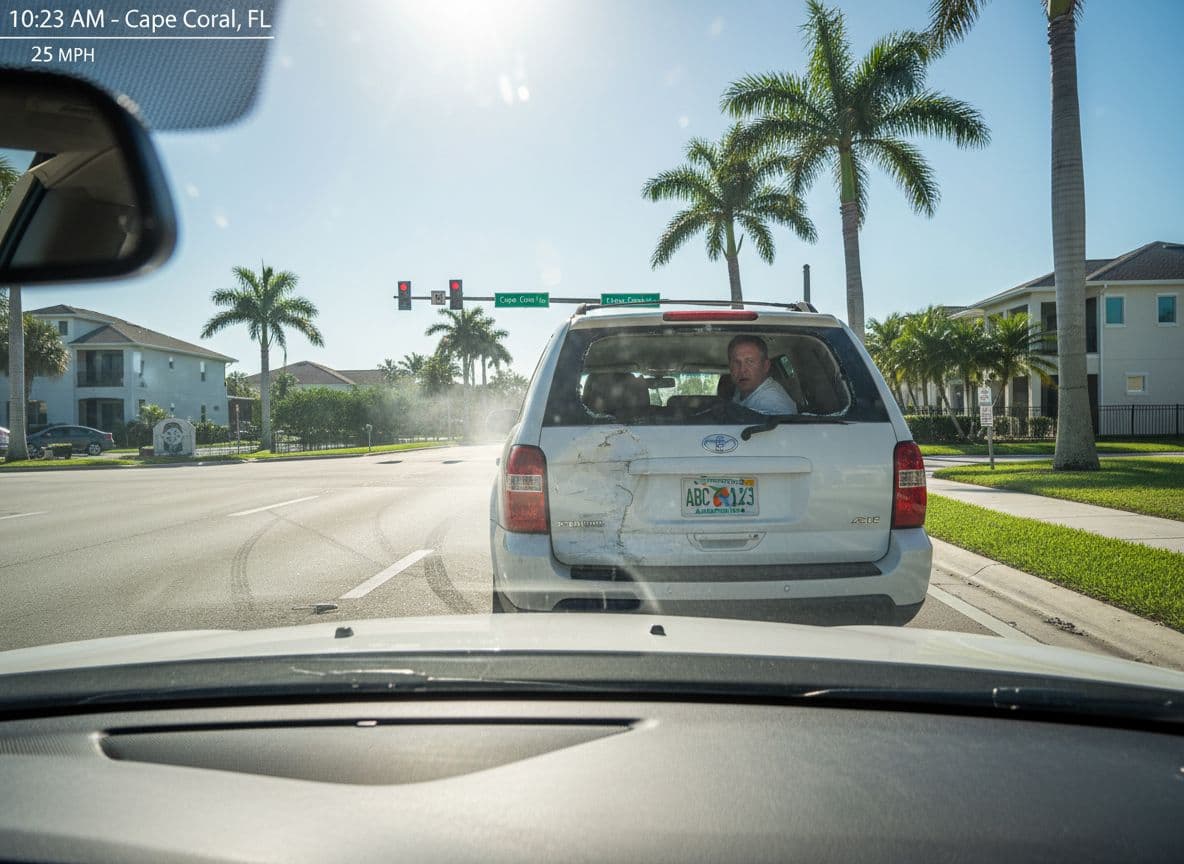
The seconds after a crash can feel blurry. Everyone remembers it differently, and insurance adjusters know that. That’s why dash cam footage can matter so much in a Cape Coral car accident case.
Used the right way, video can support your side with clear, time-stamped detail. Used the wrong way, it can hand the insurer a ready-made argument that you share the blame. This guide explains what helps, what hurts, and how to protect yourself when you’re dealing with a dash cam footage claim.
Why dash cam footage matters in a Cape Coral car accident claim
A dash cam can act like a neutral witness that doesn’t forget. It may capture the traffic signal, lane positions, braking, turn signals, and how quickly everything happened.
That matters because Florida claims often start inside the no-fault system, and then move into a fault claim if injuries are serious enough. If you want a clearer picture of how that system works, start with understanding Florida’s no-fault insurance for Cape Coral accidents. Dash cam video can support both the PIP portion (by backing up the crash details) and any later liability dispute.
What dash cam footage helps prove (when it’s clean and complete)
Good video doesn’t just show impact. It shows the story leading up to it, which is where liability is usually decided.
Here’s what tends to help most:
- Right-of-way and traffic control: Red lights, stop signs, yield signs, and who entered the intersection first.
- Unsafe lane changes: A driver drifting, cutting you off, or merging without space.
- Rear-end crash context: The other driver following too closely, looking down, or reacting late.
- Sudden turns and U-turns: Especially when a driver turns across traffic or makes an unexpected move.
- Road and weather conditions: Standing water, glare, darkness, or debris that explains why the crash unfolded the way it did.
Video can also help with credibility. If the other driver claims you “came out of nowhere,” but the footage shows you were steady in your lane for several blocks, that’s powerful.
Dash cams sometimes capture what people say right after a crash. That can help, but it can also backfire. More on that below.
If you’re building a full proof package, dash cam footage should be one piece of a bigger file. Avard Law covers other strong proof in essential evidence for a Cape Coral car accident claim.
What dash cam footage can hurt (even when you didn’t cause the crash)
Dash cam video feels objective, but it can still be used against you. Insurance companies watch for any detail that shifts blame.
Common problems include:
It shows a traffic mistake, even a small one
Rolling through a stop sign, speeding a bit, changing lanes fast, or following too close can turn into a shared-fault argument. In Florida, shared fault can cut your recovery, and in some cases it can block it.
It captures distractions or risky behavior
A dash cam may record you looking down, handling your phone, eating, or arguing with a passenger. Even if that didn’t cause the crash, adjusters may use it to attack your care level.
It records your words in the heat of the moment
People say things like “I’m sorry” or “I didn’t see you.” That’s human, not an admission of legal fault, but insurers may treat it like one. The same goes for angry statements that make you look reckless.
It’s edited, clipped, or missing the lead-up
A 10-second clip can look suspicious. Missing minutes can raise questions about what happened before the impact. If you share footage, you usually want the original file plus context, not a trimmed version.
The legal pressure points: fault rules, deadlines, and why video can decide them
In late 2025, Florida’s claim rules are tougher than many people expect. The state’s changes to negligence cases have made fault fights more important, because being pushed over the fault line can crush a case’s value.
That’s one reason dash cam footage can be so important: it can keep the story grounded in facts, not opinions. For a deeper look at how these rules affect Cape Coral drivers, read how HB 837 alters car accident compensation.
Video also needs to be believable. If the date and time stamp is off, or the file looks altered, the insurer may argue it can’t be trusted. That doesn’t mean it’s useless, but it can create an avoidable fight.
How to preserve dash cam footage after a crash (so it stays usable)
Dash cams overwrite old files. Some overwrite within hours. Treat your video like fresh produce, it won’t last long if you leave it in the car.
As soon as you can safely do it:
- Stop the overwriting: Power down the camera, or remove the SD card.
- Save the original: Keep the SD card in a safe place, and don’t record over it.
- Make a copy: Copy the file to a computer or secure storage. Keep the original file unchanged.
- Write down key details: Date, time, location, travel direction, and anything unusual (like heavy rain or sun glare).
- Photograph the scene too: Video is great, but still photos of damage and skid marks can fill gaps.
Also get your official report quickly. It often becomes the backbone document insurers use to frame the crash. Avard Law explains the process in how to obtain your Cape Coral car accident report.
How to share dash cam footage safely (and avoid hurting your case)
Sharing video should be a deliberate choice, not a reaction. Once it’s out, you can’t pull it back.
Share it with the right people first
In most cases, start with your personal injury attorney before you send it to the other driver’s insurer. Your lawyer can review it for weak spots, and decide whether to share the full file, part of it, or pair it with other proof.
If you already have counsel, give them the footage the same way you’d give medical records or bills. Here’s a helpful checklist of what to gather and provide in what paperwork your personal injury attorney needs.
Don’t post it online
Social media turns evidence into entertainment. It can also invite comments that reshape the narrative, and it can spread fast. Even a “private” post can be screenshotted and used later.
Avoid sending a “highlight reel”
A dash cam footage claim is stronger when it’s complete. If you only send the impact clip, the insurer may argue you hid what happened before.
Protect privacy when needed
Dash cam files can capture faces, license plates, addresses, and private conversations. If redaction is appropriate, your attorney can help handle that while keeping the file usable.
Use a secure transfer method
Texting a compressed video often strips quality and metadata. If you have to share it, send the original file through a secure method that preserves the format, and keep a note of when and to whom you sent it.
Conclusion
Dash cam footage can be the clearest voice in a noisy claim, but it isn’t automatically “good” evidence. It helps when it’s complete, original, and backed up by medical records, photos, and the crash report. It hurts when it shows risky driving, missing context, or heat-of-the-moment statements that insurers twist into blame.
If you have video from a Cape Coral crash, treat it like evidence, not a post. Save it fast, keep the original, and talk with a personal injury attorney before you share it widely.