
Florida’s “Serious Injury” Threshold in 2025, what it takes to step outside PIP and sue for pain and suffering (Cape Coral guide)
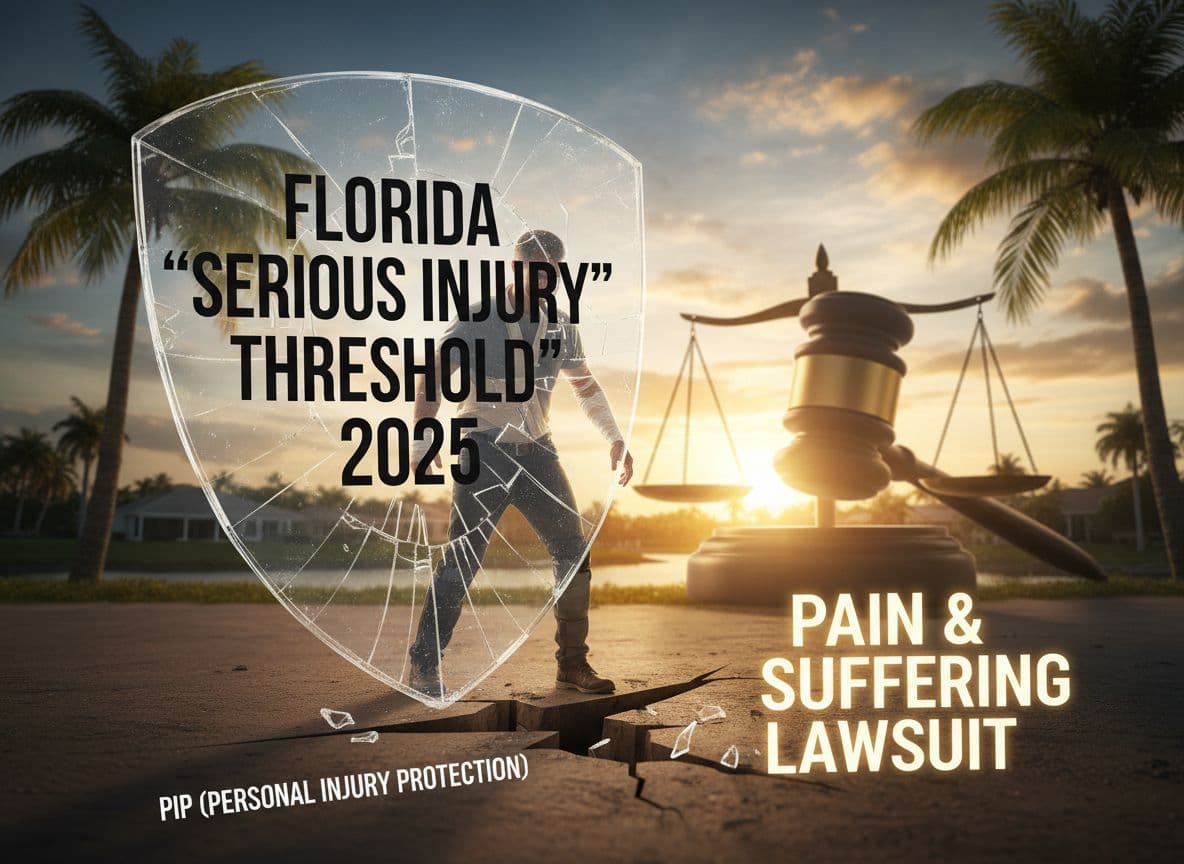
After a car crash in Cape Coral, most people expect the at-fault driver’s insurance to pay for the harm they caused. Florida doesn’t work that way at first. Under the no-fault system, your own Personal Injury Protection (PIP) usually pays initial medical bills and some lost wages, even when the other driver clearly caused the wreck.
That’s where frustration sets in. PIP doesn’t pay for pain and suffering, and the benefits can run out fast. To pursue those non-economic damages, you usually must meet the florida serious injury threshold.
This guide explains what the threshold means in 2025, what evidence helps prove it, and what Cape Coral drivers should do early to protect a potential claim.
Florida no-fault in 2025: why PIP comes first (and why it feels limiting)
Florida’s no-fault rules still apply in 2025. In most crashes, you start with PIP, which is typically capped at $10,000, and you must get medical care within 14 days to stay eligible. Many policies also limit benefits to $2,500 if a doctor doesn’t diagnose an emergency medical condition.
PIP can help with:
- A portion of medical bills
- A portion of lost wages
- Limited replacement services in some cases
What PIP does not cover is the human part of the injury: the sleep you lose, the strain on your relationships, the anxiety at intersections, the pain that won’t quit. Florida blocks those damages unless your injuries meet the legal threshold described in What Florida’s No-Fault Law Means for Your Cape Coral Car Accident Claim.
The Florida “serious injury” threshold (F.S. 627.737) in plain English
In 2025, the definition has not changed. Florida Statute 627.737 sets the conditions that let an injured driver (or passenger) step outside no-fault and sue the at-fault driver for pain and suffering.
Here’s the core idea: temporary pain is not enough. Florida generally requires a permanent injury, a permanent loss of function, significant permanent scarring or disfigurement, or death.
What qualifies under the threshold (quick reference)
| Threshold category | What it means in real life | Common examples (case-specific) |
|---|---|---|
| Significant and permanent loss of an important bodily function | A lasting loss of a body function that matters in daily life | Lasting loss of range of motion, reduced grip strength, chronic nerve deficits |
| Permanent injury within a reasonable degree of medical probability | A doctor can say the injury is permanent, based on medical evidence | Herniated disc with ongoing symptoms, permanent impairment rating, lasting joint damage |
| Significant and permanent scarring or significant and permanent disfigurement | Visible, lasting scarring or disfigurement that is more than minor | Facial scarring, burns, surgical scars with permanent cosmetic impact |
| Death | A fatal injury from the crash | Wrongful death claims by survivors |
The phrases “permanent” and “reasonable degree of medical probability” are the battleground. Insurance carriers fight these issues hard because the threshold is the gateway to pain and suffering damages.
What “permanent injury” really means (and what insurers look for)
People hear “permanent” and think it means wheelchair-level injuries only. That’s not the standard. A permanent injury can be less dramatic but still life-changing, like chronic neck pain that limits work, driving, and sleep.
In most cases, permanency is proven through medical evidence, including:
- Imaging (MRI, CT, X-rays) when appropriate
- Consistent treatment records (not just one visit)
- Objective findings (muscle spasm notes, reduced reflexes, strength loss)
- Specialist evaluations (orthopedics, neurology, pain management)
- A doctor’s opinion that the injury is permanent within a reasonable degree of medical probability
Insurers often attack permanency by pointing to gaps in care, missed appointments, or “normal” imaging. They also blame degenerative changes and pre-existing conditions. Florida law does not bar recovery because you had prior problems, but you must show the crash caused a new injury or made an existing one worse, backed by records and medical opinions.
Stepping outside PIP: what you can sue for in Cape Coral once the threshold is met
If you meet the threshold, you can generally pursue a liability claim or lawsuit against the at-fault driver for damages that PIP does not pay, including:
- Pain and suffering
- Mental anguish and inconvenience tied to the injury
- Loss of enjoyment of life (when hobbies and normal activities are limited)
- Full lost wages and reduced future earning ability (beyond PIP’s partial wage benefit)
- Future medical care not covered by PIP
- Out-of-pocket costs (co-pays, prescriptions, mileage, home help)
Think of PIP like a small umbrella in a Florida downpour. It might help at first, but it won’t keep you dry in a serious storm. The serious injury threshold is what allows you to seek broader compensation when the harm is lasting.
The fastest ways to weaken a serious injury claim (and how to avoid them)
Many Cape Coral victims lose leverage early, without meaning to. The most common problems are preventable.
1) Missing the 14-day treatment window
Even if you feel “okay,” get checked. Adrenaline hides injuries. Waiting also gives insurers an opening to argue the crash wasn’t the cause.
2) Treating once, then stopping
Permanency arguments are built on patterns: continued symptoms, continued care, and consistent reporting. Big gaps in treatment can look like you recovered, even when you didn’t.
3) Not documenting the crash and symptoms
A claim is only as strong as its paper trail. Getting the official report matters, and you can learn the process in How to Get Your Car Accident Report in Cape Coral, FL.
A simple habit that helps is keeping a short weekly log: pain level, sleep problems, missed work, and activities you can’t do. It’s not “dramatic,” it’s evidence.
2025 legal pressure points: shorter deadlines and harsher fault arguments
Even if the serious injury threshold itself hasn’t changed, the legal environment around car accident cases is tougher than it used to be.
Florida’s tort reform tightened key rules, including a shorter deadline to file many negligence lawsuits (often two years, depending on when the crash occurred) and a modified comparative fault system where being more than 50 percent at fault can block recovery from the other driver.
Those rules change how insurers negotiate. They push harder to shift blame, and they push faster because deadlines hit sooner. A detailed local breakdown is in How Florida’s New Tort Reform Changes Car Accident Settlements for Cape Coral Drivers in 2025.
When it’s time to talk to a personal injury attorney
Some cases can be handled through PIP alone. Many cannot. It’s time to speak with a personal injury attorney when:
- You need an MRI, injections, surgery, or long-term rehab
- Your doctor mentions permanency, impairment, or future care
- You missed work beyond a few days, or can’t do your job fully
- The insurer pressures you to give a recorded statement or settle fast
- You have scarring, nerve symptoms, or lasting limits in movement
A good case is built early, not patched together later.
Conclusion: the threshold is a medical issue and a legal issue
In 2025, the florida serious injury threshold is still the key that unlocks pain and suffering damages after a Cape Coral car accident. Meeting it usually comes down to clear medical proof, consistent care, and smart documentation from the start.
If your injuries aren’t fading, treat the situation like it’s serious. Get care, protect the record, and don’t let an insurer decide what your pain and suffering is worth before you know the full impact of the crash.