
Florida PIP Updates for 2026: What Cape Coral Victims Need to Know
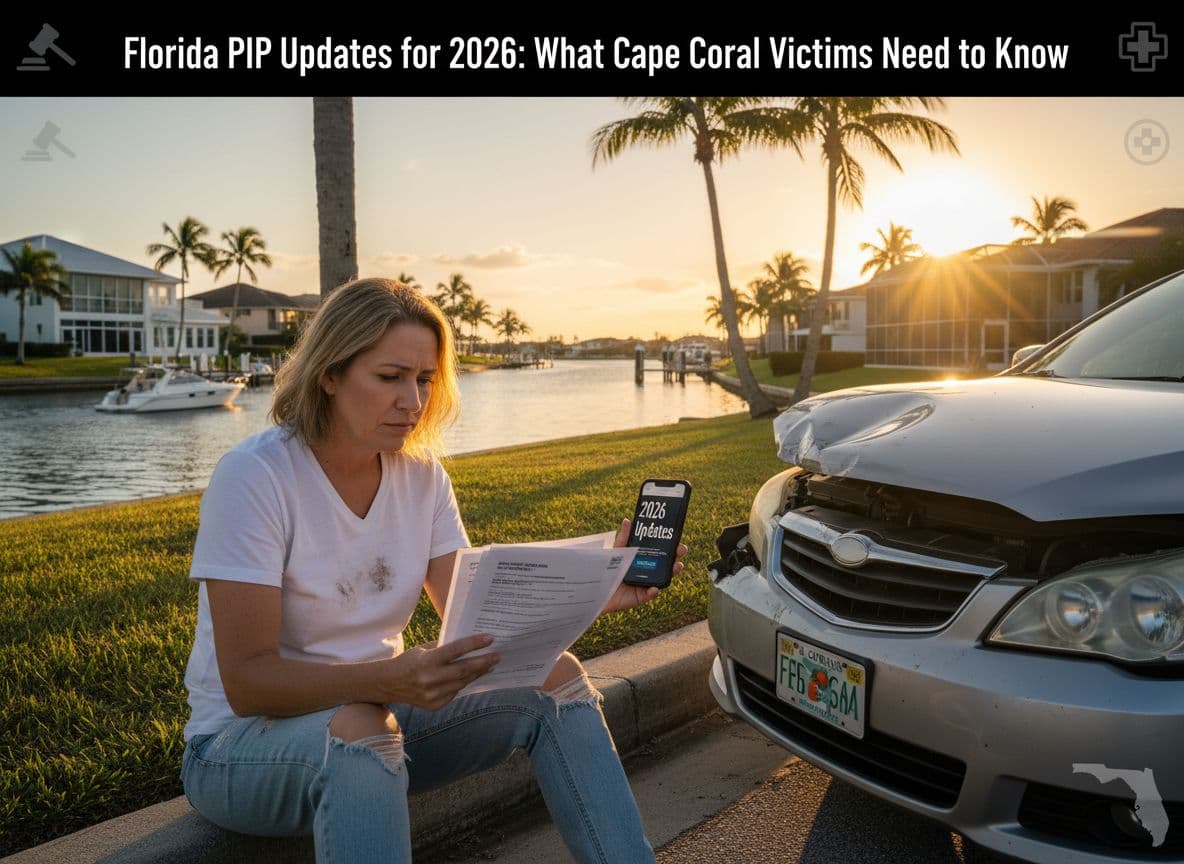
A car crash can flip your life upside down in seconds. Then the bills start, the calls from insurance adjusters pile up, and you’re left wondering who pays for what.
In January 2026, Florida drivers are living in a split screen: today’s no-fault rules still apply, but a major switch is scheduled for mid-year. These florida pip 2026 changes matter a lot in Cape Coral, where everyday driving includes heavy local traffic, seasonal visitors, and plenty of distracted driving risk.
Here’s what’s changing, what’s not (yet), and how to protect your health and your claim.
Where Florida PIP stands right now (January 2026)
As of today, Florida’s no-fault system is still in effect. That means most people injured in a crash turn to their own policy first through Personal Injury Protection (PIP), no matter who caused the wreck.
In plain terms, traditional PIP has worked like a quick-pay lane:
- It typically pays 80% of medical bills up to the policy limit.
- It typically pays 60% of lost wages up to the policy limit.
- It comes with strict rules, including the well-known 14-day window to get initial medical care after the crash.
If you need a refresher on how the current framework works, Avard Law’s overview of Florida’s no-fault car insurance law lays out the basics in simple language.
A practical problem with PIP in real life
PIP can feel like a bandage on a broken bone. It may help early, but serious injuries can burn through limits quickly, and insurers often fight over billing, records, and whether treatment was “necessary.” In early 2026, many drivers are also seeing tighter documentation expectations as insurers prepare for the upcoming shift.
The big change scheduled for July 1, 2026: PIP ends
Florida lawmakers passed legislation in 2025 that is set to repeal mandatory PIP effective July 1, 2026. After that date, Florida moves toward a more fault-based auto injury system.
Two changes matter most for victims:
- PIP goes away for new and renewed policies after the effective date.
- Minimum bodily injury (BI) liability limits increase (with property damage rules staying in place).
Florida auto coverage: before vs. after July 1, 2026
| Topic | Before July 1, 2026 | On/after July 1, 2026 |
|---|---|---|
| Injury coverage | PIP pays first, regardless of fault | Claim typically targets the at-fault driver’s BI coverage |
| Minimum BI limits | Lower minimums | $25,000 per person / $50,000 per crash |
| Lawsuit access | Often limited by no-fault thresholds | More direct path to pursue full damages from at-fault driver |
This change can help some victims seek fuller compensation, but it also removes the “automatic” PIP starting point many families relied on after a wreck.
What this means for Cape Coral crash victims
Once PIP is gone, the first question becomes less about “which policy pays first” and more about who is legally at fault, and what coverage is available.
That shift affects real people in real ways:
Medical bills may not get paid quickly. Under PIP, treatment often starts while payment gets sorted out. In a fault-based system, providers may look to health insurance, letters of protection, or payment plans while liability is investigated.
Evidence matters more. Photos, witness names, vehicle damage, and the crash report can carry more weight, because you’re proving fault earlier and more often.
Coverage gaps can hurt. If the at-fault driver has the minimum BI coverage (or none), your recovery may be limited even with serious injuries. That’s why uninsured/underinsured motorist coverage (UM/UIM) becomes even more important in a post-PIP Florida.
If you want a clear breakdown of the pieces of a Florida auto policy, including optional coverage that can protect you, see The Basics of Automobile Insurance Coverage in Florida.
What to do now (before July 2026 hits)
Think of your auto policy like a roof. You don’t inspect it during the storm, you do it before hurricane season.
A few smart steps to consider now:
Review your liability limits. Higher minimum BI limits are coming, but “minimum” is still the floor, not the safe zone.
Ask about UM/UIM coverage. This can protect you if the other driver has little insurance, or no insurance.
Check how your health insurance works after auto injuries. In a post-PIP system, health coverage may be the first line for treatment, depending on the facts of the crash and the available liability coverage.
Plan for proof of coverage. The upcoming rules include stronger requirements to show proper coverage at registration, not just after a crash.
If you’re injured in Cape Coral before July 1, 2026: protect your PIP claim
Until the law changes, the current PIP rules still control most early payments. A few mistakes can quietly wreck a claim, even when the crash was clearly not your fault.
Here’s a tight, practical checklist:
- Get medical care fast. The 14-day rule is a common reason benefits get denied.
- Tell providers it was a car crash injury. You want clean, consistent records.
- Save every document. Discharge papers, imaging orders, prescriptions, work notes, mileage, and receipts.
- Be careful with recorded statements. Short answers can be taken out of context later.
For a step-by-step look at the process, Navigating your Cape Coral PIP claim after a car accident explains deadlines, benefits, and common disputes.
If you’re injured on or after July 1, 2026: expect a fault-based fight
After the switch, you should expect insurers to focus early on:
- Who caused the crash
- Whether you share any blame
- Whether your treatment is connected to the crash
- How much coverage is available
To strengthen your position, treat the first week after a crash like you’re preserving a story that might get challenged later.
At the scene: call 911, request medical help if needed, take photos, and get witness contact information if it’s safe.
In the days after: follow up with medical care, follow treatment plans, and keep a simple pain and activity journal.
Also keep time in mind. Florida law has tightened deadlines in recent years, and many injury cases now run under a two-year clock. Waiting to act can shrink your options fast.
When it’s time to talk with a personal injury attorney
Some cases are manageable, others turn into a pressure test. A personal injury attorney can step in when the stakes are high or the insurer is already pushing back.
Situations that often call for legal help include:
Serious injuries: surgery, head injury symptoms, fractures, or lasting pain.
Denied or delayed payment: disputes about treatment, records, or “relatedness.”
Fault being pinned on you: especially in lane-change or intersection crashes.
Low policy limits: when damages are clearly higher than coverage.
If you want local help, start with Avard Law’s Cape Coral personal injury attorneys, or reach out through the firm’s contact page to discuss your situation.
Conclusion
Florida’s auto injury rules are about to change in a way that impacts real families in Cape Coral. Until July 1, 2026, PIP rules still apply, and deadlines like the 14-day treatment window can decide whether bills get paid. After that date, claims will focus more on fault, available BI limits, and your ability to prove damages. If you’re hurt and the situation feels uncertain, getting clear guidance early can protect your health, your finances, and your rights.