
Cape Coral Car Crash Claim: How to Beat the “Prior Injuries” Blame Game With the Right Records and Wording
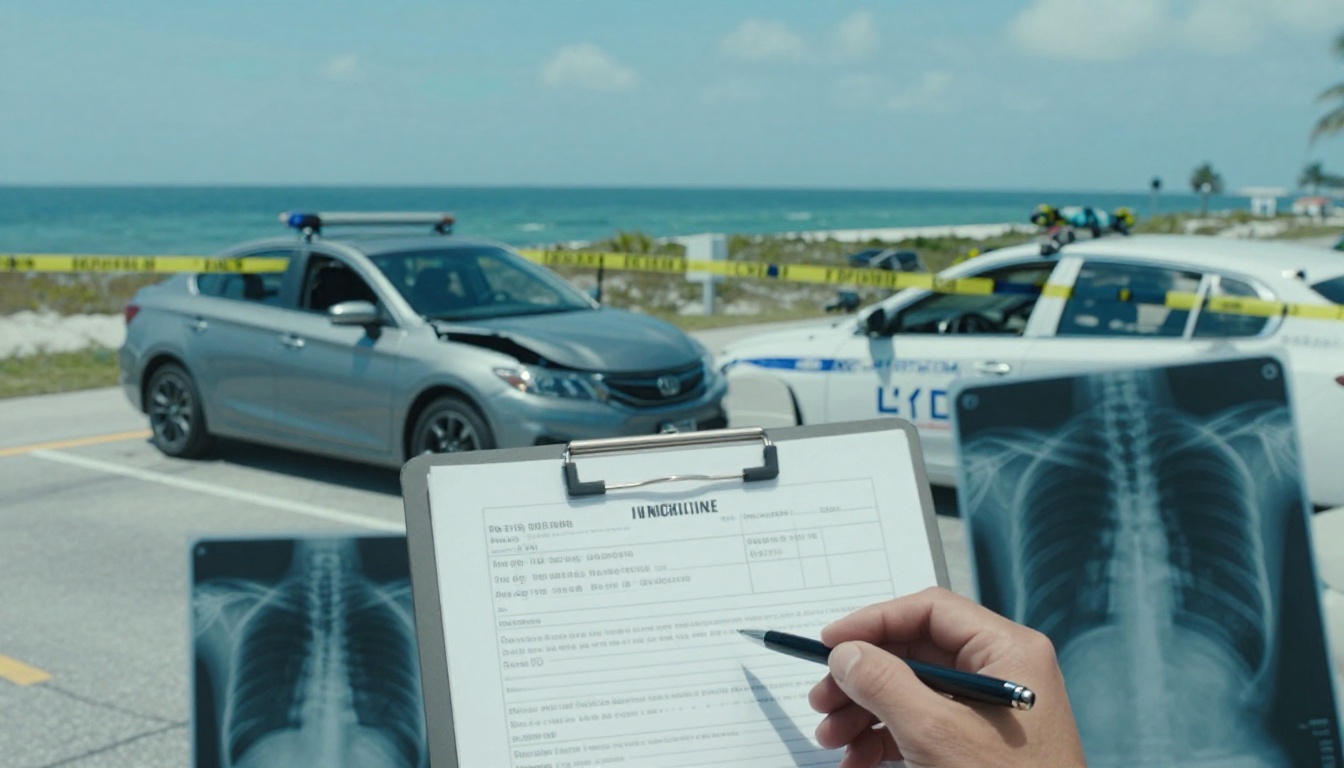
After a crash, the at-fault insurer often grabs one idea and won’t let go: “You were already hurt.” It’s like trying to repaint a wall that already had a stain; the insurance company acts like the stain is the whole story.
In a Cape Coral car crash claim, that tactic can shrink your payout fast, unless you respond with clean medical proof and careful wording that shows what changed after the wreck.
The good news is this: Florida law still allows recovery under personal injury protection when a crash aggravates a prior condition. The difference between a fair settlement and a lowball offer usually comes down to records and phrasing, not arguments.
These rights are established under the Florida Motor Vehicle No-Fault Law and relevant Florida Statutes.
Why at-fault insurers push “prior injuries” and what Florida law actually cares about
Insurance adjusters for the at-fault insurer, or insurance carrier, aren’t deciding what’s fair; they’re deciding what they can defend on paper. If your file shows you had back pain before, they’ll try to turn every new symptom into “the same old problem,” even when the crash clearly made things worse.
This is why they often request broad medical authorizations, common litigation practices used by an at-fault insurer, and ask loaded questions in recorded statements. They’re looking for a sound bite they can repeat later: “So you’ve had this pain for years?”
In Florida, the key issue usually isn’t whether you had a prior condition. It’s whether the crash caused a new injury or worsened an old one. Trial courts evaluate bodily injury claims to determine if the crash led to new harm or aggravation of a pre-existing condition. As of January 2026, the core rules haven’t shifted: you can pursue damages for aggravation of a pre-existing condition in a trial court negligence action, and juries are instructed to award damages for the added harm caused by the crash (often referenced through Florida’s standard jury instructions on aggravation). Pursuing these bodily injury claims through a trial court negligence action involves potential attorney’s fees that can impact your net recovery.
Two more legal realities shape how these cases get argued:
- Florida’s shorter lawsuit deadline under Florida Statutes (for many negligence actions, including many car crashes after March 24, 2023) makes early documentation more important, especially to recover uninsured motorist benefits if the at-fault insurer has low limits. In a trial court negligence action, inadequate records can lead to disputes over attorney’s fees and limit your ability to prove bodily injury.
- Comparative fault rules under Florida Statutes make fights more aggressive now, so insurers may combine “prior injuries” with “you were partly to blame” to drive the value down. This often plays out in trial court, where attorney’s fees and bodily injury awards hinge on clear evidence of the at-fault insurer’s responsibility.
If you’re still gathering basics like reports, photos, and witness info, start with a local proof roadmap. The Cape Coral car crash evidence checklist helps you lock in records early, before they disappear or get “rewritten” by time.
The records that work: proving “baseline vs. change” after a Cape Coral crash
The cleanest way to beat the prior-injury defense is to show a before-and-after story that makes medical sense. Think of your health like a car’s alignment. Maybe it wasn’t perfect before, but after the crash, it pulled hard to the right. Your job is proving when the pull started and how severe it became.
Strong claims usually include two buckets of records:
- Baseline records (what your condition looked like before the wreck)
- Post-crash records (what changed right after, and what treatment became necessary)
A mistake people make is assuming baseline records will “hurt” them. Sometimes they help you by showing stability. If you had a prior back issue like a herniated disc but weren’t treating for it, weren’t missing work, and weren’t getting injections, that gap can support the argument that the crash caused a new flare and new limitations, which strengthens your position in settlement or trial court for medical expenses and attorney’s fees.
Here are the documents that tend to move the needle in a Cape Coral car crash claim:
| Record type | What to request | Why it helps against “prior injury” arguments |
|---|---|---|
| EMS and ER chart notes | Full chart, triage notes, vitals, provider notes | Captures symptoms close in time to impact |
| Imaging and comparisons | Radiology reports plus image files | Shows new findings or documented change over time; a medical expert witness review is vital for proving permanent loss of bodily function or justifying medical expenses |
| Primary care or specialist notes | Records that describe prior status (baseline) | Supports “stable before, worse after” narrative |
| Work restrictions and wage proof | Work notes, missed-time records, pay stubs | Proves functional loss, not just pain complaints |
| PT/chiro notes with objective findings | ROM limits, strength deficits, positive tests | Documents measurable limitations and progression |
These records are essential not just for insurance negotiations but also if your Cape Coral car crash claim proceeds to trial court. In trial court, they help prove damages like medical expenses and can support recovery of attorney’s fees.
Two timing points matter more than most people realize.
First, early care. Florida personal injury protection rules, governed by Florida Statutes, can punish delays, and delays also create doubt that hurts in trial court when fighting for medical expenses and attorney’s fees. If you haven’t looked at the 14-day issue yet, read Florida personal injury protection 14-day rule explained for Cape Coral.
Second, objective crash evidence can support the medical story. If impact severity is disputed, video can help connect the mechanics to the flare-up. If police were on scene, you may be able to request body-worn footage. Use requesting Cape Coral police body cam video to preserve and request it with wording that reduces delays, making it stronger evidence for trial court on medical expenses and attorney’s fees.
The wording that works (and the wording that quietly damages your claim)
Prior injury cases are often lost in the small phrases that sound harmless in daily life, but become weapons in a claim file, potentially escalating to trial court where attorney’s fees and expert medical testimony come into play.
What you want your medical records to say
You don’t need a dramatic story. You need precise language that separates old symptoms from new problems, and ties the change to the collision. When you see a provider, the goal is a note that clearly states:
- Mechanism: “Rear-ended at speed,” “side impact,” “airbags deployed,” or similar facts. Expert medical testimony is often required by the trial court to explain this mechanism of injury.
- Timing: “Pain began immediately,” or “within hours,” if that’s accurate.
- Baseline: “Prior intermittent low back pain, controlled, no recent treatment,” if true.
- Change: “Now daily pain,” “new radicular symptoms,” “new weakness/numbness,” “new headaches,” “sleep disruption,” “cannot sit more than 20 minutes.”
- Functional limits: driving, lifting, childcare, work tasks, stairs, household chores. These details help quantify pain and suffering in a Cape Coral car crash claim.
If a chart note is vague (for example, it says “back pain” without mentioning the crash), ask politely for an addendum. Providers do this more often than people think, as long as you’re asking for accuracy, not advocacy. Vague records can undermine your case in trial court, leading to disputes over attorney’s fees.
What to avoid saying to adjusters and in recorded statements
Under Florida Statutes governing personal injury protection, insurance questions often sound friendly when reporting symptoms to an insurance carrier, but they’re built to blur time. Be careful with these traps, as poor phrasing can drag the case to trial court with mounting attorney’s fees:
- “I’ve always had back pain.” (If you mean occasional soreness years ago, say that.)
- “It’s the same pain as before.” (Even if it’s the same area, the intensity and limits may be different.)
- “I was fine the next day.” (Many injuries worsen after adrenaline fades.)
If you must speak with an insurer early, keep it narrow: the crash facts, where you sought care, what hurts now, and how your daily life changed. Don’t guess about diagnoses. Inaccurate statements can complicate matters in trial court and inflate attorney’s fees.
Also be cautious before signing general releases. A targeted records request is normal. Signing a general release too early can jeopardize an underinsured motorist claim or uninsured motorist benefits. A wide-open authorization can turn into a fishing trip.
A practical, safer phrase that often fits the truth is: “I had a prior condition, but it was manageable. After this crash, my symptoms increased and my function dropped.” That sentence draws the line insurers try to erase, helping avoid trial court battles and unnecessary attorney’s fees.
Conclusion
The at-fault insurer’s “prior injuries” argument only works when the story stays fuzzy. In a Cape Coral car crash claim, you stop that tactic by proving baseline, documenting change, and using plain, consistent wording that matches your medical records. Get evaluated early, make sure the crash is clearly stated in your charts, and push for notes that describe function, not just pain. When the paper trail is clear, the blame game gets a lot harder to sell.
A solid record also pressures the at-fault insurer to accept a reasonable offer of judgment or proposal for settlement, tools governed by Florida Statutes that can secure attorney’s fees if rejected unreasonably. Serve your own offer of judgment early alongside a proposal for settlement to shift the dynamics and cover your attorney’s fees under Florida Statutes.
If no fair offer of judgment or proposal for settlement materializes, the case proceeds to trial court. There, expert medical testimony can clarify the standard of care in negligence claims, distinguishing them from medical malpractice scenarios. During closing argument, if the defense improperly leans on prior injuries, your attorney can seek a curative instruction from the judge. A weak prior injuries defense might even prompt a directed verdict before closing argument concludes.
In trial court, persistent misuse of prior injuries during closing argument opens the door to a motion for new trial if the verdict seems tainted. For instance, inflammatory remarks in closing argument could justify a motion for new trial on evidentiary grounds, or a motion for new trial due to attorney misconduct in closing argument. Florida courts scrutinize such tactics closely, often granting a motion for new trial when closing argument crosses lines on prior injuries. Even subtle bias in closing argument might support a motion for new trial, reinforcing why clear documentation matters.
Should evidence overwhelmingly favor you, request a directed verdict mid-trial to avoid a flawed closing argument altogether. Note that in uninsured motorist benefits disputes, breach of contract issues can emerge alongside prior injuries debates, further complicating the at-fault insurer’s position. With proactive steps like an early offer of judgment and airtight records, you minimize risks from trial court battles over closing argument tactics.