
Cape Coral car crash demand package checklist, the exact records and photos that move offers
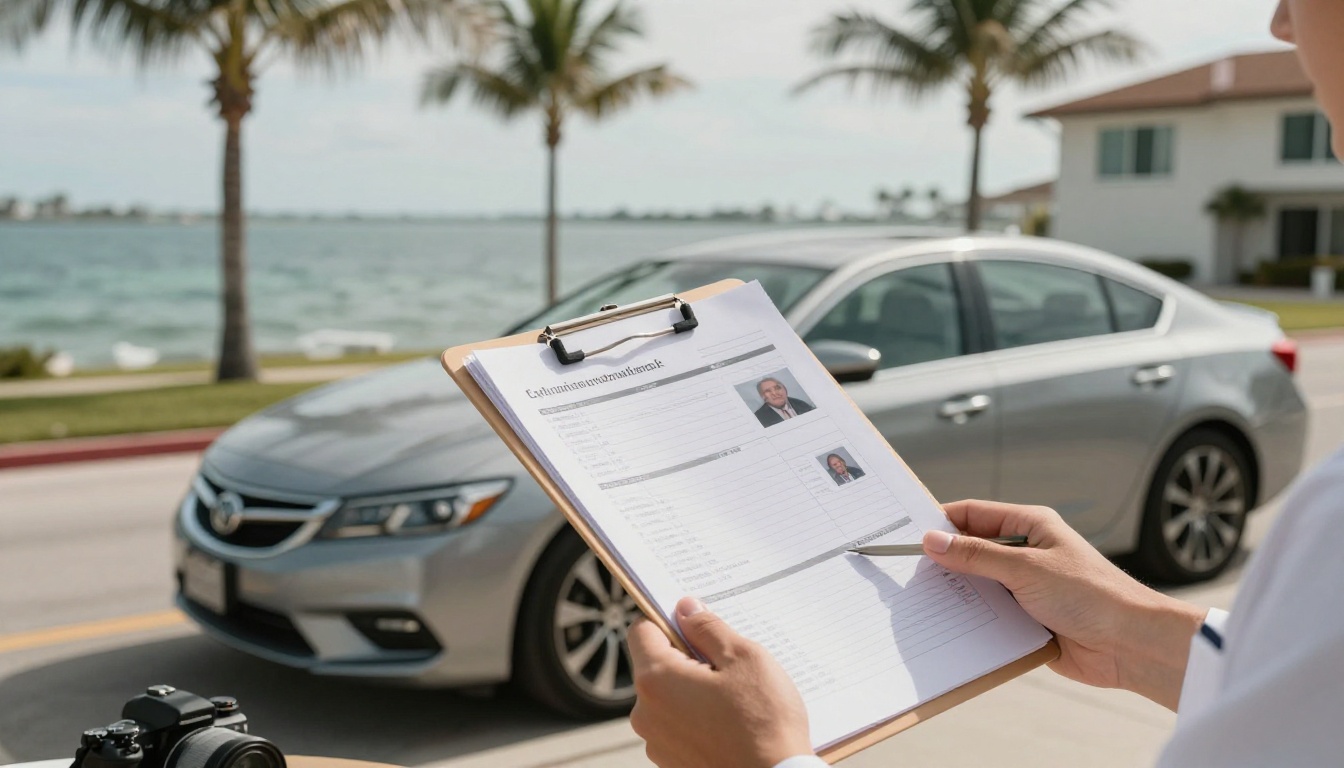
A car crash demand package is like handing the insurance company a clear, labeled map to the money they should pay. When it’s done right, adjusters stop guessing, stop stalling, and start talking numbers.
When it’s done wrong, they do the opposite. They “can’t evaluate yet,” they question treatment, and they hunt for reasons to blame you.
If you were hurt in a Cape Coral crash, the fastest path to a serious offer usually isn’t a longer demand letter. It’s better proof, especially the exact records and photos that make liability and damages hard to argue with.
What a car crash demand package needs to prove (in plain English)
Every demand package is trying to answer two questions:
- Why are we sure their driver is legally at fault (or mostly at fault)?
- What did the crash cost you, in dollars and in daily life?
Florida law still boils most vehicle cases down to duty, breach, causation, and damages. If you want a judge-level outline of how Florida courts frame personal injury claims, see the Florida Courts benchguide PDF, Personal Injury Claim benchguide outline.
Two Cape Coral realities matter in 2026:
- Deadlines are tighter after Florida’s tort reform changes, and the fault fight is more aggressive. Evidence that pins down who caused the crash matters more than it used to. (For a local explanation, read Florida tort reform impact on Cape Coral car accident settlements.)
- Crash volume is not “rare.” Publicly reported local data for 2025 shows Cape Coral recorded 271 crashes, including serious injury and fatal crashes. Adjusters see claims every day, so your package has to stand out by being complete and organized.
Liability proof that stops the “shared fault” argument
Adjusters often try to shave value by pushing blame onto you. Your goal is to make that difficult. These are the records and photos that do it.
The police report (and any supplements)
The crash report anchors the basic facts: date, time, drivers, witnesses, diagram, and citations. It also tells the insurer your crash was real and officially documented.
Don’t rely on someone else to “send it later.” Request it and keep a clean copy. If you need step-by-step help, use this guide on how to obtain a Cape Coral car accident report.
If the report is wrong (wrong lane, wrong address, wrong insurance), document the error early. A bad report can drag down an offer even when your injuries are serious.
Scene and vehicle photos that adjusters actually use
Think like an adjuster. They want context shots that explain the physics, not just close-ups of a dent.
Include these photo groups (when available):
- Wide shots: the full intersection or roadway, showing lanes, turn arrows, and sight lines.
- Traffic controls: signals, stop signs, yield signs, and any blocked or missing signs.
- Vehicle positions: where cars ended up, including resting angles and distances.
- Damage patterns: front, rear, both corners, and any intrusion into the cabin.
- Road evidence: debris field, gouge marks, skid marks (with a reference object for scale).
- Lighting and weather: sunrise glare, rain pooling, or fog conditions, if they mattered.
If your crash involved a rideshare, a commercial vehicle, or a road-rage driver, add screenshots of trip details, company IDs, or any threatening texts. Those details can change how insurers evaluate risk.
Witness and video sources, even if you don’t “have” the video yet
If you have witness names, include them with short identifiers (for example, “John S., saw impact from gas station driveway”). If you have written statements, include signed copies.
Also list potential video sources you requested or preserved: dash cam, doorbell camera, business cameras, or traffic cameras. Even the act of identifying and requesting video signals that you’re ready to prove fault.
For a broader evidence rundown, Nolo’s guide is a useful cross-check: evidence to collect after a car accident.
Injury and money proof that pushes offers up (not just “treatment records”)
Once fault is supported, the offer usually turns on injury credibility. Insurers pay more when the medical story is consistent, timely, and backed by objective findings.
The medical records that matter most
A strong demand package doesn’t dump a stack of papers. It highlights the records that connect the crash to the injury, and then shows what it took to improve.
Prioritize:
- Emergency and urgent care records: triage notes, discharge instructions, and diagnoses.
- Imaging results: radiology reports for X-ray, CT, MRI (the report matters more than the picture).
- Specialist notes: ortho, neuro, pain management, and any referral reasoning.
- Physical therapy records: eval, measurable limits, progress notes, discharge status.
- Medication history: prescriptions and changes (especially for pain, muscle spasm, sleep, or headaches).
Timing matters in Florida’s no-fault system. If you miss early treatment, insurers often treat the claim like a soft target. This is why the PIP deadline comes up in negotiations so often. If you’re unsure what counts as “initial treatment” in 2025 and 2026, review Florida PIP 14-day rule explained for Cape Coral.
Bills, ledgers, and payment proof (clean and consistent)
Include itemized billing where possible, plus a ledger showing dates of service and balances. If health insurance paid part, include EOBs if you have them. A tidy billing section reduces adjuster “confusion” delays.
A simple table inside your demand package helps an adjuster calculate faster:
| Category | Include | Common reason insurers cut it |
|---|---|---|
| Medical charges | Itemized bills, ledgers, EOBs | Missing dates, duplicate charges |
| Wage loss | Employer letter, pay stubs, tax forms | No proof you missed work |
| Out-of-pocket | Pharmacy receipts, mileage log | “Unverified” expenses |
Wage loss and work impact proof
Wage loss is often undervalued because people don’t document it. Your strongest set is:
- An employer letter with job title, pay rate, dates missed, and any reduced duty.
- Recent pay stubs (before and after the crash).
- If self-employed, invoices, 1099s, bank deposits, and a short profit and loss summary.
If you used PTO or sick time, document it. Insurers treat “paid time off” like it didn’t cost you, unless you show it was consumed.
The “life impact” records that sound human, not rehearsed
Pain and suffering isn’t proved by dramatic language. It’s proved by consistent details.
Two items often move offers:
- A 2-page symptom timeline: what hurt first, what got worse, what improved, what didn’t.
- A short photo set: bruising progression, braces, assistive devices, home modifications, visible scarring.
Don’t post about the crash on social media. Adjusters look for smiles, vacations, gym photos, and “doing fine” captions that they can twist.
How to package it so it’s easy to say “yes” to money
A demand package is judged in minutes first, hours later. Make the first minutes count.
A practical order that works
Put the most decision-driving proof up front:
- Cover letter: crash facts, liability theory, injury summary, and the demand number.
- Liability section: crash report, photos, witness list, any citations.
- Injury section: key records, imaging reports, treatment timeline.
- Damages section: totals for medical, wages, out-of-pocket, plus supporting proof.
- Attachments index: one-page list so nothing “goes missing.”
If you’re still in the first days after the collision, lock down your foundation first. This local guide on what to do immediately after a Cape Coral accident helps prevent the gaps insurers love to exploit.
Timing and the response deadline
Many claims settle faster when the package is sent after you understand the injury path (not necessarily after you’re fully healed). Your letter should set a clear response date and state what’s included, so the insurer can’t claim they didn’t get key records.
If you’re also handling the insurance claim process yourself, this overview helps with the basics: how to file a car insurance claim.
Conclusion
A strong car crash demand package doesn’t beg. It proves. In Cape Coral cases, the offers that move usually follow the same pattern: clear liability records, scene photos that tell the story, medical documentation that matches the timeline, and clean billing and wage proof. If your package makes it easy to see fault and hard to deny harm, you’re already negotiating from a better place.