
Florida Slip And Fall Evidence Checklist For The First 72 Hours
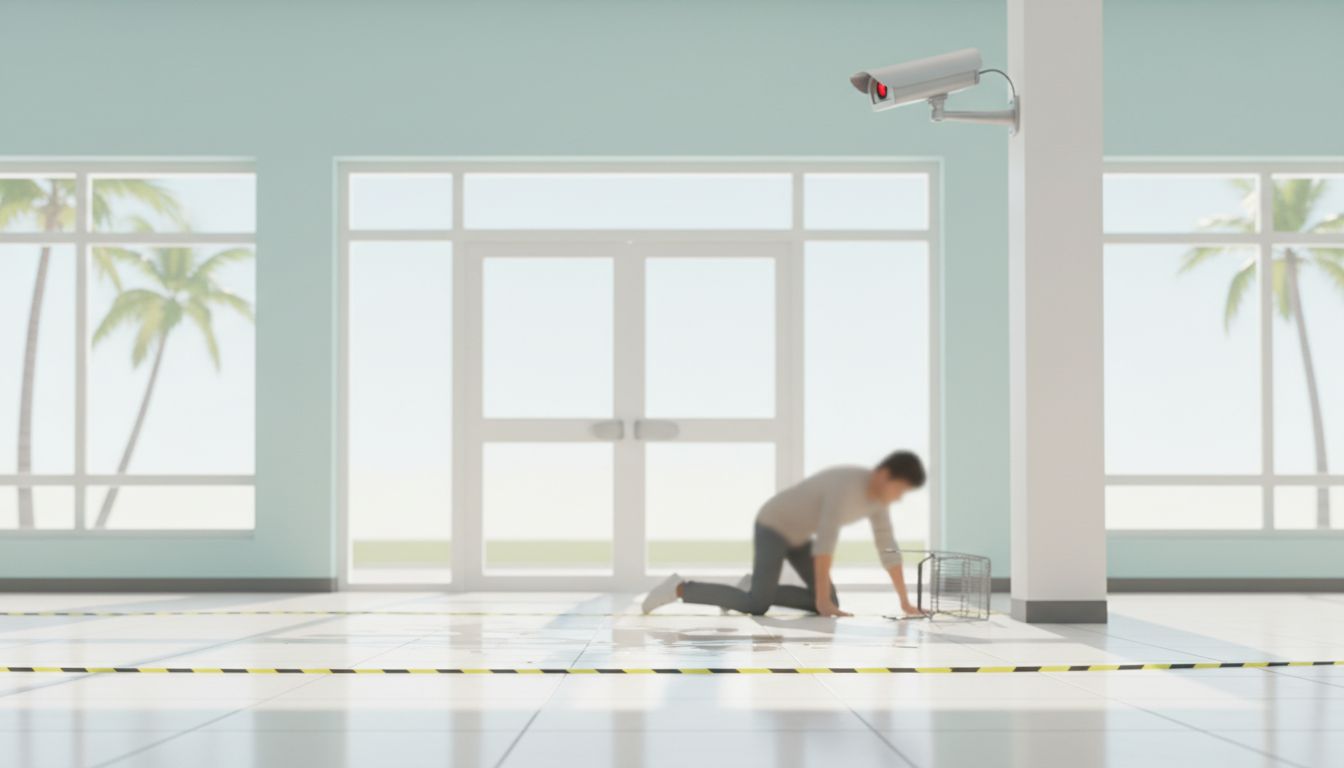
A slip and fall can feel like a blur. One moment you’re walking, the next you’re on the ground, embarrassed, hurting, and unsure what to do. The problem is that important proof can disappear fast, spills get cleaned, mats get moved, and video can be recorded over.
The first three days are often the best window to collect Florida slip and fall evidence that supports what happened and why it wasn’t your fault. The goal isn’t to “build a case” while you’re in pain, it’s to preserve facts before they fade.
Below is a practical, real-world checklist for the first 72 hours, written for people in Florida who may need a premises liability claim.
0 to 2 hours: Protect your health, then freeze the scene

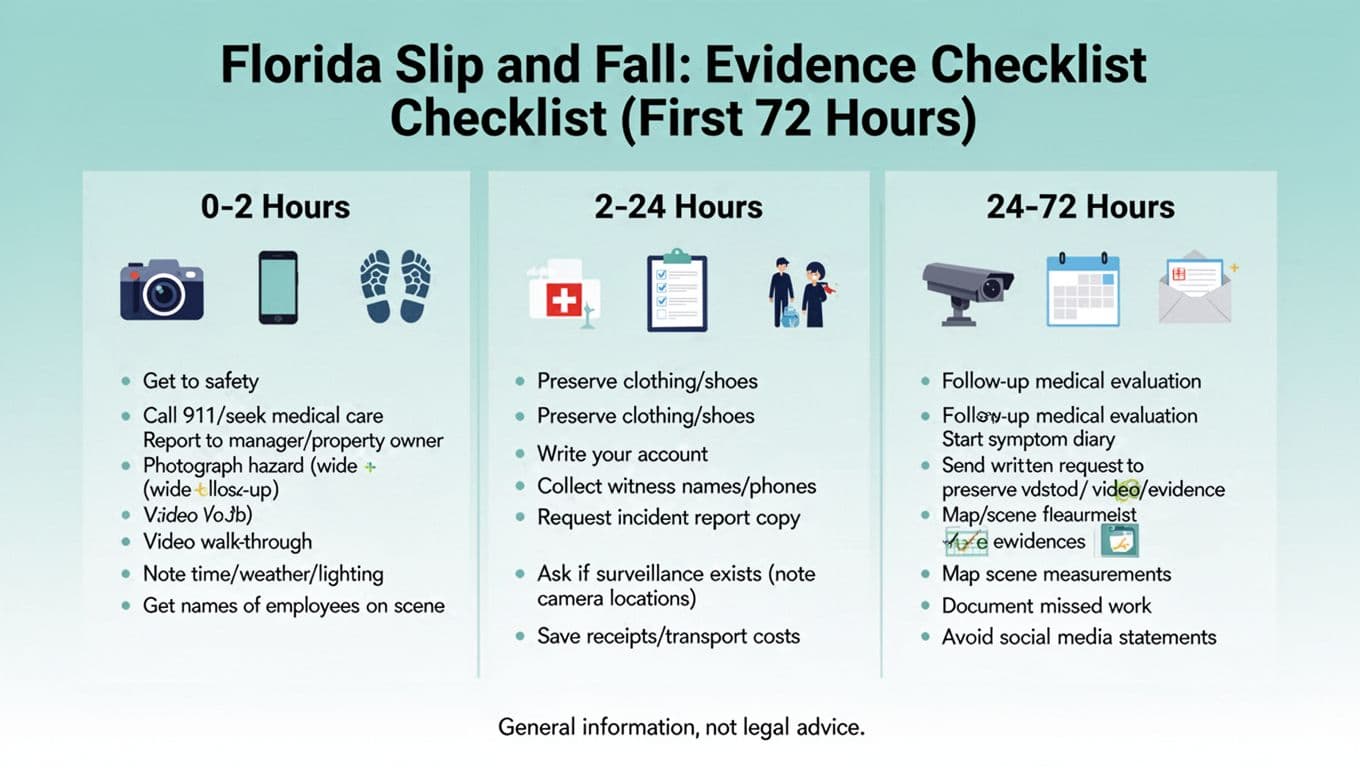
First, get to safety. If you hit your head, feel dizzy, or have serious pain, call 911. Adrenaline can hide symptoms, so don’t talk yourself out of care. Early medical notes can also help connect your injury to the fall.
Next, treat the scene like a paused video frame. You want to capture it before anyone “fixes” it.
Here’s what to do, in order, if you can:
- Report the fall right away to the manager, property owner, or staff on duty. Ask who you’re speaking with and write down their name and job title.
- Photograph the hazard from several angles, both close-up and wide. Include nearby aisles, doorways, and any warning signs (or the lack of them).
- Record a short video walk-through showing how someone approaches the area, where the hazard sits, and what the lighting looks like.
- Document time and conditions in your phone notes. Add weather, wet entry mats, shadows, broken lights, or anything else that affected visibility.
- Get witness contact info if anyone saw it. A quick name and phone number is enough.
Keep your words simple when you report it. Don’t guess about what caused the fall. Also don’t apologize, even out of politeness. A casual “I wasn’t watching” can be repeated later as if it’s a confession.
If you can safely do only three things: get medical care, take photos, and report it to management.
Before leaving, ask one direct question: whether cameras cover the area. If they say yes, note the camera locations and who told you.
2 to 24 hours: Lock down the proof you control (and start your paper trail)
Once you’re home, shift from “scene capture” to “preservation.” Small details matter here, because Florida cases often turn on what can be proven, not what feels obvious.
Start by protecting physical items. Put the shoes and clothing you wore in a bag, unwashed. If there’s liquid, debris, or torn fabric, that can support what you slipped on or how you fell. Keep any bandages, braces, or medical devices you needed right after, too.
Then write your account while it’s fresh. A short, honest timeline is better than a long story. Include where you were going, what you noticed (or didn’t), and what body parts hit first. If you later learn your injury is more serious than you thought, that early note helps show consistency.
Also gather your early expenses. Save ride-share receipts, co-pays, crutches, and over-the-counter meds. Those small costs add up.
This quick table shows what to save and how to store it:
| Evidence | Best way to preserve it |
|---|---|
| Shoes and clothes worn | Bag them, don’t wash, label date/time |
| Photos and videos | Upload to cloud, email to yourself |
| Witness info | Save in contacts, add brief note |
| Medical records and aftercare notes | Request visit summaries, keep a folder |
| Receipts and missed work notes | Screenshot, store in one digital folder |
Florida also uses modified comparative negligence rules. If an insurer can pin most of the blame on you, it can reduce or block recovery. That’s why consistent documentation matters early, before memories shift.
If you want a clearer sense of how injuries show up days later, see understanding slip and fall injuries, including common symptoms people ignore at first.
24 to 72 hours: Preserve video, track symptoms, and avoid common missteps
By day two or three, pain often changes. Bruising spreads, back stiffness sets in, and headaches may start. Follow up with medical care if symptoms persist or worsen. Tell the provider you fell, where it happened, and what hurts now. Gaps in treatment can become an easy argument for an insurance adjuster.
This is also the time to secure evidence you don’t control. Many businesses don’t keep surveillance video long. Some systems overwrite within days. So, if cameras likely captured the fall or the area before it, a written request to preserve footage can be critical.
Focus on these steps:
- Send a written preservation request to the property owner, manager, or corporate office. Ask them to keep all video from at least one hour before and after the incident, plus incident reports, cleaning logs, and maintenance records.
- Sketch the scene while you still remember it. Note distances, entrances, mats, shelving, and where you landed.
- Start a symptom diary with short daily notes. Track pain level, sleep issues, dizziness, and limits on work or chores.
- Be careful with statements. Don’t give a recorded interview without advice. Also don’t sign broad medical authorizations or settlements right away.
- Stay off social media about the incident. Even an “I’m fine” post can be taken out of context.
Florida slip and fall rules can differ depending on where you fell. For example, business cases involving a spill often require proof the business had actual or constructive knowledge of the dangerous condition. You can read that standard in Florida Statute 768.0755. Your early photos, witness notes, and video preservation request often connect directly to that issue.
Also keep the deadline in mind. Florida’s current statute of limitations for many negligence claims is generally two years (a shorter window than in the past), so waiting can carry real risk.
For more context on who may be responsible in places like stores, hotels, or sidewalks, read slip and fall accidents in public places, including common liability and compensation issues.
In many cases, the difference between a strong claim and a weak one is simple: the evidence exists, or it doesn’t.
Conclusion: Treat the first 72 hours like evidence insurance
The first 72 hours after a fall are when facts are easiest to prove. Medical care protects your health, and good documentation protects your claim. Photos, witness contacts, preserved clothing, and a timely request to save video can all matter later.
If you’re unsure what to do next, gather what you can and get legal advice soon. Florida slip and fall evidence is hardest to rebuild once it’s gone.