
Florida Tow Truck Crash Claims: Proof Checklist If You Are Not At Fault
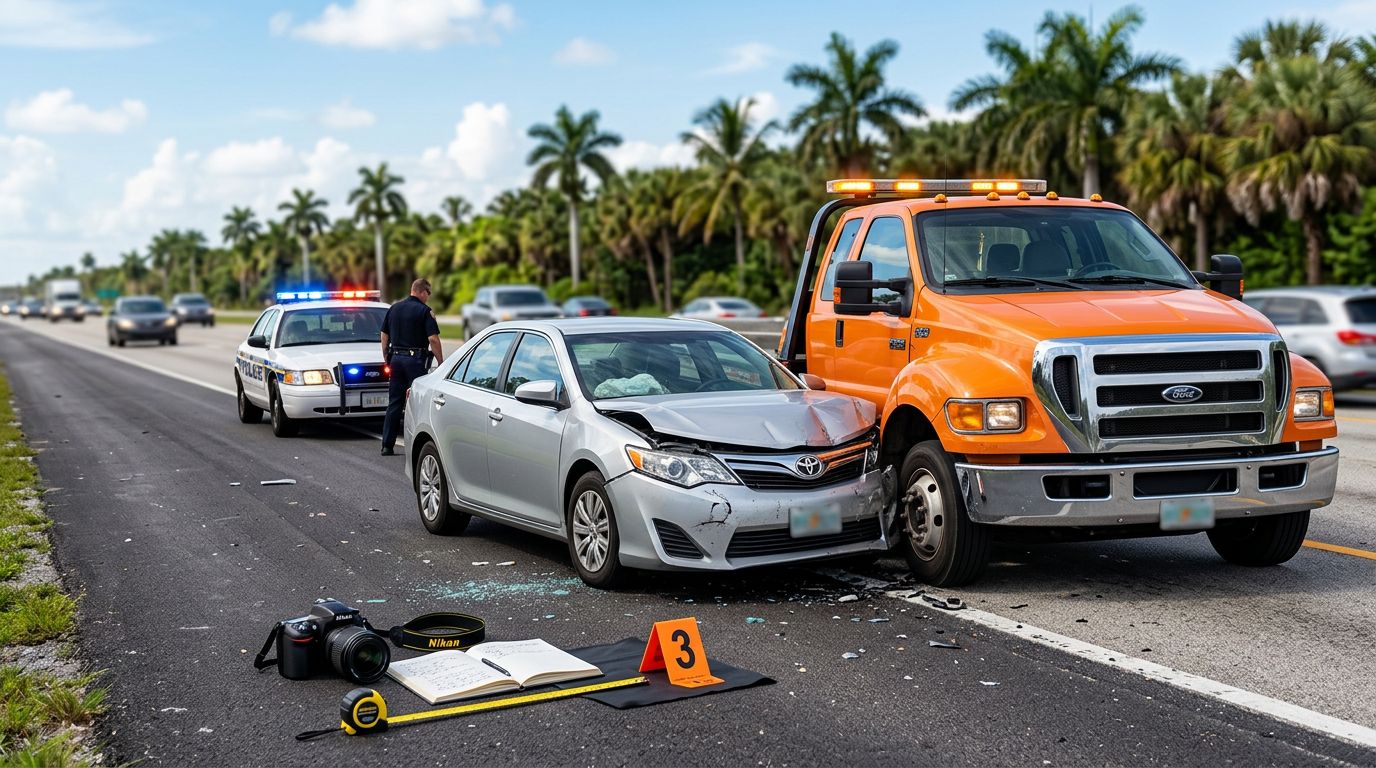
A tow truck is supposed to clear danger, not cause it. When one hits your car, backs into you, drops a vehicle, or cuts across traffic, the claim can get messy fast.
In Florida tow truck crash claims, the people with the strongest cases usually save proof before it fades. Video gets erased, paperwork gets misplaced, and damaged vehicles get moved within hours.
Start with the facts that can still be locked down today.
Why Florida Tow Truck Crash Claims Rise or Fall on Proof
Tow truck wrecks often look simple at first. They rarely stay that way.
One truck may be owned by one company, dispatched by another, and working a police rotation call. In other cases, the driver is handling a private roadside job. That matters because the right insurer, the right company records, and the right witnesses can change your claim.
Tow trucks also create unusual fact issues. The truck may have been towing another car, backing into traffic, swinging wide at an intersection, or loading a disabled vehicle on the shoulder. Those details often decide fault. As of April 2026, current public data still does not break out statewide tow truck crash claim totals, so each case turns on its own evidence.
Florida also has crash reporting rules that matter from day one. The Florida Department of Highway Safety and Motor Vehicles explains what drivers should do after a crash, including when law enforcement must be contacted. If you need broader early guidance after any truck-related wreck, this guide on what to do after a Florida truck crash is a helpful starting point.
One more point is easy to miss. Florida law still limits unrequested tow solicitation after crashes. If a tow truck shows up without being called, you do not have to accept that tow in most situations. That can matter later if storage fees start piling up.
The first 48 hours often decide whether your claim looks clear or turns into a blame fight.
The Proof Checklist Most Not-at-Fault Victims Need Right Away
Think of the crash scene like wet cement. Every hour leaves fewer clear marks.
This is the evidence that usually carries the most weight:
| Evidence to save | Why it matters |
|---|---|
| Wide scene photos and video | Shows lane position, warning lights, traffic flow, and where the tow truck was operating |
| Close photos of all damage | Helps prove backing, turning, sideswipe, or underride contact points |
| Tow truck identifiers | Ties the driver to the right company, truck, and insurance policy |
| Witness names and camera sources | Breaks a he-said, she-said dispute |
| Tow tickets, storage forms, and receipts | Supports property damage and fee disputes |
| Same-day medical records | Connects your injuries to the crash timing |
Start wide, then move close. Photograph the whole road, not only the dent. Get traffic lights, lane lines, shoulder space, skid marks, debris, and any vehicle the tow truck was carrying or pulling. Then capture the tow truck’s door markings, plate, truck number, and company name. If there is a wheel-lift, flatbed, winch, chain, or hook involved, photograph that too.
Tow-specific paperwork matters more than many people think. Keep every tow authorization, lot receipt, and text message about pickup or storage. If a fee dispute begins, consumer complaint resources from FLHSMV may help point you in the right direction.
Scene proof should also match the crash type. If the tow operator clipped you during a sweeping turn, the same lane-position evidence discussed in this Florida wide-turn truck crash proof guide can become important. If the truck backed into you, pay close attention to reverse angle, warning alarms, lighting, and whether a spotter was present.
Keep your own short timeline as well. Write down the time, weather, traffic, what you heard, and what the driver said. A few plain notes made the same day often beat a foggy memory months later.
The Tow-Specific Records and Mistakes That Can Make or Break the Claim
Insurers look for gaps. Don’t hand them any.
First, avoid guessing in a recorded statement. If you don’t know the tow truck’s speed or exact distance, say you don’t know. A polite guess can sound like an admission later. Tow truck companies and commercial insurers often move fast, so your words matter early.
Next, protect the vehicles. Don’t rush to repair, release, or sell your car if fault is disputed. Damage patterns, paint transfer, and crush depth can help show whether the tow truck backed into you, turned across your lane, or struck you while handling another vehicle. The tow truck itself may also need inspection before repairs wash away key proof.
That is where records behind the scene start to matter. In harder cases, lawyers often seek dispatch logs, call records, driver time records, GPS data, dashcam footage, towing invoices, and post-crash inspection records. If impact angles or movement are disputed, crash reconstruction for Florida wrecks can help test each side’s story against the physical evidence.
Medical timing matters too. Florida’s no-fault system may put your own PIP coverage in play first for injury treatment, while vehicle damage, towing, and storage often go through the at-fault side’s property damage coverage. So, get checked out promptly and keep a clean record of every visit, bill, prescription, and missed day of work.
Finally, watch the paperwork. Some companies want quick signatures to move the car, reduce storage time, or close out property damage. Read every release before signing. A fast fix for the vehicle should not quietly close the door on your injury claim.
A tow truck case is a chain. Missing video, missing receipts, or a missing company name gives the other side a place to pull.
Tow truck crashes create more confusion than most wrecks because the scene changes fast and the paper trail can split in three directions. Early proof keeps that confusion from becoming your problem.
Save the photos, keep the tow paperwork, protect the vehicles, and get medical care right away.
If the tow company or insurer is already shifting blame, get legal help before the evidence disappears.