
Florida SSDI Hearing Formats in 2026 Made Simple
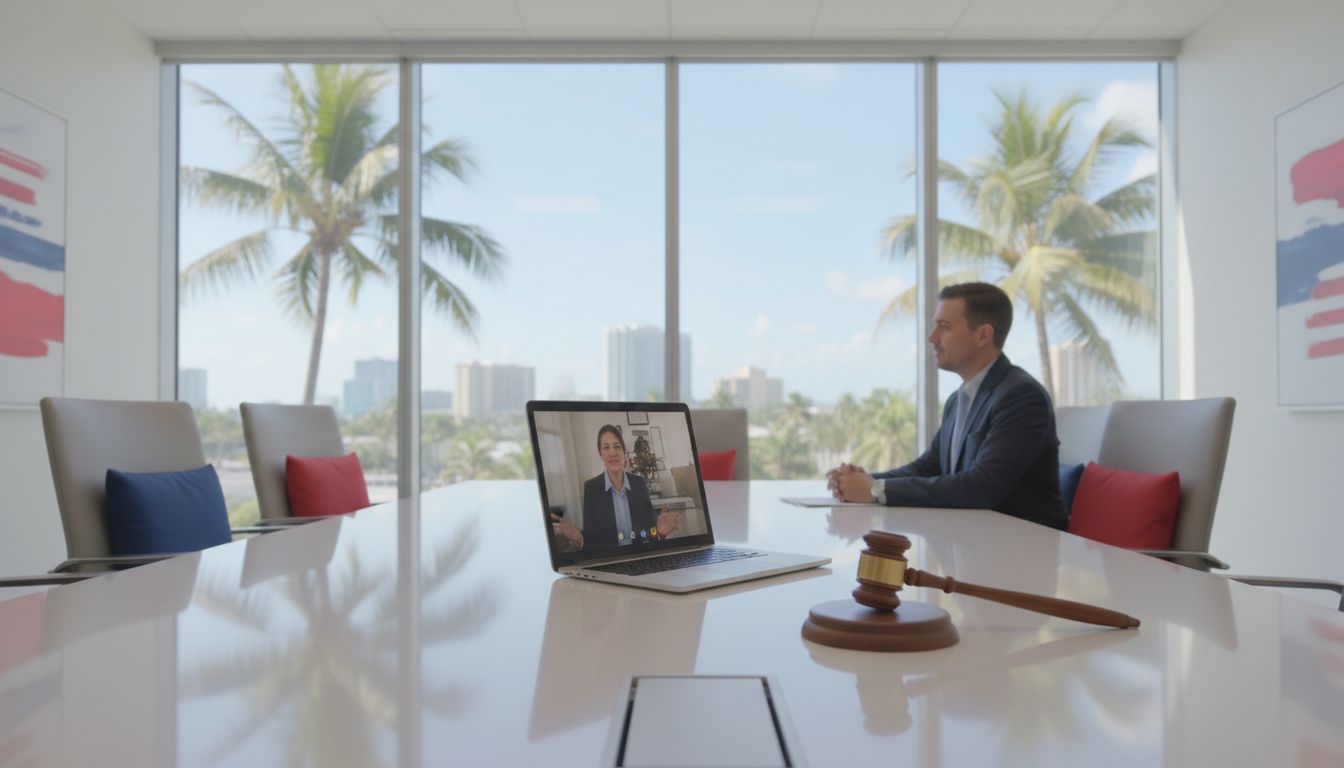
Worried that a video hearing will hurt your Florida SSDI case? It won’t. In 2026, Florida SSDI hearing formats give you more ways to appear, but the legal test stays the same.
What changes is the setup, not the judge’s job. If you know the format options, the notice deadlines, and the best fit for your situation, the hearing feels less like a black box and more like a meeting you can prepare for.
The four Florida SSDI hearing formats in 2026
As of April 2026, Social Security uses four standard hearing formats for disability cases in Florida. That system did not change for 2026. Remote hearings became regular options in late 2024, and they remain part of the normal process now.
Here is the simple breakdown:
| Hearing format | How it works | Often best for |
|---|---|---|
| In-person | You go to the hearing office and sit in the room with the judge | People who prefer face-to-face contact |
| Video at an SSA site | You go to an SSA location and appear by video | People who want staff support but less travel |
| Online video | You join from home or another private place using an approved platform | People with travel, health, or distance issues |
| Telephone | You appear by phone | People without stable video access |
Florida hearing offices include places such as Tampa, Miami, Orlando, Jacksonville, and Fort Lauderdale. Yet you may not need to travel to the judge’s office, depending on the format assigned.
The format affects convenience, not the standard of proof.
That point matters. Some people think in-person hearings carry more weight. They don’t. The judge still reviews the same medical file, asks the same kind of questions, and applies the same Social Security rules.
In most cases, the hearing is informal and lasts about 45 minutes to an hour. Social Security records the audio. You, your lawyer, and the judge speak under oath, and the judge may ask about work history, symptoms, treatment, daily activities, and limits.
The main difference is practical. In-person may feel more personal. Online video may save hours of driving. Telephone can work when video is not realistic, but it removes visual contact. That can make it harder for some people to follow the flow of the hearing.
If your case is moving toward a hearing, it helps to review a detailed Florida SSDI hearing checklist before the notice arrives. That gives you a head start on records, deadlines, and what the judge will want to hear.
How Social Security picks the format, and when you can ask for a different one
Social Security does not wait for you to choose a format from scratch. Instead, it sends a hearing notice and a “Notice of Ways to Attend.” That notice tells you how the hearing is currently set and gives a deadline to object if the setup does not work.
This is where many people get tripped up. They read the hearing date, then miss the part about the format deadline. Later, they realize the hearing is set in a way that creates problems, such as a long drive, poor internet, or a phone-only setup that makes them uncomfortable.
If the scheduled format won’t work for you, speak up before the notice deadline.
You can ask for a different format, but timing matters. Don’t wait until the week of the hearing. If pain, fatigue, anxiety, distance, or tech problems make the assigned option a bad fit, raise that issue fast.
If you are still asking for a hearing after a denial, Social Security uses Form HA-501 for that request. Once the case reaches the hearing level, national trends and outcomes are tracked in the agency’s ALJ disposition data.
Format choice is only one piece of the puzzle. You also need your file ready on time. Social Security still applies the five-business-day evidence rule in 2026, so late records can become a real problem. If that deadline feels fuzzy, this guide on the Florida SSDI hearing evidence deadline explains it in plain English.
No matter which format you use, a weak record stays weak. A strong record still wins cases. The format only changes how you get in the room, or onto the screen.
Which hearing format works best for Florida claimants
There is no single best format for every case. The better question is this: Which format lets you show up clearly, calmly, and on time?
For many claimants, online video is the sweet spot. It cuts travel, saves energy, and still lets the judge see and hear you. That’s a big help if sitting in traffic or walking long distances makes symptoms worse.
In-person can be a good fit if you focus better face to face or feel more comfortable speaking in the same room as the judge. Some people simply communicate better that way. If that sounds like you, ask for it early.
Video at an SSA office works well when home internet is unreliable. It also helps if you want a structured setting without a long trip to the main hearing office.
Telephone is often the least demanding on the tech side, but it can feel harder to read the pace of the hearing. Think of it like trying to have a serious meeting with the lights off. The conversation still happens, but you lose some cues.
Whatever format you get, prepare for the practical side. For remote hearings, use a quiet place, charge your devices, and have a backup phone nearby. For in-person hearings, plan your route, parking, and arrival time. In both settings, keep your medication list close and know the basics of your treatment history.
If you’re worried about delay, local backlog still matters. Some offices move faster than others, so it helps to compare current Florida SSDI hearing wait times while you prepare.
The best format is the one that helps you testify without extra strain. The strongest cases are often the ones where the claimant can focus on answering clearly, not on fighting the setup.
The hearing format in 2026 is simpler than it sounds. You may appear in person, by phone, by video at an SSA site, or by online video from home. What matters most is picking, or objecting to, the format early enough to avoid problems.
If your hearing notice sets a format that doesn’t work, act before the deadline passes. A better setup can make the hearing easier, and a better-prepared hearing can make all the difference.