
Florida Playground Injury Claims: A Parent’s Proof Checklist
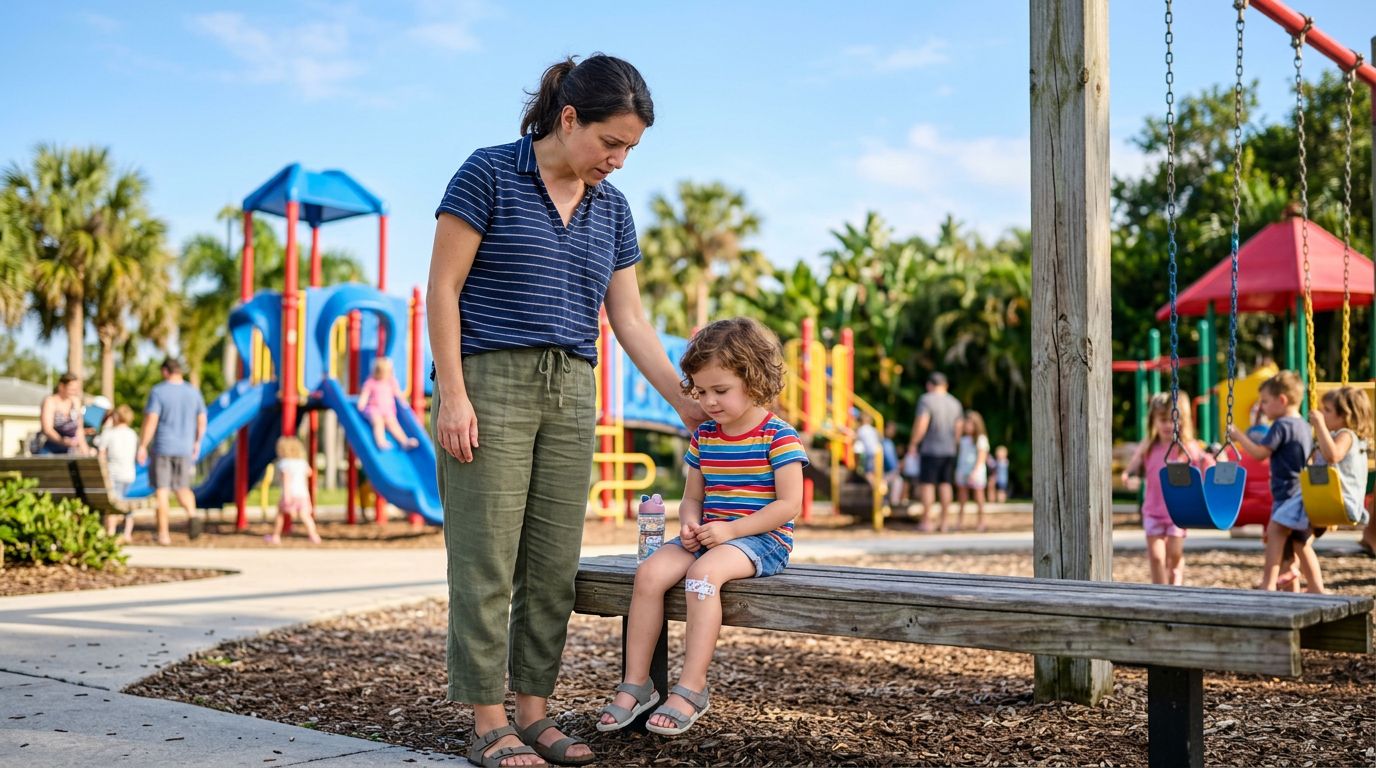
One bad fall can turn a normal park trip into an ER visit. In Florida playground injury claims, the hard part often starts after the ambulance leaves.
The injury may be obvious. The reason it happened may not be. According to the CPSC public playground safety checklist, more than 200,000 children go to U.S. emergency rooms each year for playground injuries. Most non-fatal injuries happen on public playgrounds, the same kind found in Florida parks, schools, and daycares.
That makes early proof important, because playground scenes change fast.
What parents must prove after a playground injury
Not every fall leads to a valid claim. Kids run, climb, and miss steps. A case usually turns on whether a school, park, daycare, apartment complex, HOA, or business failed to keep the area reasonably safe.
Think of the claim as a four-part puzzle. You need evidence of a dangerous condition, proof the owner knew or should have known about it, proof that condition caused the injury, and proof of the losses that followed.
Dangerous conditions on playgrounds often include broken chains, loose bolts, rusted equipment, missing guardrails, exposed concrete footings, worn-out surfacing, or hard ground under tall equipment. The CPSC Public Playground Safety Handbook is a useful benchmark, especially for surfacing, fall zones, and equipment spacing.
Falls still drive most serious cases. Recent national data shows falls cause a large share of playground injuries, and climbers, swings, and slides lead the list. Even a fall from a modest height can cause a fracture or concussion when the surface below isn’t protective.
Notice matters just as much as the hazard. If a bolt was missing for weeks, mulch had washed away, or staff ignored earlier complaints, that helps show the danger wasn’t a sudden surprise. Some cases also involve poor supervision, especially at schools and daycares.
If the injury happened at a city park or public school, extra rules may apply. Those cases can look simple from the outside, but they often are not.
The proof checklist that matters in the first 48 hours
A playground claim is like a sandcastle near the tide. Wait too long, and the shape is gone. Your first job is getting medical care. Right after that, start preserving facts.
The fall is only the start. The claim usually rises or falls on what you can still prove two days later.
This is the evidence that usually carries the most weight:
| Proof | Why it matters | Best source |
|---|---|---|
| Photos and video of the scene | Shows equipment, height, surfacing, warning signs, and lighting | Your phone or a witness’s phone |
| Witness names and contact details | Confirms how the fall happened and whether others saw the hazard earlier | Parents, staff, teachers, bystanders |
| Incident report | Creates a time-stamped record | School office, park staff, daycare, HOA, business |
| Maintenance and inspection records | Can show notice and repeat problems | Owner, city, school district, daycare |
| Medical records and bills | Tie the fall to the injury and treatment | ER, urgent care, pediatrician, specialists |
| Clothing, shoes, and damaged items | May show blood, tears, residue, or caught hardware | Preserve them at home |
Start with wide photos. Then take close shots of the broken step, thin mulch, exposed edge, or hot metal surface. Include the ground below the equipment. If there was no warning sign, capture that too.
Report the injury before you leave if you can. Ask for the employee’s or administrator’s name and the report number. If the property has cameras, ask in writing that video be saved.
Also, write down what your child said right away. Children forget details fast. So do adults. A simple note about where the child was, what part failed, and who saw it can help later.
Keep every receipt, discharge paper, brace, and follow-up note. If you’re trying to understand what losses may be part of a claim, Avard’s guide on Florida slip and fall damages explains the same basic damages categories used in many Florida negligence cases. For broader first-step concerns about bills, statements, and insurance, these personal injury FAQs are a helpful starting point.
Common mistakes that hurt Florida playground injury claims
Parents often assume the playground owner will do the right thing. Sometimes that happens. Often, the scene gets cleaned up, the equipment gets repaired, and the story shifts.
One mistake is waiting to see if the child gets better. A same-day exam helps the child and links the injury to the fall. Delayed care gives insurers room to argue.
Another mistake is guessing. Don’t estimate how long a hazard was there unless you know. Don’t say your child was fine if pain may surface later. Short, accurate facts work better than polished stories.
Social media can also cause trouble. A smiling family photo after the accident doesn’t show what happened at the playground, but the defense may try to use it that way.
Timing matters, too. For many negligence cases in Florida, the filing deadline is now shorter than it used to be. Avard’s page on the Florida injury statute of limitations explains why waiting can shut the courthouse door even when the injury is real.
Public entity cases deserve extra care. A claim against a city, county, or school district can involve added notice rules and limits. Meanwhile, private playground cases may bring in landlords, management companies, vendors, or product makers. Getting the right defendant early can make the difference between a strong claim and a dead end.
When the injuries are serious, early legal help can preserve video, request records, and stop the evidence from disappearing.
Playgrounds should feel simple. Claims after a child’s fall rarely are.
The strongest Florida playground injury claims don’t rely on outrage. They rely on proof, the hazard, the notice, the medical link, and the losses.
When parents move fast, they protect the facts before the ground is raked, the equipment is fixed, and the memory of the day starts to fade. If the injury is serious, early legal review helps preserve the story while it can still be proved.