
Florida Police Chase Crash Claims: Proof Checklist for Innocent Drivers
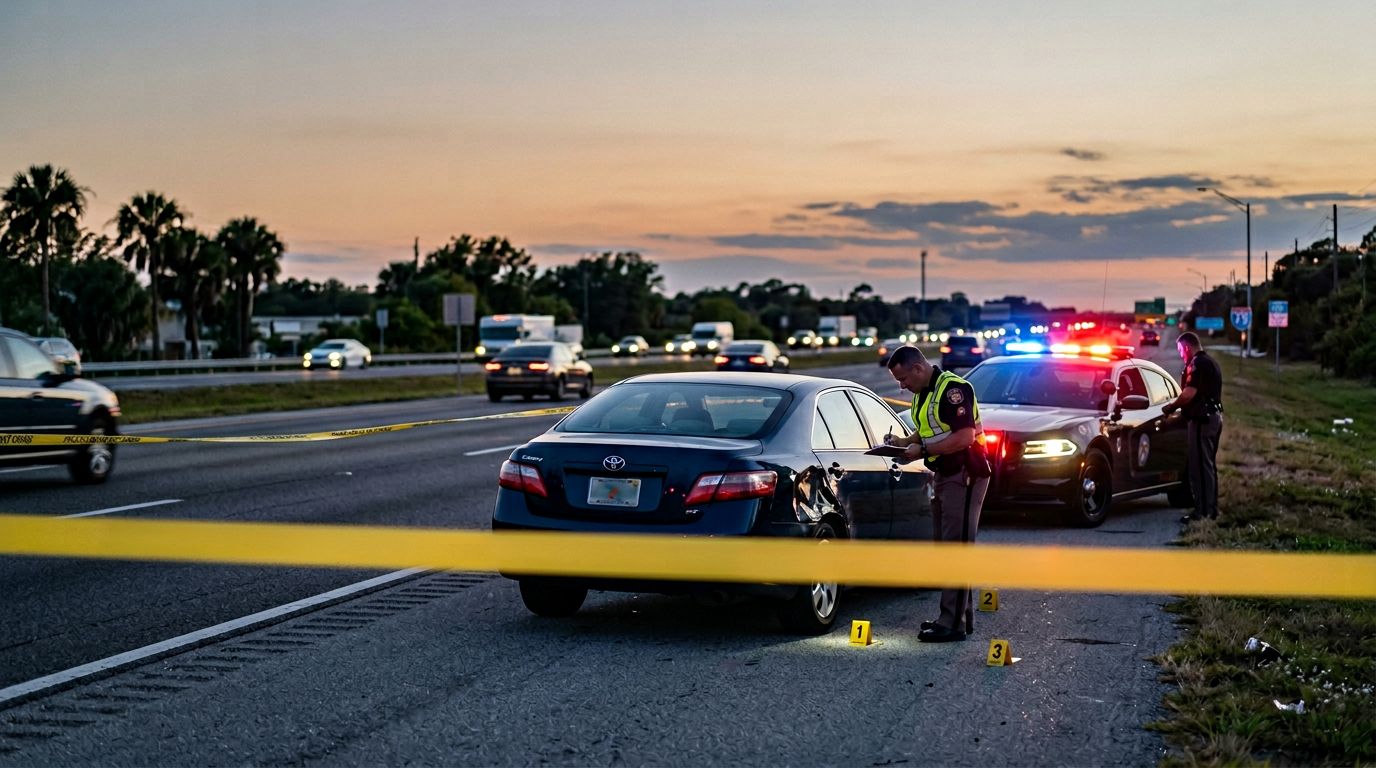
A police chase can turn an ordinary drive into chaos in seconds. If you were the innocent driver hit in the middle of it, proof will matter as much as your injuries.
That’s because these crashes often create two fights at once. First, who caused the wreck? Second, who should pay when a fleeing suspect, law enforcement, and several insurers all point fingers?
The sooner you lock down the facts, the harder it is for anyone to rewrite what happened.
Why Florida police chase crash claims get messy so fast
Most Florida police chase crash claims don’t fail because the crash was minor. They get hard because liability spreads in different directions.
The fleeing driver is often the first target. That person may have sped, ignored lights, crossed lanes, or slammed into other cars while trying to escape. Still, that may not end the case. A police agency or city could also face a claim if officers acted in a reckless way or ignored safety rules during the pursuit. Those claims are tougher because government protections often come into play.
Florida also remains a no-fault state. Your own PIP coverage usually pays first for some medical bills and lost wages, often up to $10,000, no matter who caused the wreck. If your injuries are serious, you may pursue a liability claim beyond PIP against the responsible party.
Fault rules can also change the value of the case. If an insurer can push too much blame onto you, recovery drops fast. That matters in chase crashes because adjusters often argue you braked late, followed too closely, or could’ve avoided the impact.
As of April 2026, Florida still doesn’t use a chase-only civil claims rule. The Florida Senate’s 2026 motor vehicle bill page reflects broader insurance activity, but these cases still turn on Florida’s usual crash rules, including no-fault coverage, negligence, and shared-fault standards.
Time also matters. Most Florida negligence lawsuits tied to car crashes now face a two-year filing window. That sounds like plenty of time, but video disappears, witness memory fades, and damaged vehicles get repaired or sold.
The proof checklist innocent drivers should build right away
Think of a chase crash like a storm scene. Once the road clears, the best clues can vanish. Strong Florida police chase crash claims usually rely on ordinary evidence gathered early, not dramatic claims made later.
This is the proof that usually carries the most weight:
| Proof | What it helps show |
|---|---|
| Wide photos and video of the scene | Lane positions, traffic signals, debris, and where each vehicle ended up |
| Names of officers, agencies, and witnesses | Who was involved, who saw the chase, and who can confirm the sequence |
| Dashcam, doorbell, and business footage | Speed, sirens, light changes, and impact timing |
| Medical records started quickly | That the crash caused your injuries, not something else |
| Vehicle damage and tow-yard photos | The angle of impact and whether you were pushed into another car |
The takeaway is simple: build a clean timeline.
In chase cases, the cleanest timeline often beats the loudest story.
Start with the scene if you can do it safely. Take wide shots first, then close-ups. Get the police units, the suspect vehicle, skid marks, broken glass, lane lines, and nearby signs in frame. If witnesses stopped, get names and phone numbers before they leave. A neutral witness can carry more weight than either driver’s story.
Also, don’t assume the crash report tells the whole story. It helps, but it may not capture every camera angle, every officer involved, or every movement in the chase.
In the first week, five moves usually protect the claim:
- Get medical care fast, then keep every visit note and bill.
- Save all photos, videos, and texts in one folder.
- Ask about nearby cameras before footage is overwritten.
- Keep your car photographed before repairs begin.
- Write down what you remember while it’s still fresh.
If the chase caused a domino effect, proof of impact order matters even more. This guide to Florida multi-car accident claims shows how chain-reaction evidence often decides fault. If the fleeing driver disappears or can’t be identified, uninsured motorist issues may come into play, and Avard Law’s guide to Florida phantom vehicle UM claims can help you see what proof becomes important.
Where good chase-crash claims lose value
Insurers rarely argue with the danger of a police chase. Instead, they usually argue about your role in the wreck and the size of your losses.
A common defense sounds small at first. They’ll say you were distracted, stopped short, changed lanes, or failed to react in time. In other words, they try to turn a clear victim into a shared-fault driver. That can be costly under Florida’s modified comparative negligence rule, because a finding of more than 50 percent fault can block recovery in a negligence case.
Your words matter too. Don’t guess about speed, distance, or whether you “maybe” could’ve done something different. Guesses become admissions later. Stick to facts you know.
Medical gaps also hurt strong cases. If you wait too long, the insurer may say your pain came from work, age, or an older injury. The same goes for missing follow-up appointments without a clear reason.
Property damage proof is another weak spot. Once repairs start, some of the best physical evidence disappears. That’s why tow-yard photos, repair estimates, and close-ups of each impact point matter. A side crush tells a different story than rear damage. A pushed-in trunk may show you were stopped and struck from behind. Damage patterns often expose the real sequence.
Claims involving police conduct add another layer. If the issue is whether officers acted unreasonably, your lawyer may need dispatch records, bodycam footage, dashcam video, pursuit logs, and training materials. Those items aren’t always easy to get, which is one more reason not to wait.
When a chase crash wrecks your car and your health, outrage is natural. Still, documentation is what moves the claim.
The innocent driver with the clearest photos, the tightest timeline, and the most consistent medical record usually stands on firmer ground. If blame is already shifting your way, getting legal advice early can protect the evidence before it disappears.