
Florida Hydroplaning Crash Claims: How Innocent Drivers Prove Negligence
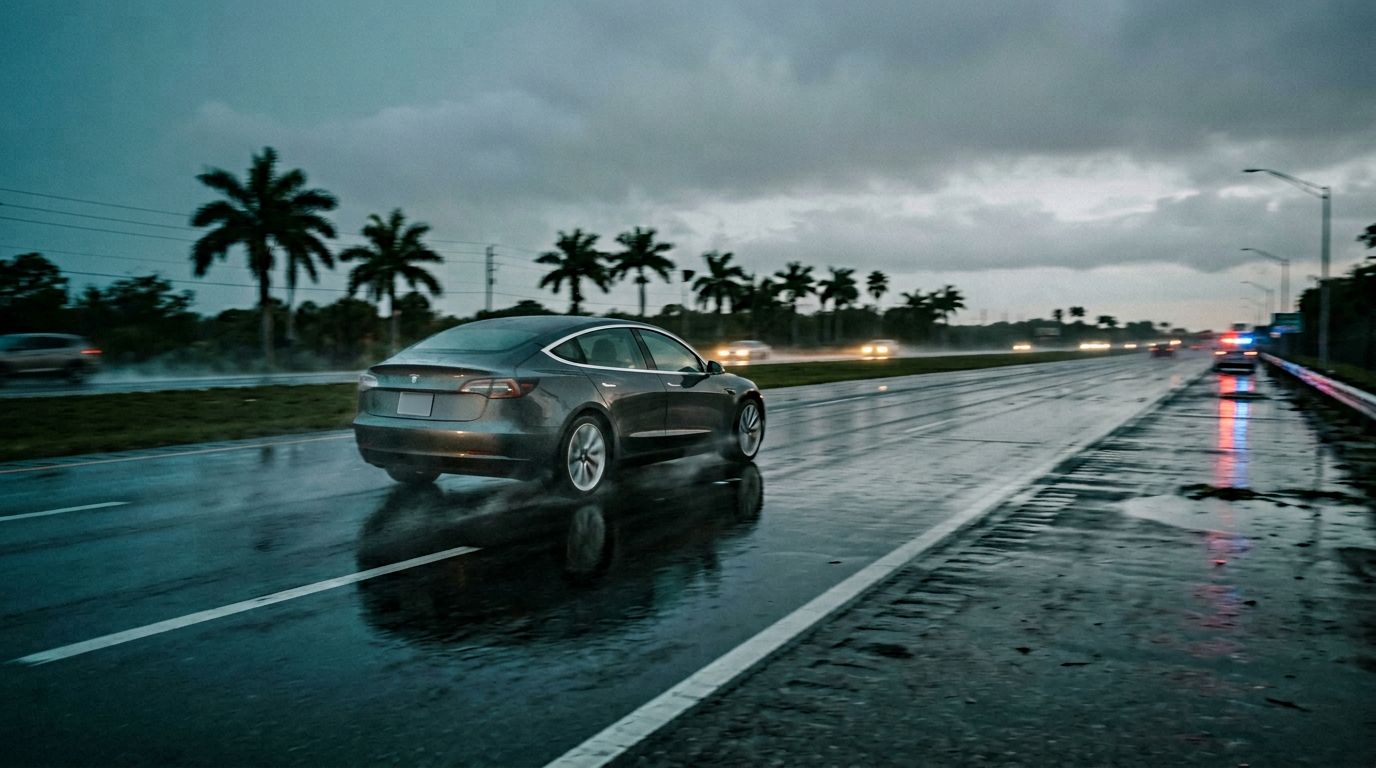
Rain can turn a Florida highway into a skating rink in seconds. Yet a florida hydroplaning accident is not automatically an unavoidable act of nature.
As of April 2026, recent wet-road crashes in places like Duval County have kept that point in focus. Slick pavement, speed, worn tires, and poor choices often mix together, and the driver who says “the car just hydroplaned” may still be legally at fault.
When hydroplaning does not erase fault
Hydroplaning is a loss of traction, not a free pass. The law still asks a simple question: did the driver act with reasonable care for the conditions?
Florida injury claims follow standard negligence rules. That means the injured person must show duty, breach, causation, and damages, which is reflected in this Florida bench guide on personal injury claims. On a rainy road, “reasonable care” usually means slowing down, leaving more space, using safe tires, and avoiding sudden moves.
Hydroplaning itself has known causes. According to TXDOT’s hydroplaning explanation, water depth, speed, tread depth, tire pressure, and pavement conditions all affect whether a car rides on top of the water. In other words, hydroplaning rarely comes out of nowhere.
That matters in a claim. If the other driver was going too fast for heavy rain, tailgating, or driving on bald tires, the weather becomes part of the story, not the whole story. Think of it like a kitchen fire. Grease may ignite fast, but someone still left the burner on.
Florida also uses modified comparative fault. So if the other side can pin most of the blame on you, your recovery can shrink, or disappear if you are found more than 50 percent at fault. That is why innocent drivers need proof early, especially when the crash happened during a lane change, a merge, or a chain reaction.
The evidence that proves negligence in a Florida hydroplaning accident
A hydroplaning claim often turns on details that vanish fast. Rain stops. Water drains away. Cars get towed. Memories soften around the edges.
So the first hours matter. If you are able, start with the basics described in what to do right after a Florida car wreck in Cape Coral. The same early steps help statewide, because every crash file needs the same backbone: scene proof, witness proof, and medical proof.
This is the evidence that usually moves the claim forward:
| Evidence | What it can show |
|---|---|
| Wide photos of the roadway | Standing water, lane lines, skid marks, shoulder width, and visibility |
| Close photos of all vehicles | Damage angles, tire condition, tread wear, and impact points |
| Witness names and dashcam footage | Speed, following distance, lane movement, and whether the driver lost control before impact |
| Police report and report number | Initial diagram, statements, citations, and parties involved |
| Medical records from the same day | A clean link between the crash and your injuries |
A good photo set works like a map. Start wide, then move closer. Show puddling, spray, road crown, faded striping, and bridge surfaces. If the other vehicle has worn tires, photograph them before the car disappears into a tow yard.
Official reporting also helps. Florida law enforcement uses standard crash procedures, and the Florida Highway Patrol crash investigation policy shows how officers document scenes. The Florida Uniform Traffic Crash Report instructions also give useful context for what appears in the report and why.
If the hydroplaning crash set off several impacts, that proof gets even more important. A spinning car can hit one lane, bounce into another, and trigger a pileup. In that setting, this Florida multi-car accident claims guide helps explain how to show you were not the person who started the chain.
The short version is simple. The more your evidence shows unsafe driving before the skid, the harder it is for the insurer to blame “just rain.”
How innocent drivers answer the “weather made me do it” defense
Insurance companies love the weather defense because it sounds neutral. No villain, no blame, just bad luck. Still, bad weather does not force someone to speed into traffic, drive on poor tires, or follow two car lengths behind at 60 mph.
Hydroplaning is a condition, not a defense. The real issue is why the driver lost control in the first place.
That is where a lawyer builds the timeline. How hard was it raining? Was there standing water? How fast was the driver likely going? Did the tread look worn? Did witnesses hear braking too late, or see the vehicle whip across lanes?
Sometimes the answer points to maintenance, not only driving. If the driver hydroplaned after a tire failed, tire condition and repair records may matter as much as speed. In those cases, Florida tire blowout accident claims can overlap with hydroplaning proof, especially when tread wear, bad inflation, or poor upkeep played a role.
Lawyers also look for contradictions. A driver may say, “I was going slow,” but the crush damage, event data, or witness account tells a different story. They may claim a sudden emergency, yet their own tires were nearly smooth. That gap between words and facts is often where negligence becomes clear.
Florida’s no-fault system may cover some early medical bills, but serious injury cases still rise or fall on liability proof. When the evidence shows the other driver failed to adjust to rain, a florida hydroplaning accident claim becomes much stronger.
Rain may start the slide, but proof decides the case. Innocent drivers usually win these claims by showing what happened before traction disappeared, not only what happened after impact.
That means clear photos, prompt treatment, witness names, tire evidence, and a report that fits the scene. When those pieces line up, “the road was wet” stops sounding like an excuse and starts sounding like what it often is, only one part of the fault story.