
Florida Cruise Slip and Fall Claims: Ticket Deadlines That Can End a Case
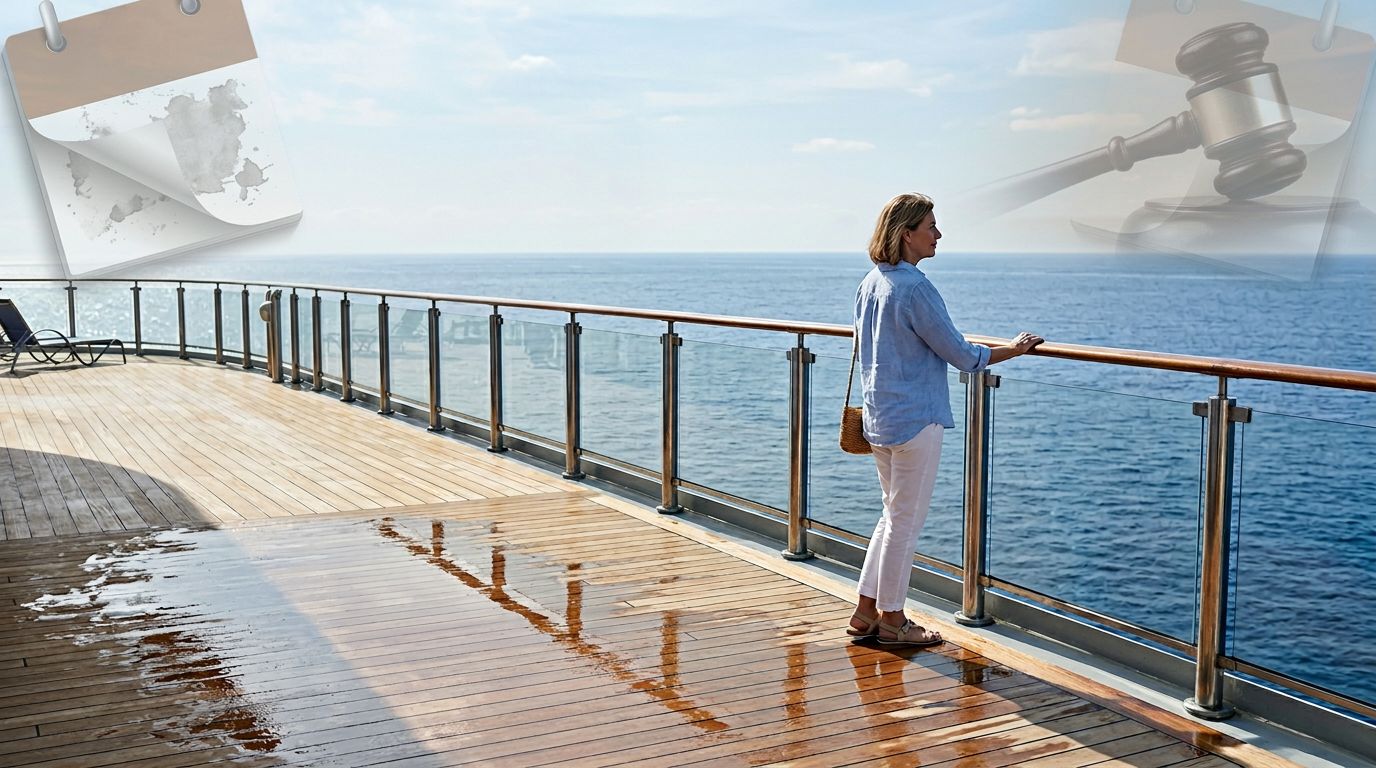
A fall on a cruise ship can look like any other injury, until the ticket contract changes the rules. Miss the deadline, and a strong claim can sink before the cruise line ever argues fault.
That catches many Florida passengers off guard. People assume they have the same time they would have after a store or hotel fall on land. In most cruise slip fall claims, that assumption is wrong.
Why cruise ship slip and fall deadlines are much shorter
Cruise injury cases usually fall under federal maritime law, not ordinary Florida premises law. That matters because the passenger ticket is also a contract, and those contracts often shorten the time to act.
As of April 2026, many major cruise lines still require written notice within 6 months of the injury and a lawsuit within 1 year. Federal law allows those limits, and courts often enforce them if the ticket gave fair notice.
Land-based cases are different. A grocery store or hotel fall in Florida often starts with the Florida premises liability duty of care rules, and many negligence claims follow a longer two-year window. Cruise lines usually don’t.
Here is the quick comparison that trips people up:
| Claim type | Typical deadline |
|---|---|
| Written notice to cruise line | 6 months from injury |
| Lawsuit for cruise ship injury | 1 year from injury |
| Many Florida land slip and fall claims | 2 years |
The ticket controls the fine print, so always check your own contract. For example, Carnival’s Cruise Ticket Contract spells out important injury claim limits, and other major lines use similar terms.
In cruise slip fall claims, the first fight is often not about liability. It’s about whether the passenger beat the ticket deadline.
Venue is another trap. Many cruise lines require suit in federal court in Miami, often the U.S. District Court for the Southern District of Florida, even if you live elsewhere and boarded in another port. That’s one reason these cases move on a different track than a land-based fall in Orlando, Tampa, or Fort Lauderdale.
What you must prove in a Florida cruise slip and fall case
A fall alone does not create liability. You still have to show the cruise line failed to use reasonable care, and that failure caused your injury.
In plain terms, most cruise slip fall claims turn on four points: a dangerous condition existed, the cruise line knew or should have known about it, the condition caused the fall, and you suffered real losses. Wet buffet floors, slick pool decks, worn stair nosings, loose mats, poor lighting, and uneven thresholds are common examples.
Notice is often the hardest part. If a passenger spills a drink and you slip seconds later, the cruise line may argue it had no fair chance to fix the hazard. If the deck stayed wet for a long time, or crew members walked by it without acting, the claim gets stronger.
Proof matters because ships clean fast and video can disappear. Report the fall to ship security right away. Ask for the report number. If you want a useful model for why that paper trail matters, see this guide on getting incident reports fast after a fall.
Medical records matter just as much. Go to the ship’s medical center if you can, or get off-ship care at the next port. A same-day exam helps tie the injury to the fall. That is especially important with back injuries, head injuries, and fractures, because pain often builds after the shock wears off.
Damages in cruise cases often look familiar. You may seek payment for medical bills, lost wages, future care, and pain. The same basic loss categories discussed in Florida slip and fall damages can apply, even though the deadline rules are much tighter at sea.
Cruise contracts also differ in wording. Royal Caribbean’s guest terms and conditions are a good reminder that the exact notice language, venue clause, and filing rules should be checked before the calendar runs out.
What to do after a shipboard fall, before the clock runs out
Time matters from the first hour. The strongest cases are built while the scene is still fresh.
Take these steps as soon as you can:
- Report the fall to ship security or guest services, and ask that they create a written report.
- Photograph the hazard, your shoes, the lighting, and the area around the fall.
- Get names and contact details for witnesses.
- Seek medical care right away, even if you think the injury is minor.
- Save your ticket, boarding documents, receipts, and any messages from the cruise line.
After that, don’t sit on the claim. Written notice usually needs more than a casual complaint at the service desk. It should identify the ship, sailing date, where you fell, what caused it, the injuries involved, and the treatment you received. Sending that notice to the proper legal or claims department matters.
Don’t assume an insurance claim pauses the one-year lawsuit deadline. It usually doesn’t. Internal reviews can drag on, and the filing clock keeps moving.
The exact contract should guide the next step. For instance, the NCL Guest Ticket Contract highlights time limits and venue terms that can shape where and when a claim must be filed.
Some passengers hear that missing the six-month notice does not always destroy the case. Sometimes that is true. Still, it creates a serious problem and gives the cruise line another defense. Missing the one-year filing deadline is usually much worse. In many cases, that ends the claim.
A cruise ship fall can happen in seconds. The legal deadline moves almost as fast. For people leaving from Florida ports, the most important fact is simple: cruise slip fall claims usually live on a much shorter clock than land-based injury cases.
If the fall happened on a cruise, treat the ticket contract like a countdown timer. Evidence fades, reports get buried, and the deadline keeps running even while you’re still trying to recover.