
Florida Flatbed Truck Crash Claims and the Load Securement Proof That Counts
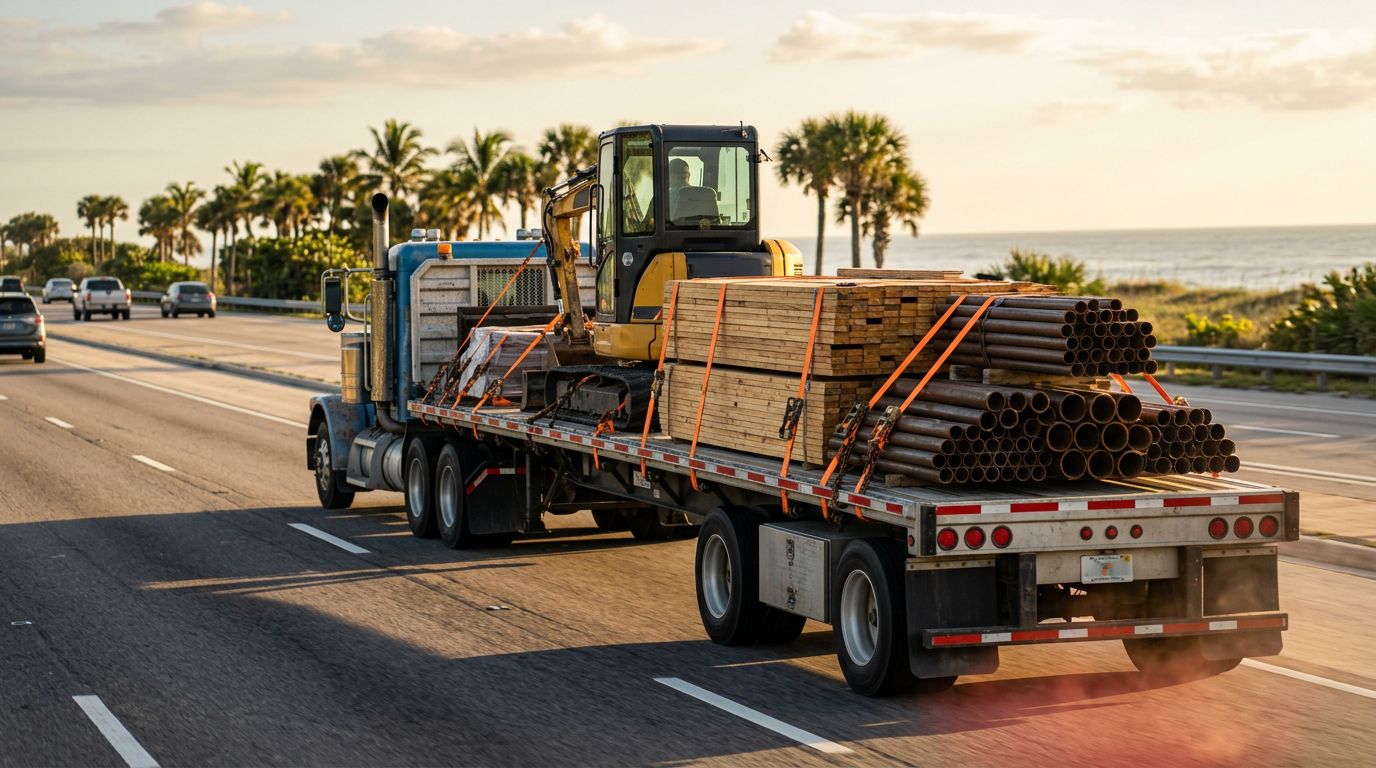
A loose load can turn a normal drive into a wall of steel, lumber, pipe, or machinery in seconds. After that, the fight usually starts with one issue, who failed to secure the cargo.
In flatbed truck crash claims, the answer often sits in proof that disappears fast. As of April 2026, Florida still does not publish a clean flatbed-only crash category in public data, and federal large-truck data trails behind real time. That makes case-specific evidence far more important than broad statistics.
The strongest claims are usually built before the trailer is repaired, the cargo is moved, and the records are cleaned up.
Why load securement decides many Florida flatbed truck crash claims
Flatbeds are different from enclosed trailers. The cargo is out in the open, and the securement system is part of the story. Chains, straps, binders, edge protectors, stakes, tarps, and blocking all matter.
That is why load securement often sits at the center of fault. Federal rules require cargo to stay in place during normal driving, braking, and turning. The FMCSA cargo securement rules set the general standard, and some flatbed loads have extra rules under 49 CFR 393.120.
Florida also enforces improper load laws. If cargo spills, drops, shifts, or escapes onto the road, that can support a negligence claim.
A flatbed case may involve more than the driver. The carrier may share blame. So might the shipper, loader, broker, or a company that supplied bad securement gear. That depends on who chose the method, who inspected it, and who had control over the load before the truck moved.
In many flatbed crashes, the real fault story is not in the first police report. It is in the tie-downs, the loading records, and the inspection trail.
Insurers know this. Therefore, they often try to narrow the case to driver error alone. That can miss the bigger problem. A shifted steel coil, loose pipe bundle, or broken chain may point to bad loading, worn equipment, skipped checks, or all three.
This also matters because Florida uses modified comparative negligence in most injury cases. If the carrier can pin too much blame on you, recovery can shrink or disappear. Solid securement proof keeps that from becoming an easy argument.
The load securement proof that matters most after a flatbed crash
Start with the scene. Then move to the trailer. After that, go after the records.
This is the proof that usually carries the most weight:
| Evidence | What it can show |
|---|---|
| Scene photos and video | Cargo position, lane blockage, road debris, skid marks, and impact angles |
| Securement gear | Missing straps, broken chains, loose binders, damaged anchor points, and worn equipment |
| Cargo and loading records | What was hauled, how it was loaded, weight, and who handled securement |
| Truck data and logs | Speed, braking, route timing, stops, and inspection activity |
| Medical records | When symptoms began and how the crash affected your body |
The table points to one theme. A strong claim connects the load, the truck, and your injuries in one clean timeline.
At the scene, wide photos matter more than people expect. Capture the whole roadway, the trailer deck, fallen cargo, tie-down locations, warning devices, and every vehicle position. Then move in closer. Photograph snapped chains, cut straps, empty securement points, broken dunnage, damaged rub rails, and any marks showing the load shifted before impact.
Video can help even more. A short clip may show cargo leaning, metal scraping, or debris spread across lanes. Nearby stores, traffic systems, and dashcams may also catch the load moving before the crash.
Next, protect the records behind the wreck. Bills of lading, weight tickets, loading diagrams, dispatch notes, pre-trip inspection reports, and post-crash repair records can all matter. So can onboard data. If speed, braking, or timing is disputed, preserving truck black box and ELD data can make a major difference.
Some flatbed crashes also start a skid or fold in the trailer. When shifted cargo leads to a swing or loss of control, the same issues seen in Florida jackknife truck claims often come into play.
Finally, get medical care quickly. Pain does not always show up at the roadside. Neck injuries, shoulder tears, back pain, and head symptoms often appear after the shock wears off. Prompt treatment helps your health, and it also helps prove timing.
How insurers attack these cases, and how good proof shuts that down
Most defense arguments in flatbed truck crash claims follow a pattern. The carrier may say the load was secure before impact. The insurer may say you drove too close, changed lanes badly, or overreacted. In a debris case, they may even argue there is no proof the cargo came from that truck.
That is why gaps hurt. A missing photo of the trailer deck, a repaired vehicle, or a vague recorded statement can give the other side room to rewrite events.
Several mistakes show up again and again. People guess when they do not know. They allow repairs before key photos are taken. They throw away tow paperwork, work notes, or prescription receipts. Some also assume the crash report settles everything. It rarely does.
A better approach is simple. Keep every document tied to the wreck. Save texts, bills, repair estimates, and medical records in one place. Write down what you saw while it is still fresh. If a witness mentioned a wobbling load or a loose strap before impact, that detail matters.
Flatbed crashes often create chain reactions, especially when cargo lands in traffic or blocks a lane. In those cases, timing becomes critical. The order of impacts may decide who started the sequence and who got pushed into whom. That is why this Florida chain-reaction accident checklist can be useful when several vehicles are involved.
The core point is straightforward. Good cases do not rely on assumptions. They rely on proof that shows what the load was, how it was secured, when it failed, and who had responsibility for that failure.
Broad crash numbers will not decide your case. Proof will.
When a flatbed carrier says the cargo was secure, the answer is not a guess. It is the scene photos, the broken gear, the loading records, the truck data, and the medical timeline. In Florida flatbed truck crash claims, that evidence often matters more than anything said after the wreck.