
Florida Broken Glass Door Injury Claims at Stores and Hotels
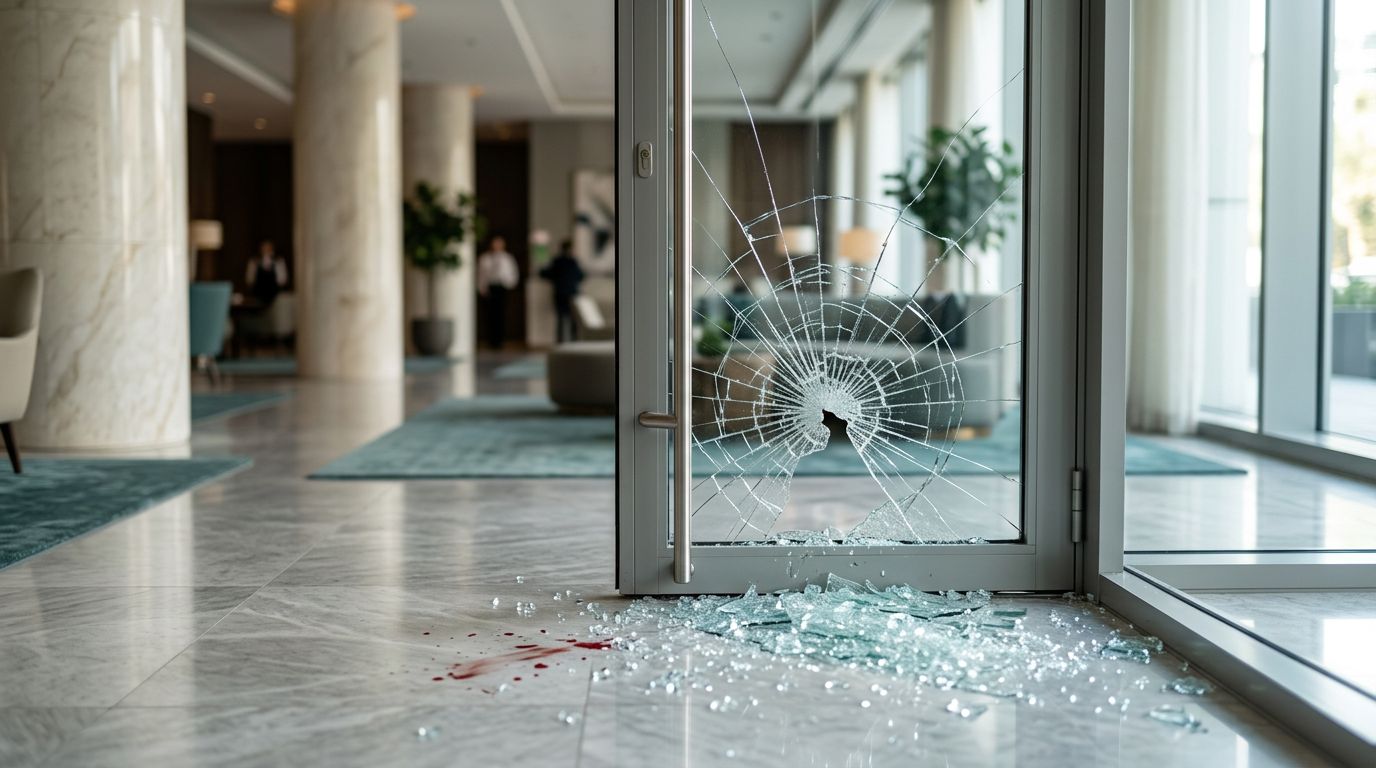
One step through a store entrance or hotel lobby can turn into blood, stitches, and a trip to the ER. Broken glass door injuries happen fast, and the cleanup often starts before you understand what went wrong.
In Florida, these cases usually come down to one core issue: did the business fail to keep the property reasonably safe? If a store or hotel ignored a dangerous door, used the wrong glass, or failed to warn guests, a claim may follow. That starts with how Florida law treats customers and hotel guests on commercial property.
When a broken glass door becomes a legal claim
Store customers and hotel guests are usually treated as invitees in Florida. That means the business must use reasonable care to inspect the property, fix hazards, and warn people about dangers it knows about, or should know about. If you want a broader view of that rule, Avard Law’s guide to Florida premises liability duty of care explains how these cases are built.
A broken glass door claim can arise in more than one way. Sometimes a door shatters when someone pushes it normally. Other times, a person walks into a clear glass panel that blends into the background. In hotels, sliding balcony doors, lobby doors, and pool-area entry doors can all create risk. In stores, trouble often starts at the main entrance, checkout area, or interior display sections.
Florida broken glass injury claims are not automatic. A business is not liable only because someone got hurt. You still need proof that the store or hotel knew, or should have known, the door was unsafe. That may involve cracked glass, loose hardware, bad alignment, missing decals, poor lighting, or a failure to use safety glazing.
Courts tend to look at practical facts, not labels. They focus on where the door was placed, how visible it was, whether lighting made it hard to see, how crowded the area was, and whether the business had prior warning signs. A clear glass panel in a busy lobby can be dangerous if it looks like open space.
This quick comparison shows how the theory often works:
| Door problem | Why it matters |
|---|---|
| Glass shatters on normal use | May point to poor maintenance, impact damage, or wrong glass |
| Clear glass lacks visible markings | May make the barrier hard to see in a busy or bright area |
| Door sticks, slams, or comes off track | May show ignored repair needs or defective hardware |
The legal framework for many of these cases falls under Florida’s negligence statutes. The hard part is proving what the business knew before the glass broke.
The proof that usually decides these cases
A broken glass door case can change within hours. Staff sweep the floor. Maintenance replaces the panel. Video loops over itself. That is why early evidence matters so much.
If the door gets replaced the same day, your own photos may become the strongest proof in the case.
Start with the scene. Wide photos show the entrance, lighting, and traffic flow. Close photos show the shattered glass, handle, frame, warning decals, and any blood or torn clothing. If the injury happened at a hotel, include the room number, lobby area, or pool gate. If it happened at a store, capture nearby displays, mats, and signs.
You should also ask for an incident report before leaving, if you can do so safely. Get names of employees and witnesses. A witness who says, “That door cracked last week,” can matter more than most people think. Surveillance footage is often crucial because it may show whether the door failed on normal contact or whether staff already knew it was a problem.
Maintenance history matters too. In many broken glass injury claims, the case turns on records such as:
- repair requests for the same door
- prior complaints from customers or guests
- inspection logs
- replacement records showing the wrong type of glass or delayed repair
Code issues can also change the case. If the door should have had safety glass, but did not, that can support a negligence claim. Safety glass usually breaks into smaller, less dangerous pieces. Ordinary glass can break into sharp shards that cause deep cuts and nerve damage.
Medical records are just as important as scene photos. Cuts to the hand, face, forearm, or leg may need sutures, scar care, tendon repair, or follow-up treatment. If you waited a week to see a doctor, the insurer may argue the injury was minor or came from something else. A same-day or next-day visit helps connect the injury to the event.
Damages, deadlines, and common defenses in Florida
The value of a broken glass door claim depends on the harm, not on the shock of the moment alone. A small cut and a severed tendon do not belong in the same category. Some people recover after stitches. Others deal with surgery, scar revision, lost grip strength, or permanent pain.
In Florida, damages may include medical bills, future treatment, lost income, and pain and suffering. For a plain-language look at how injury compensation is usually measured, see Avard Law’s page on what slip and fall victims can claim in Florida. The same damages concepts often apply in commercial property injury cases.
Businesses and insurers usually respond with familiar defenses. They may claim the door looked obvious, you were distracted, you pushed too hard, or another customer caused the damage seconds earlier. Florida’s comparative fault rule can reduce recovery if you share blame. In many negligence cases, being more than 50 percent at fault can bar recovery.
Time also matters. Florida shortened the filing period for many negligence claims. The deadline is controlled by section 95.11, and missing it can end the case before it starts. That is one reason people should not wait for the business to “handle it internally.”
Hotels and stores also try to shift blame to contractors. Sometimes that argument works, sometimes it does not. Liability may fall on the owner, operator, management company, or maintenance vendor, depending on who controlled the area and who handled repairs. Control often matters more than the name on the building.
What matters most after a store or hotel glass injury
Glass fails in a second, but the claim turns on what existed before it failed. The strongest cases usually show a dangerous condition, notice, clear injury proof, and prompt action.
If you were hurt by a broken glass door at a Florida store or hotel, get medical care first and preserve the scene as quickly as you can. In these cases, timing is often as important as the injury itself.