
VA Lumbar Spine Ratings in 2026: ROM, Flare-Ups, and Muscle Spasm
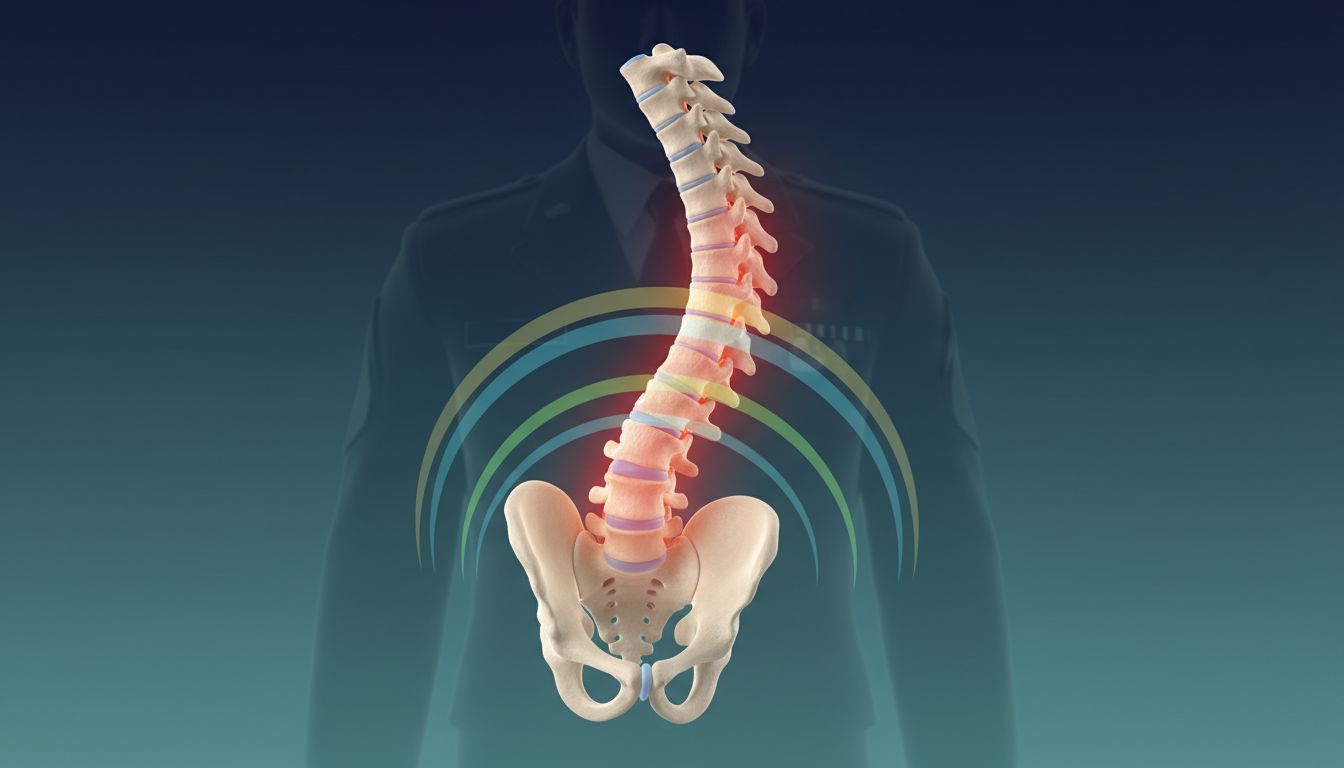
A back exam can hinge on one thing you did not expect, how far your spine moved on that day. For veterans with pain, stiffness, spasms, or pain that shoots into the legs, VA lumbar spine ratings often turn on real-world limits, not just a diagnosis.
That is why a good record matters. The VA looks at motion, flare-ups, guarding, and muscle spasm, then asks a simple question: how much does the condition limit your life?
How the VA measures lumbar spine motion
The rating rules for lumbar spine claims are still built around the thoracolumbar spine schedule in 38 CFR 4.71a. In plain terms, VA checks forward flexion first, then combined range of motion, then whether the spine is fixed in place.
Here is the basic framework:
| Rating | Forward Flexion | Combined ROM | Common finding |
|---|---|---|---|
| 10% | Greater than 60 degrees but not more than 85 degrees | Greater than 120 degrees but not more than 235 degrees | Painful motion, mild limits, or spasm without abnormal gait |
| 20% | Greater than 30 degrees but not more than 60 degrees | 120 degrees or less | Worse motion loss, or spasm that changes posture or gait |
| 40% | 30 degrees or less | N/A | Severe motion loss |
| 50% | N/A | N/A | Unfavorable ankylosis of the thoracolumbar spine |
| 100% | N/A | N/A | Unfavorable ankylosis of the entire spine |
The key point is simple. VA does not rate back pain by pain alone. It rates how that pain limits movement and function. A veteran may walk into an exam upright, then lose motion once bending, twisting, or repeated use starts to hurt.
The VA’s own thoracolumbar spine guidance shows the measurements examiners use. That matters because a single number can move a claim from 10% to 20%, or from 20% to 40%.
Why flare-ups and muscle spasm can change the outcome
Flare-ups are one of the biggest reasons back claims get underrated. On a good morning, your back may bend farther. On a bad day, you may stiffen up after a short drive, a shift at work, or even getting out of bed.
VA should consider those worse days, not ignore them. If a flare-up cuts your bending, standing, or walking, that functional loss can matter as much as the exam room number.
A rating should reflect the days your back fails you, not only the day the examiner saw you.
Muscle spasm and guarding also matter. A 10% rating can fit spasms or tenderness when your gait and spinal shape stay normal. A 20% rating can fit spasms or guarding that cause an abnormal gait, scoliosis, reversed lordosis, or abnormal kyphosis.
That is where detail counts. A note that says “back pain” is weak. A note that says “spasm after sitting 15 minutes, limps when standing, needs to lean forward to dress” is much stronger.
Evidence that supports a higher back rating
A strong claim is built from repeated proof, not one dramatic statement. VA wants to see the pattern.
Useful records often include:
- Treatment notes that mention pain, stiffness, spasms, and limited bending
- A symptom log that shows how flare-ups hit your daily life
- Buddy statements from a spouse, coworker, or family member
- A well-supported exam, including a private DBQ when it fits the record
If your C&P exam missed your worst-day limits, VA DBQ forms for back injury claims can help show the type of findings VA needs. In the same way, evidence for a higher back rating helps show why the current percentage no longer matches the condition.
The best records do one thing well. They connect symptoms to function. That means showing how far you can bend, how long you can sit, whether you miss work, and what happens after repeated use.
A private exam can help when it is specific and honest. It should match the medical history, not fight it. If the numbers and the story line up, the claim gets easier to understand.
When leg symptoms point to a separate rating
Low back pain does not always stay in the back. If it travels into the legs, or causes numbness, weakness, or tingling, VA may rate a separate nerve condition too.
That matters because lumbar spine claims and nerve claims often travel together. For that reason, lumbar radiculopathy compensation levels can be an important part of the bigger picture.
Watch for symptoms like:
- Pain that shoots below the knee
- Numbness or pins-and-needles
- Leg weakness or foot drop
- Loss of reflexes or muscle atrophy
Those symptoms do not replace the spine rating. They can add to it. So a veteran with a 20% back rating and separate nerve ratings may end up with a much higher combined result.
For Florida veterans, this often comes down to proof. If the medical record only talks about the spine, the nerve pain may be missed. If the record shows both, the claim tells a fuller story.
Conclusion
VA lumbar spine ratings in 2026 still depend on the same core facts, how far the back moves, how flare-ups limit function, and whether spasms or guarding change the way you stand and walk. The rating number is not about one painful moment, it is about the condition’s effect over time.
If your claim is built on clear records and accurate measurements, the VA has less room to understate the problem. For a back condition, the right evidence can make the difference between a snapshot and the full picture.