
Florida Apartment Falls: Broken Handrail Evidence Checklist
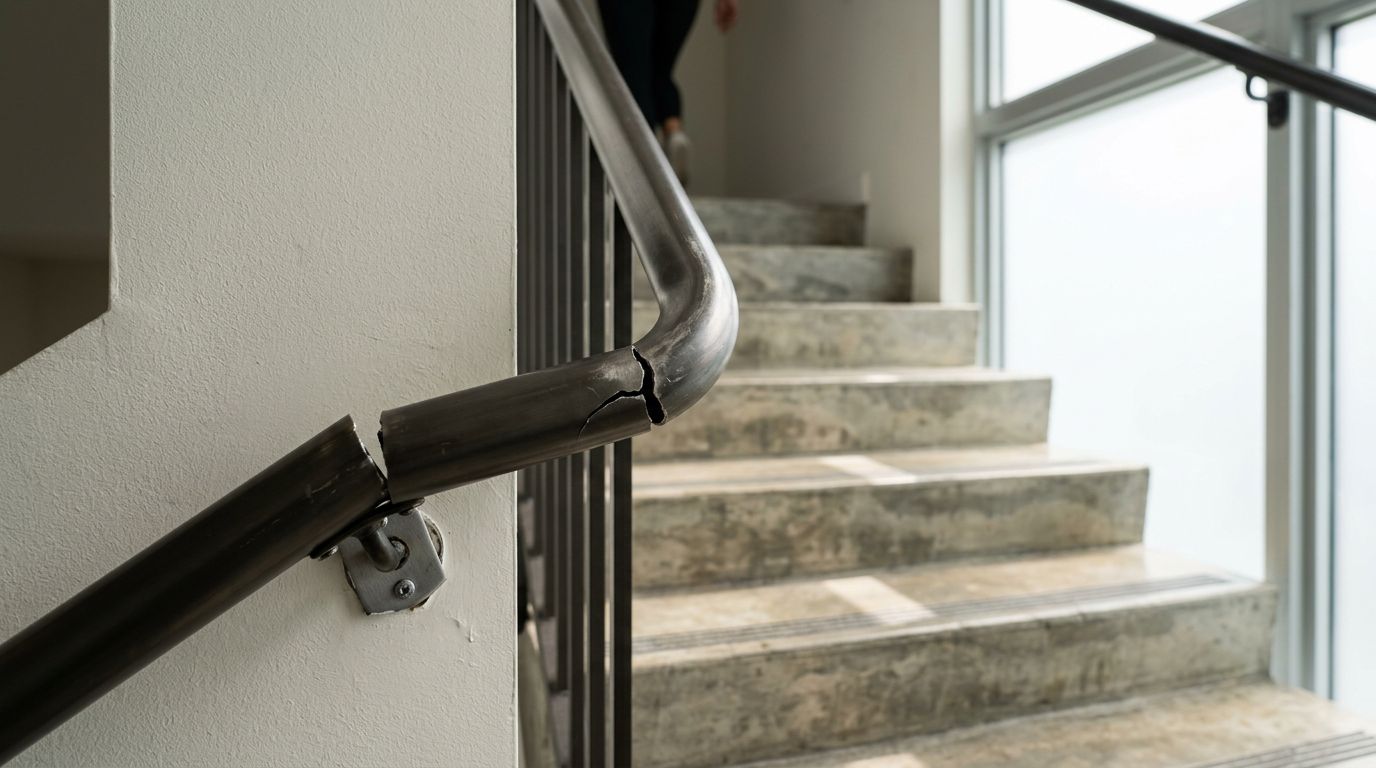
A stair rail should steady you, not send you to the ground. When a handrail snaps, pulls loose, or shifts under your grip in a Florida apartment complex, the next few hours matter almost as much as the fall itself. In many cases, broken handrail evidence decides whether the landlord, management company, or maintenance vendor can be held responsible.
The legal issue sounds simple: did the people in control of the property know, or should they have known, the stairway was unsafe? The answer usually sits in photos, work orders, witness names, and prompt medical records. If you want to protect a claim, treat the scene like melting ice. It won’t stay the same for long.
Why apartment handrail claims depend on proof
Florida apartment fall claims usually fall under premises liability. You must show a dangerous condition existed, the property side had notice, they failed to fix or warn, and that failure caused your injury. A broken rail helps prove danger, but it doesn’t prove the whole case.
Notice is often where these claims turn. If the rail had been loose for weeks, tenants may have reported it. If rust, rot, missing bolts, or wobble were easy to see, management may be charged with seeing what a reasonable inspection would have found. By contrast, if the break happened seconds before your fall, the claim may be harder.
Control matters, too. The deed holder is not always the only party at fault. An apartment operator, property manager, or maintenance company may control the stairwell. That’s why understanding Florida premises liability duty of care helps in common-area cases involving stairs, breezeways, and entry steps.
Code issues can also support the claim. Handrails in multi-unit housing often must meet safety rules for placement, grip, and strength. Still, a code problem alone isn’t enough. You also need proof that the unsafe rail caused the fall and the injuries that followed.
If the handrail gets repaired before you document it, a strong claim can become a word-against-word fight.
Broken handrail evidence checklist after a Florida apartment fall
Start at the scene if you can do so safely. Even a few phone photos can preserve facts that vanish before sunset.
What to capture before you leave
Focus first on the handrail itself. Take close photos and wide shots. Show where it detached, bent, cracked, or pulled from the wall. Include bolts, brackets, screws, rust, chipped concrete, loose anchors, or rotted wood. If the rail still moves, record a short video.
Next, capture the whole stair area. Photograph the steps, lighting, water, dirt, worn treads, broken edges, and any missing warning signs. A fall rarely happens in a vacuum. The full scene often explains why you reached for the rail and why the fall became serious.
Then preserve your own condition. Photograph visible injuries, torn clothing, damaged shoes, broken glasses, and anything else that changed in the fall. Keep the shoes and clothing in a safe place. Don’t wash them right away.
A short checklist helps:
- Handrail condition: Loose brackets, missing hardware, rust, cracks, splinters, or fresh break points.
- Scene evidence: Stair layout, lighting, weather exposure, pooled water, and worn steps.
- People who saw it: Names, phone numbers, unit numbers, and brief notes about what they observed.
- Paper trail: The manager’s name, the security guard’s name, and the incident report number.
- Your injuries: Early photos, urgent care records, and notes about pain that started later.
Before you leave, ask management or security to make a written report. If possible, get a copy or take a photo of it. For a deeper look at getting apartment fall reports quickly, use that guide while the event is still fresh.
What to gather in the next few days
The next phase is about records. Ask that surveillance video, maintenance logs, inspection records, repair invoices, and prior complaints be preserved. In apartment cases, past tenant reports can be gold. One ignored maintenance request may show actual notice. Several similar complaints may show a pattern.
Medical proof matters just as much. Go to the doctor fast, even if adrenaline masked the pain at first. Falls on stairs often cause wrist fractures, shoulder tears, back injuries, and head trauma. If you wait too long, the defense may argue something else caused your pain.
Also save proof of loss. Keep bills, pharmacy receipts, ride-share costs, wage records, and time missed from work. Those documents help show the value of the case. If you want a clearer picture of what slip victims can claim in Florida, damages usually include both financial losses and pain-related losses.
Common mistakes that weaken Florida apartment fall claims
The biggest mistake is waiting. Apartment staff may repair the rail the same day. Video may be erased in days, not months. Witnesses move, forget, or stop answering calls. Fast action protects the facts.
Another problem is guessing. Don’t tell management, “I think the rail was loose for months,” unless you know that’s true. Stick to what you saw, felt, and heard. Short, accurate statements carry more weight than dramatic ones.
Recorded statements can also cause trouble. Insurance adjusters often look for gaps, guesses, or casual comments like “I’m okay.” Meanwhile, social media posts can undercut a claim if they make the fall sound minor.
Time limits matter, too. In Florida, many negligence claims now face a two-year filing deadline. Comparative fault also plays a role. If the defense says you missed a step, wore unsafe shoes, or ignored an open hazard, they may try to reduce or block recovery. That doesn’t mean the apartment complex escapes blame. It means the evidence must clearly show how the broken rail contributed to the fall.
A good handrail claim is like a staircase built on solid fasteners. Each piece supports the next. Remove photos, witness proof, medical care, or notice evidence, and the claim starts to wobble.
A broken handrail case is built on details, not outrage. Save the scene, report the fall, get medical care, and gather records before repairs erase the story. If an apartment complex ignored a loose or failing rail, evidence gives your claim weight. Early legal help can identify who controlled the stairwell and what proof needs to be preserved now.