
Cape Coral Car Crash Claim Proof Checklist: The Exact Records to Request in the First 7 Days
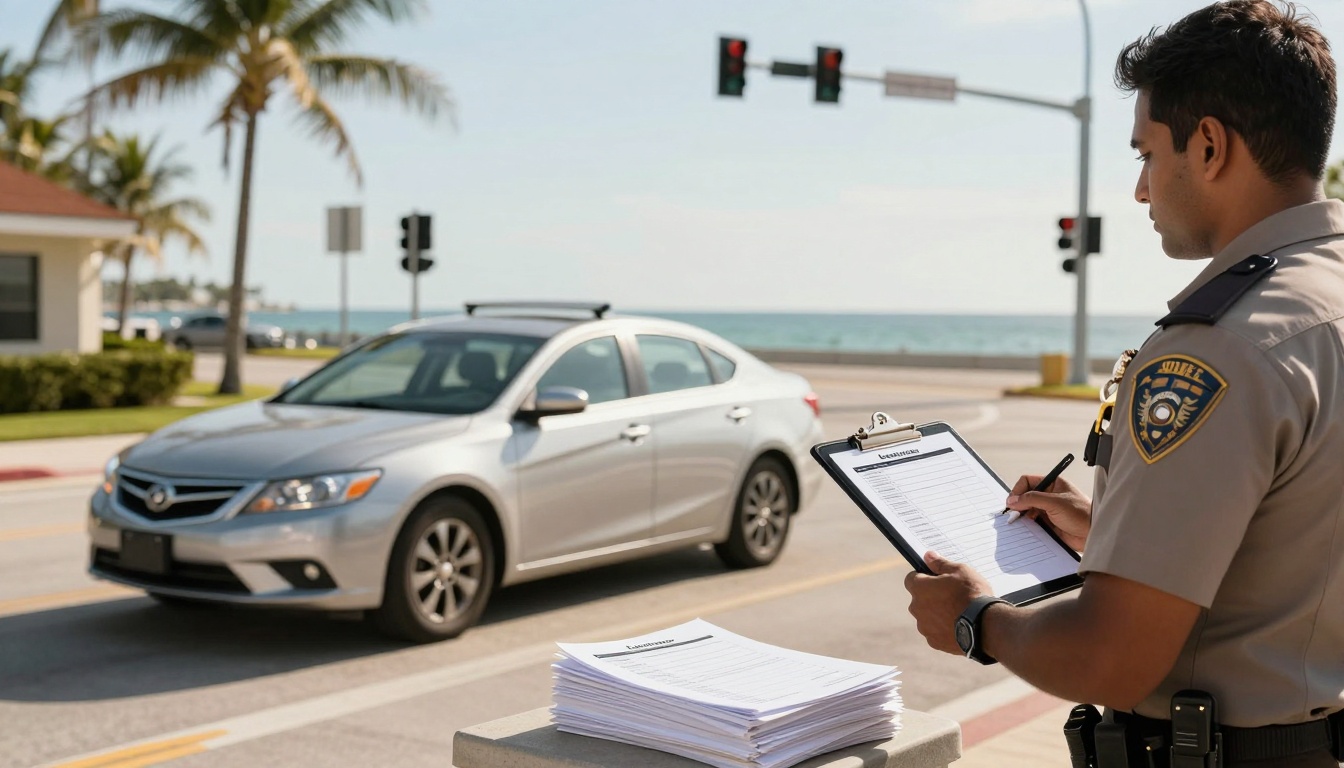
After a Cape Coral wreck, people usually focus on the car and the pain. Failing to gather evidence for your claim feels like paperwork you can “handle later.” That’s how good cases get underpaid instead of securing the financial compensation you deserve.
The first week is when facts are easiest to prove and hardest to rewrite. Video gets erased, cars get repaired, and injuries start sounding “vague” if the first medical notes are thin.
Use this car accident evidence checklist to request the exact records that lock your story in place, while the trail is still warm.
Day 0 to Day 1: Secure the official crash record (before the story changes)
The strongest early document is the Cape Coral car accident report, also known as the police report, because it anchors time, location, drivers, and initial statements. In Florida, law enforcement involvement matters even more when there’s an injury, a death, or at least $500 in apparent property damage.
Start at the scene, if you can:
- Exchange information with other drivers, including proof of insurance, driver’s license numbers, and license plates.
- Photograph driver’s license numbers, proof of insurance, plates, accident scene photos of vehicle positions, and any skid marks or debris.
- Get the agency name (Cape Coral Police Department, Florida Highway Patrol, or Lee County Sheriff’s Office), the officer’s name, and the report or case number.
- Ask witnesses for names and numbers, then text them “Thanks, please save this number.” It timestamps the contact.
Within 24 hours, request these items from the investigating agency (or the records unit):
Florida Traffic Crash Report: Ask for the long form when available (it typically includes the narrative, diagram, and driver details).
Call-for-service details: Request the CAD log (computer-aided dispatch) or incident history, which can show when the call came in and what was reported.
Citations and crash exchange: If any citations were issued, get the citation numbers. Citations don’t prove fault by themselves, but they shape negotiations. Always ensure you exchange information properly with other drivers for a complete handover of details.
If police didn’t respond and you were told to self-report, don’t wait. Florida rules can require a written report within 10 days in certain situations, and delay creates doubt. For a practical scene checklist, use what to do immediately after a car accident in Cape Coral.
Days 1 to 3: Medical proof that insurers actually rely on
Insurance adjusters don’t “feel” your injury. They read it. The first medical records often decide whether your pain sounds like a real injury or a minor complaint.
In Florida’s no-fault insurance system, Personal Injury Protection (PIP) usually requires you to seek medical attention within 14 days to access benefits. Even if you think it’s “just sore,” waiting is risky, as it could indicate serious injuries.
In the first three days, request and save these medical records:
EMS records (if an ambulance came): The paramedic report can document symptoms at the scene (headache, dizziness, neck pain, confusion). Those early notes help later.
ER or urgent care chart notes: Ask for the full chart, not just discharge papers. You want triage notes, doctor notes, nursing notes, vitals, and diagnoses.
Imaging records: Get both the radiology report and the image files (often provided on a CD or via portal). If you later see a specialist, they may need the images, not a one-page summary.
Medication and follow-up instructions: Save prescriptions, restrictions, and referrals. They support that you took the injury seriously and tie into medical bills and medical expenses.
Work status and restrictions: If you miss work, ask for a work note that lists dates and limits (no lifting, no driving, reduced hours). These help prove lost wages from your injuries.
Also create two simple “you” records that carry weight later: (1) a daily symptom note (pain level, sleep, headaches, numbness), and (2) a photo log of visible bruising that changes over days.
If you’re already seeing billing confusion, PIP denials, or “patient responsibility” letters, get ahead of it with Florida PIP medical benefits after a Cape Coral car crash. Missing records can turn into missed payments.
Days 3 to 7: Fault proof, video preservation, and the money trail
By the end of week one, the case often shifts from “What happened?” to “Prove it.” The insurance company will be pushing their insurance adjuster to find reasons to deny or reduce your claim. This is when you gather the evidence that closes loopholes.
Request your insurance file basics: Get your insurance policy declarations page, PIP claim number, and the adjuster’s contact details. Ask your own insurance company for a list of documents they want, then submit them in one clean package as part of the claims process. Be careful about providing a recorded statement without first consulting a personal injury attorney or car accident lawyer.
Lock down vehicle damage proof:
Get towing and storage invoices, repair estimates, and photos taken by any shop or insurer. If the car is a total loss, ask for the valuation report. Damage patterns often support the crash mechanics (rear-end impact, angle, intrusion).
Preserve video fast:
Gas stations, restaurants, and neighborhoods often overwrite footage in days. If you suspect a nearby camera caught the crash, contact the business right away and ask them to preserve the footage for the time window. If they won’t release it to you, an attorney can send a preservation letter.
Identify independent data sources:
Some cars store event data (speed, braking) related to vehicle damage and many drivers have dash cams or witness statements. Don’t allow repairs or downloads that could overwrite data without saving a copy first. Never admit fault at the scene, as early statements can complicate your case.
Here’s a quick record request map for the first 7 days, including the police report:
| Record to request | Who has it | What to ask for | Why it matters |
|---|---|---|---|
| Traffic Crash Report | Police agency | Full report with diagram and narrative | Anchors the event and statements |
| CAD/dispatch log | Police agency | Call-for-service detail | Time stamps, early descriptions |
| EMS run sheet | Ambulance provider | Paramedic report | Symptoms recorded at the scene |
| ER chart + imaging | Hospital | Full chart notes + image files | Injury link, objective tests |
| Repair estimate + photos | Body shop/insurer | Estimate and all photos | Supports impact severity and angles |
| Wage proof | Employer | Pay stubs, missed time, work note | Supports lost income claim |
Florida law also tightened many injury claims in recent years, with shorter deadlines and tougher comparative fault arguments that can impact your legal rights in many cases. Evidence gathered early helps protect you from blame shifting later. For a local explanation of these rule changes, read how Florida’s new tort reform changes car accident settlements for Cape Coral drivers in 2025.
Conclusion: Treat the first week like evidence triage
A strong claim isn’t built on one “big” piece of proof. It’s built on many small records that agree with each other. In the first 7 days, focus on the crash report, full medical notes, video preservation, and the money trail.
Keep everything in one folder, with dates and sources, since having organized proof is essential for obtaining fair financial compensation. If you’re dealing with injuries, pressure from adjusters, or missing records, contact a personal injury attorney early to protect your legal rights and streamline the claims process, while the evidence is still available.