
Cape Coral Crash Police Reports, common mistakes that hurt claims, how to fix them fast
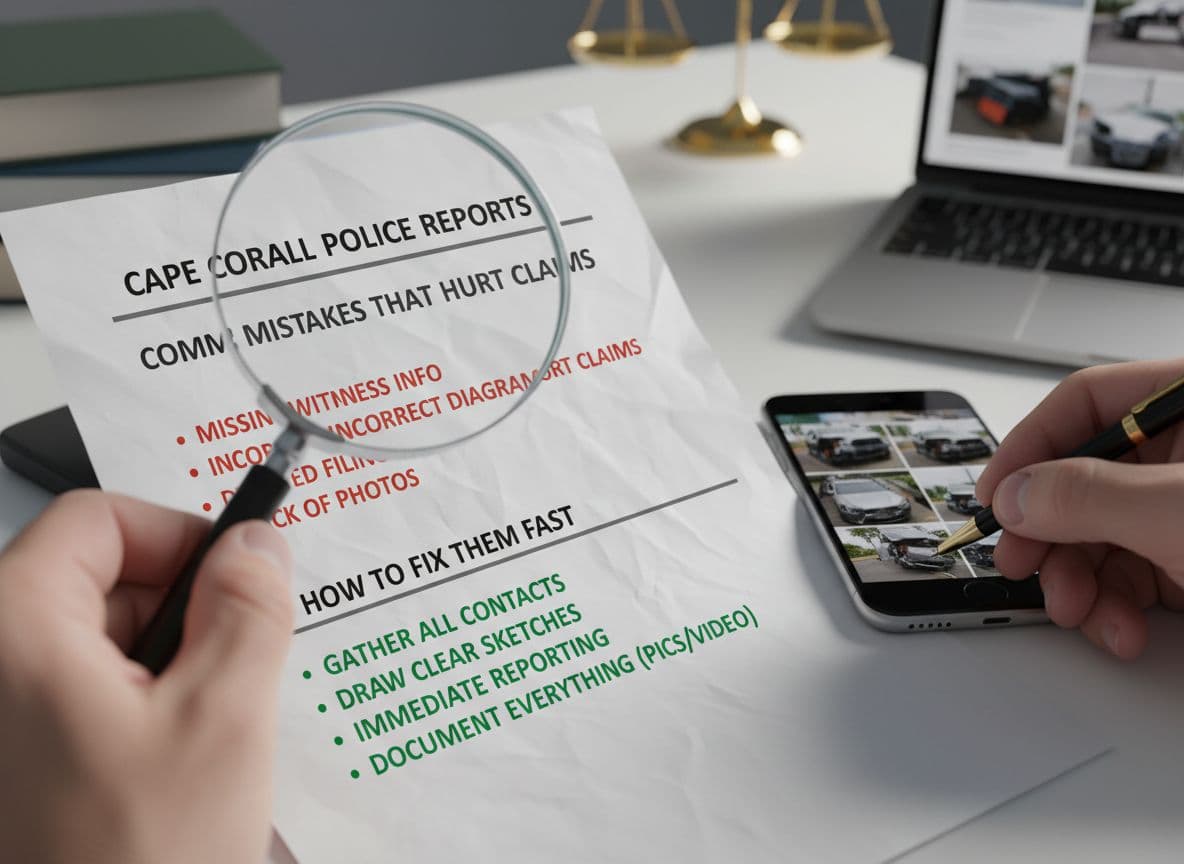
After a wreck, your mind is usually on the tow truck, the pain, and the phone calls. The paperwork can feel like background noise. But that paperwork often becomes the story everyone argues about later.
A Cape Coral police report can help your insurance claim, or it can quietly weaken it if key details are missing or wrong. The good news is that many problems can be corrected, or at least reduced, when you act fast and document the right things.
Why a Cape Coral police report matters more than most people think
A police report is often the first neutral record of the crash. Insurance adjusters read it early because it usually includes:
- Driver and vehicle details (names, insurers, plates)
- Date, time, and location
- Diagram and narrative of what happened
- Witness names and contact info (when collected)
- Citations issued (or not issued)
- Officer observations (road conditions, statements, visible injuries)
It’s not the final word on fault, and it’s not perfect. Still, it can shape the first impression of your claim. Think of it like the opening scene of a movie. If the opening scene is confusing, the rest of the story is harder to sell.
If you’re unsure what to do right after a collision, review this guide on essential steps after a Cape Coral car accident. Early actions often decide how strong the report and the claim will be.
Common mistakes tied to police reports that can shrink a settlement
Small missteps at the scene and in the days that follow can snowball. Here are the issues that most often cost people money.
Mistake 1: Not calling law enforcement for a report when you should
Drivers sometimes “handle it privately,” especially in parking-lot or low-speed crashes. That can backfire if the other driver changes their story, denies involvement, or claims you were unhurt.
Fast fix: If police were not called, document everything yourself immediately. Take wide and close photos, save text messages, and write down a timeline while it’s fresh. Then report the crash to your insurer with clear, factual details.
Mistake 2: Treating the officer’s questions like casual conversation
At the scene, it’s easy to blurt out “I didn’t see them,” or “I’m fine.” Those phrases can end up summarized in the report in a way that sounds like fault or a lack of injury.
Fast fix: Stick to facts you know, not guesses. If you don’t know your speed, don’t estimate. If you feel shaken but unsure about injuries, say you’re getting checked out.
Mistake 3: Leaving out witnesses, or assuming the officer captured them
Witnesses often drift away quickly, and sometimes officers can’t get full statements from everyone.
Fast fix: Ask for names and phone numbers yourself if it’s safe. If you already left the scene, retrace your steps. Nearby businesses may have employees who saw the crash, or cameras that captured it (those recordings can be erased fast).
Mistake 4: Not checking the report for errors
Reports can contain simple but harmful mistakes: wrong lane, wrong direction of travel, incorrect insurance info, swapped vehicle positions, or a missing passenger.
Fast fix: Get the report as soon as it’s available and review it line by line. If something is wrong, gather proof (photos, medical records showing injury complaints, witness contacts) and request a correction or supplement through the agency’s process.
Mistake 5: Confusing “no citation” with “no fault”
Many people assume that if the other driver wasn’t ticketed, they can’t win their claim. That’s not how insurance investigations work.
Fast fix: Build your own evidence file. Photos, dashcam video, scene measurements, and witness statements can carry a claim even when no ticket was issued. For more on what evidence matters, see proving fault in a Cape Coral car accident.
Mistake 6: Waiting too long to get medical care (or gaps in care)
In Florida, delays in treatment can create two problems at once. You may risk losing access to certain benefits, and insurers may argue you weren’t really hurt.
Fast fix: Get evaluated promptly, follow up, and keep appointments. If you had a gap because of cost, transportation, or scheduling, document the reason. A clear explanation is better than silence.
To understand the insurance system that applies right away after a crash, read how Florida’s no-fault law affects Cape Coral car accident claims. Many claim problems start with missed deadlines and incomplete paperwork.
Mistake 7: Giving a recorded statement before you’ve seen the report or a doctor
Adjusters may sound friendly, but their job is to reduce payouts. If your statement conflicts with the police report or later medical findings, they may use that conflict against you.
Fast fix: Provide basic claim notice, then pause. Gather the report, photos, and medical notes first. If you must speak, keep it short and factual.
Mistake 8: Not documenting pain and limits while it’s happening
A police report rarely captures how the injury affects sleep, driving, childcare, or work. If you don’t track it, it’s easier for an insurer to treat the injury as minor.
Fast fix: Start a simple daily log. Note pain level, missed work, tasks you couldn’t do, and appointments. Keep receipts and mileage too.
Quick repair plan: what to do in the first 7 days
When a claim starts to wobble, speed matters. Use this simple checklist to tighten things up fast.
| Problem | Why it hurts the claim | Fast fix |
|---|---|---|
| Report has wrong facts | Insurer relies on it early | Request correction or supplement, attach proof |
| No witness listed | “Your word vs theirs” | Locate witnesses, save names and numbers |
| Injury doesn’t appear in report | Insurer doubts injury | Get medical evaluation, keep records, explain delayed symptoms |
| You admitted fault casually | It becomes a soundbite | Clarify with facts and evidence, avoid extra commentary |
| Missing photos or video | Hard to show impact and angles | Gather vehicle photos, scene photos, dashcam, nearby camera leads |
What if the police report blames you?
It happens. Officers arrive after the impact and often work with limited time and mixed statements. A report that seems unfavorable isn’t the end, but it does mean you need to be organized.
Focus on evidence that answers basic questions: Where were the cars? What did the traffic control devices show? What damage patterns match the story? Who saw it? A strong claim is built on proof, not frustration.
When to bring in a personal injury attorney
If you’re dealing with injuries, disputed fault, or pressure to accept a quick settlement, it’s time to talk with a personal injury attorney. The earlier you get help, the easier it is to preserve evidence, address report errors, and keep insurance communications from drifting into harmful territory.
This is even more true when injuries are serious, symptoms are delayed, or you’re told you share blame. Those are the cases where small mistakes can cost a large amount.
Conclusion
A Cape Coral crash claim often rises or falls on details recorded in the first few days. Review the Cape Coral police report, correct errors quickly, and back up your story with photos, medical records, and witnesses. Don’t let a rushed statement or a missing detail become the “official version” of what happened. If the report is wrong or the insurer pushes back, getting advice early can protect the value of your claim.