
Florida Delayed C-Section Malpractice Signs Families Should Save
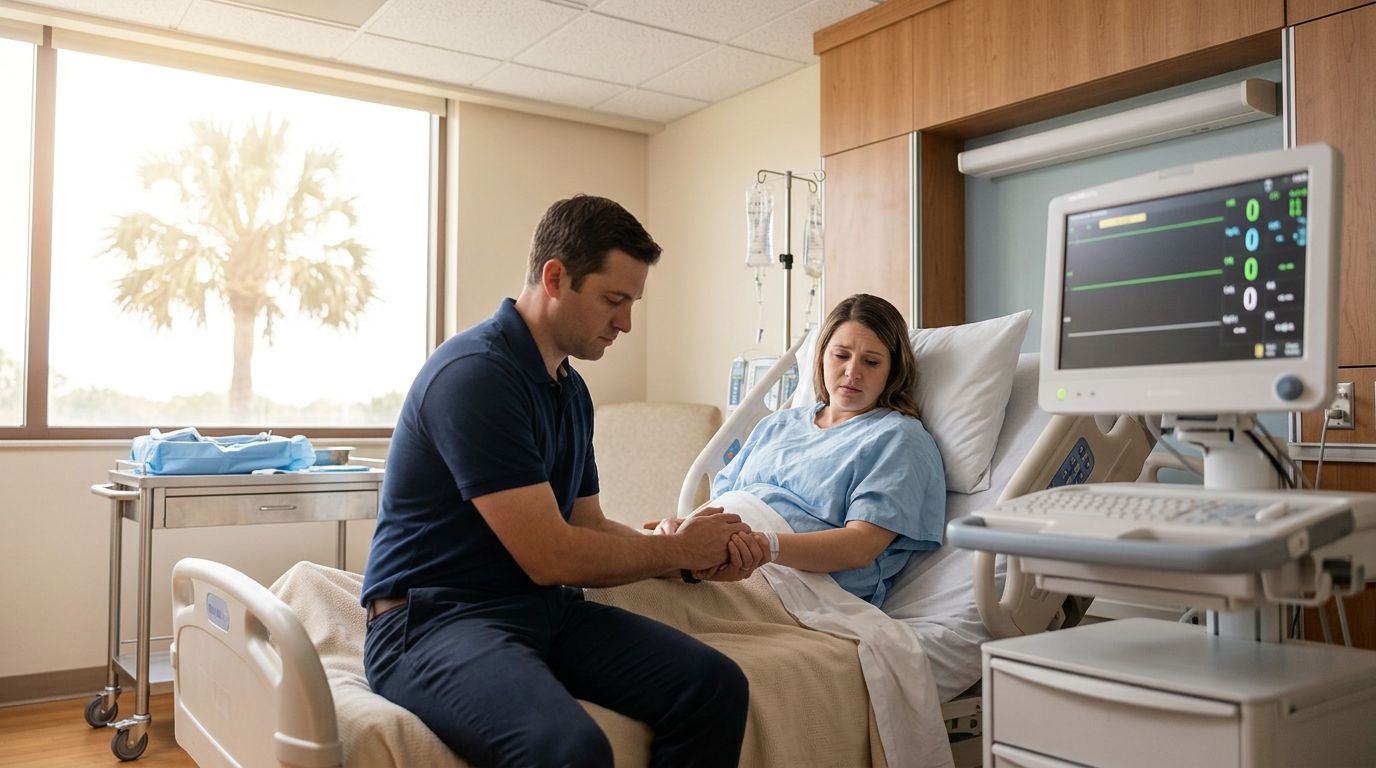
Labor can turn fast. One minute, staff say things look fine. Then the baby’s heart rate drops, alarms sound, and talk shifts to surgery. When that surgery comes too late, families may later wonder if a delayed c-section malpractice claim exists.
The answer often rests on proof saved in the first days and weeks. Memories fade. Records change hands. Phone photos get deleted. If you suspect a delay harmed your baby or the mother, start preserving the story while it’s still fresh.
When a delayed C-section may point to malpractice
A bad result does not always mean negligence. Birth can change in seconds, and some emergencies are unavoidable. Still, malpractice may exist when the team saw danger, or should have seen it, and failed to act in time.
Common warning signs include fetal distress on the monitor, dropping oxygen levels, stalled labor, placental problems, cord issues, or signs of uterine rupture. In many hospitals, an emergency C-section triggers a rapid response because oxygen loss can injure a baby very quickly. A common benchmark is a 30-minute decision-to-incision window in urgent cases, although the right response time depends on the facts.
What matters most is the timeline. When did the strip first look abnormal? When did a nurse call the doctor? When did the doctor arrive? When was surgery ordered? When did the baby actually get delivered? A gap between those points can tell the real story.
A poor outcome alone rarely proves malpractice. The timeline, the monitor strips, and the chart often do.
Listen for phrases you remember hearing during labor. Families often recall staff saying the baby was “not tolerating labor,” “having decels,” or “showing distress.” Those words matter. So do delays tied to staffing, slow anesthesia response, a missing operating room, or confusion between providers. When a preventable delay caused oxygen loss, brain injury, or death, a case may involve delayed c-section malpractice.
The records and evidence families should save right away
Start with the hospital record, but don’t stop there. The full picture usually comes from many small pieces. Think of it like a puzzle. One text message may not prove much. Ten matching details can.
This quick reference shows what families should preserve.
| Record or item | Why it matters |
|---|---|
| Fetal monitor strips | Shows distress patterns, timing, and whether staff acted |
| Labor and delivery notes | Tracks calls, orders, exams, and charted concerns |
| Operative report | States when surgery began and what doctors found |
| NICU records | Connects birth events to later symptoms and treatment |
| Placenta pathology | May show abruption, infection, or other cause of distress |
| Photos, videos, texts | Captures timing, statements, and the baby’s condition |
| Discharge papers and bills | Helps show damages and follow-up care |
Ask for complete records, not just discharge summaries. Families often miss the most useful parts, such as nursing notes, anesthesia records, and fetal heart tracing strips. Also save bracelet tags, medication printouts, transfer records, and appointment notes from the days before delivery.
Then write down what each family member remembers. Do it separately. One person may remember a nurse saying surgery was needed at 2:15 p.m. Another may remember that the doctor did not arrive until much later. Those details can support the chart, or expose gaps in it.
Keep every photo and video from the hospital stay. Save voicemail messages, screenshots, and portal messages too. If the baby needed resuscitation, cooling therapy, seizure medicine, or NICU transfer, preserve those records. They may help show how quickly harm appeared after birth.
Most importantly, do not edit or tidy up what you save. Raw files often include timestamps. Those timestamps can matter as much as the image itself.
Signs the delay may have injured the baby or the mother
Delayed delivery often harms the baby first, because oxygen loss can damage the brain. Early signs may include low Apgar scores, trouble breathing, seizures, weak muscle tone, poor feeding, or an NICU stay. Later, some children develop movement problems, learning delays, hearing loss, or cerebral palsy.
Still, not every birth injury points to malpractice. The question is whether the delay likely changed the outcome. That link usually depends on medical records, imaging, and the timing of symptoms.
Parents should also watch for signs that the mother suffered harm. A delayed C-section can raise the risk of heavy bleeding, infection, uterine rupture, emergency hysterectomy, organ injury, or emotional trauma after a frightening birth. If the mother needed a blood transfusion, intensive care, or another surgery, save those records too.
Certain patterns deserve close review:
- Distress before delivery: repeated decelerations, a sudden drop in fetal heart rate, or chart notes about non-reassuring tracings.
- Delay after decision: staff discussed surgery, but the patient stayed in labor for a long time.
- Serious condition at birth: the baby needed resuscitation, cooling treatment, intubation, or transfer.
- Long-term harm: brain injury, seizure disorder, developmental delay, or permanent disability.
These facts do not prove liability by themselves. However, together they often show whether the team moved too slowly when every minute counted.
Why timing matters in a Florida malpractice claim
Florida birth injury cases are evidence-heavy from the start. State law usually requires pre-suit steps, including medical support for the claim under section 766.102. Because of that, families should act quickly while records are easy to gather and witnesses still remember what happened.
Recent Florida verdicts have reached into the tens of millions when delayed obstetric care led to severe brain injury or death. That does not predict what any one case is worth. It does show how strongly juries can react when records tie a delay to permanent harm.
Time limits matter too. In many Florida malpractice cases, the deadline is short, and cases involving children have special rules. Those rules can be complex, and waiting too long can block a claim. A lawyer reviewing delayed c-section malpractice will usually look at negligence, causation, and damages at the same time, not one by one.
That early review can answer the hard question families keep asking: was this a tragic emergency, or a preventable delay?
When birth turned from routine to emergency, every minute mattered. The same is true after the delivery. Save the chart, save the messages, and save your own memory of the day. In Florida delayed C-section malpractice cases, proof fades fast, and the strongest claim often starts with the records a family kept.