
Florida Apartment Complex Slip and Fall Claims Proof Checklist
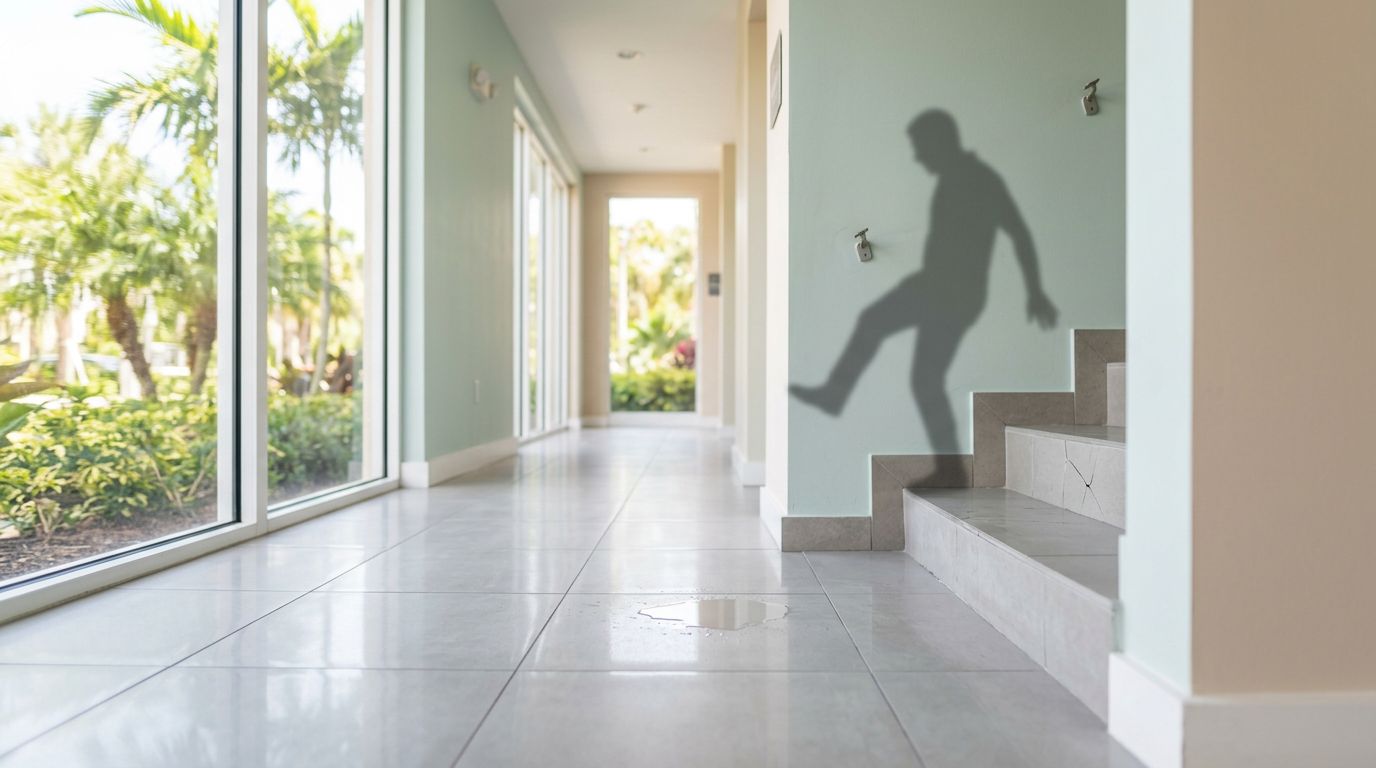
A fall in an apartment complex can look minor at first. Then the ankle swells, the back tightens, and the manager says no one knew about the problem. In florida slip and fall claims, proof often matters as much as the fall itself.
If you were hurt in a stairwell, breezeway, pool deck, hallway, lobby, or parking lot, start building a paper trail right away. The scene can change within hours. This checklist explains what evidence helps most, what Florida law looks for, and what can weaken a claim before it really begins.
What you must prove after an apartment complex fall
Most apartment complex cases come down to three points, control, notice, and injury. You need to show the landlord, property manager, or another party controlled the area. Then you must show they knew, or should have known, about the danger and failed to fix it or warn people.
That danger might be a wet walkway, broken step, loose tile, missing handrail, poor lighting, or algae on a pool deck. In common areas, management often has the clearest duty because residents and guests rely on them to keep shared spaces reasonably safe. Florida’s landlord maintenance duties under section 83.51 give useful background on repair and upkeep duties.
A strong claim usually shows three facts, the hazard existed, management had notice, and the fall caused real harm.
Notice is where many claims tighten. If a puddle formed seconds before the fall, the complex may say it had no fair chance to respond. If the same leak showed up for weeks, or neighbors had already complained about the stairwell, the case looks very different. That is why understanding Florida property owner responsibilities can help you see what duty may apply.
Falls inside a private unit can still lead to a claim, but the notice issue is often harder. In many of those cases, the landlord must have known about the defect, or had enough warning signs that a repair should have happened earlier.
As of March 2026, no major Florida law change has rewritten the basic proof rules for ordinary apartment slip and fall cases. Still, general negligence rules in Chapter 768 of the Florida Statutes still shape fault arguments and damages. If the defense can show you share some blame, your recovery may drop.
The proof checklist that gives your claim weight
Think of evidence like bricks. One brick may not hold much. Stacked together, they can support the whole claim.
Start with the scene. Take wide photos and close-ups before staff cleans, dries, or repairs anything. Show the exact spot, nearby doors, lighting, warning signs, stair edges, and whatever made the area unsafe. If water came from a leak, photograph the source too.
Next, report the fall to management the same day. Ask for a written report and keep a copy, a photo, or at least the report number. That report helps pin down time, place, and notice.
This quick table shows the proof that often carries the most weight:
| Evidence | Why it matters |
|---|---|
| Scene photos and video | Shows the hazard before it changes |
| Witness names | Confirms what the area looked like and when |
| Incident report | Proves you notified management promptly |
| Medical records | Links the fall to your injuries |
| Prior complaints or work orders | Helps prove notice |
| Lease or guest status | Shows why you were lawfully on the property |
After that, hold onto the small things people often toss out. Keep the shoes and clothes you wore. Save texts, emails, and resident portal messages about the hazard. If neighbors complained about the same puddle, broken handrail, or uneven walkway, get their names. A recurring problem can be far more powerful than a single photo.
Medical care belongs on the checklist too. Go the same day if you can. Adrenaline can hide pain, and delayed treatment gives the insurer room to argue that something else caused the injury. If your symptoms grow over several days, write down that timeline while it’s still fresh.
Surveillance footage can make or break a case, but many systems overwrite video quickly. Ask the complex in writing to preserve footage from the area, along with maintenance logs, inspection records, and repair requests. For a deeper look at early proof, see this Florida slip and fall evidence checklist.
One extra point matters if your fall happened in a leasing office or another business-run area on the property. In those situations, Florida’s transitory foreign substance rule may affect how notice is proven for spills and similar hazards. In simple terms, the fight often centers on whether the business knew, or should have known, the condition was there.
What weakens Florida slip and fall claims
Insurance companies rarely knock out a case with one dramatic point. More often, they chip away at credibility.
A common mistake is minimizing the fall. Someone tells the manager they’re fine, drives home, and waits a week to see a doctor. That gap becomes part of the defense story. Another problem is weak location detail. “Near the stairs” is far weaker than “west stairwell by Building C, third step from the bottom.”
Also, don’t guess. If you don’t know how long the puddle was there, say that. If you assume maintenance cleaned the area earlier, leave that out unless you saw it. A solid claim rests on facts, not filler.
Social media can hurt more than people expect. A single smiling photo from a birthday dinner may be used to argue you weren’t injured. Recorded statements can create trouble too, because short answers often get stretched into bigger admissions later.
Finally, damages need proof, not just pain. Keep bills, wage records, therapy notes, and mileage logs for treatment. If you want a plain-English summary of what may be recoverable, Avard Law’s guide to Florida slip and fall damages explains the main categories.
A fall claim is a bit like a photo that develops over time. The clearer the early image, the harder it is to dispute later. If you were hurt in a Florida apartment complex, get care, protect the scene, and keep every record. In florida slip and fall claims, the people with the best proof usually stand on the strongest ground.