
Florida Backing-Up Accident Proof Checklist for Not-At-Fault Drivers
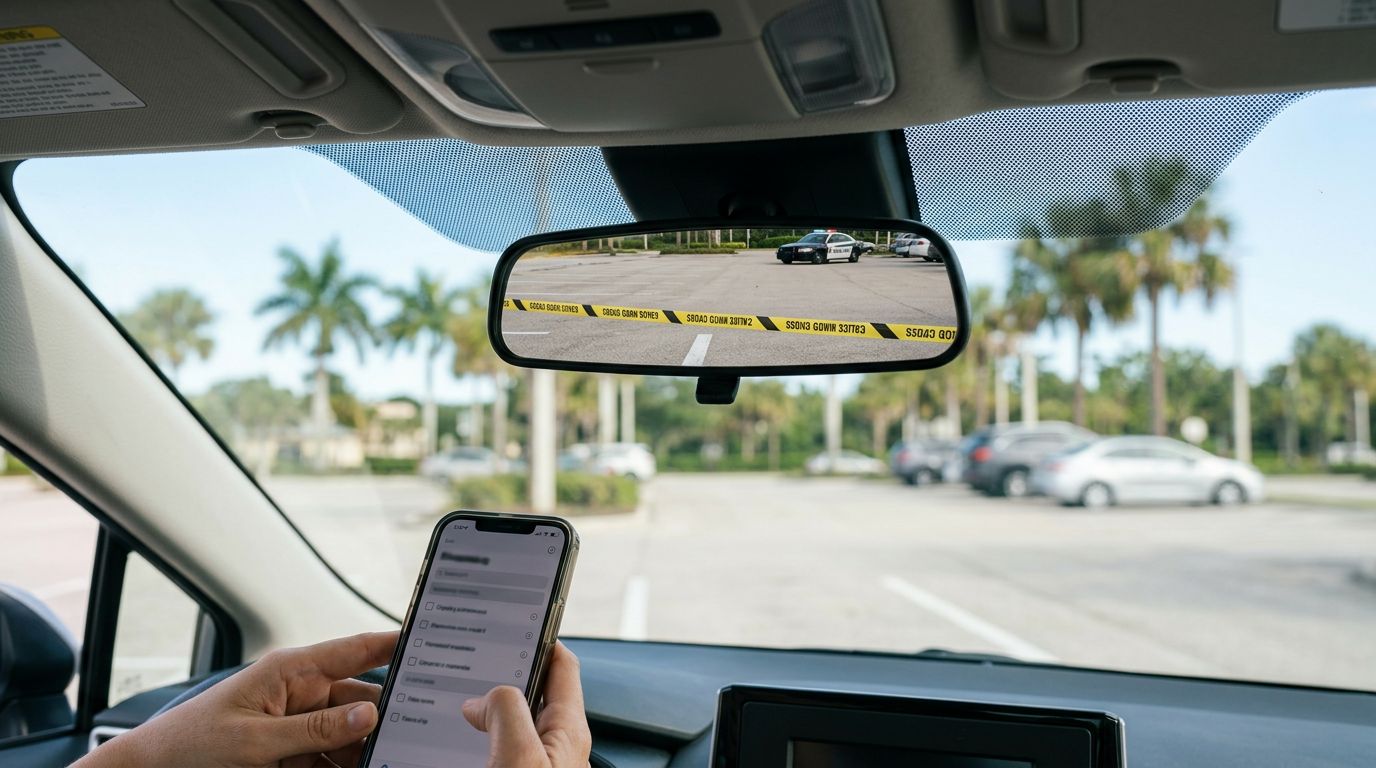
A Florida backing up accident can happen in a blink. One driver shifts into reverse, misses a blind spot, and hits your car. Then the insurance fight starts.
If you weren’t at fault, proof matters from the first minute. A few smart steps can protect your health, your claim, and your timeline. This guide covers what to gather, what to avoid, and when legal help may make a real difference.
Why proof matters after a Florida backing up accident
In most reverse crashes, the backing driver is usually blamed. That’s because drivers must check mirrors, watch blind spots, and yield before moving backward. Still, fault isn’t automatic. Parking lots, driveways, and shared lanes often lead to finger-pointing.
Florida also uses modified comparative negligence. So if an insurer says you helped cause the crash, your recovery drops by your share of fault. If they place 51 percent or more on you, you can’t recover damages from the other side.
Florida remains a no-fault state, too. Your own PIP coverage can pay initial medical bills, no matter who caused the wreck. Yet claims for car damage, lost income, and pain often depend on how well you document the facts.
PIP also has limits. It may cover part of medical bills and some lost wages, but not every loss. So when treatment grows, or the other driver contests fault, the paper trail around the crash matters even more.
These are the time rules that matter most:
| Issue | Florida rule |
|---|---|
| Personal injury lawsuit | 2 years from the crash date for accidents on or after March 24, 2023 |
| Property damage lawsuit | 4 years from the crash date |
| Police report threshold | Report crashes involving injury, death, or more than $2,000 in damage |
In short, backing-up crashes look simple, but claims rarely are. Fast, clear evidence gives you the best chance to show what happened.
The proof checklist to start within minutes of the crash
Start with safety. If anyone is hurt, call 911. Also call law enforcement if the crash caused injury, blocked traffic, or likely caused more than $2,000 in damage. If the other driver leaves, try to note the plate number, car description, and direction of travel.
Next, take photos before the scene changes, if it’s safe to do so. Capture both vehicles, the point of impact, license plates, skid marks, debris, nearby signs, parking space lines, and the wider area. Wide shots matter because they show sight lines and who had room to move.
Then get names and numbers from witnesses. A neutral witness can break a deadlock fast. Nearby homes, stores, and businesses may also have video, so ask right away because footage often gets deleted.
After that, exchange insurance and contact details, but keep your words simple. Stick to facts. Don’t guess about speed, distance, or fault. A quick “I’m sorry” can be twisted into an admission.
Get medical care as soon as symptoms appear, even if the crash felt minor. Stiffness, headaches, numbness, and back pain often show up later. The longer you wait, the easier it becomes for an insurer to say something else caused the injury.
Finally, save every receipt and record. Keep the crash report number, towing bill, repair estimate, rental car costs, medical bills, and missed-work notes in one place. A short pain journal also helps, because it shows how the injury changed daily life.
Small backing-up crashes often create big proof problems. The driver who documents early usually stands on firmer ground.
Common mistakes that weaken a not-at-fault claim
One common mistake is assuming a parking lot has no real traffic rules. It does. Private property doesn’t erase a driver’s duty to reverse with care.
Another mistake is moving too fast to repair the vehicle. Take clear photos first, and keep repair estimates. Damage patterns often help show which driver was backing, turning, or stopped.
Low-speed impact can create another problem. Insurers love to argue, “The car barely shows damage, so you can’t be hurt.” That’s not always true. Neck, shoulder, and back injuries can appear after modest force. If that issue shows up in your case, this guide on overcoming low vehicle damage in Florida injury claims explains why visible damage isn’t the whole story.
Recorded statements also cause trouble. The other driver’s insurer may sound friendly, but its goal is to limit payout. So give basic notice to your own carrier, yet think carefully before giving a detailed recorded statement to the other side.
Also, stay off social media for a while. A single photo of you carrying groceries or smiling at dinner can get used out of context. Claims rise or fall on details, and casual posts create details you didn’t need.
When a lawyer can help protect your side of the story
Some backing-up crashes resolve with basic insurance handling. Others turn messy fast. Legal help often matters when the other driver denies backing, both drivers were moving, a commercial vehicle was involved, or your injuries last more than a few days.
A lawyer can also help when the insurer shifts blame, downplays treatment, or offers a fast settlement before you know the full cost. That matters in Florida because fault percentages directly affect what you can recover.
Cases involving children, older adults, or prior injuries also need careful handling. Those facts don’t destroy a claim, but insurers may use them to argue your pain came from something else. A lawyer can sort through records and push back with the right evidence.
Time also matters more than many people think. Injury cases generally carry a two-year filing deadline, while property damage claims usually get four years. Waiting sounds harmless, yet video disappears, memories fade, and damaged vehicles get repaired.
The simple rule is this: don’t let the other side write the first clean version of events. If a Florida backing up accident left you hurt or facing a fault dispute, early legal advice can protect both the evidence and the claim.
A backing-up crash may look minor, but the claim can grow serious fast. The best move is to protect proof, get checked out, and act before records disappear. When fault gets disputed, solid evidence can keep another driver’s reverse mistake from becoming your financial burden.