
Florida Balcony Collapse Injury Claims: Building Code Evidence Checklist for Stronger Cases
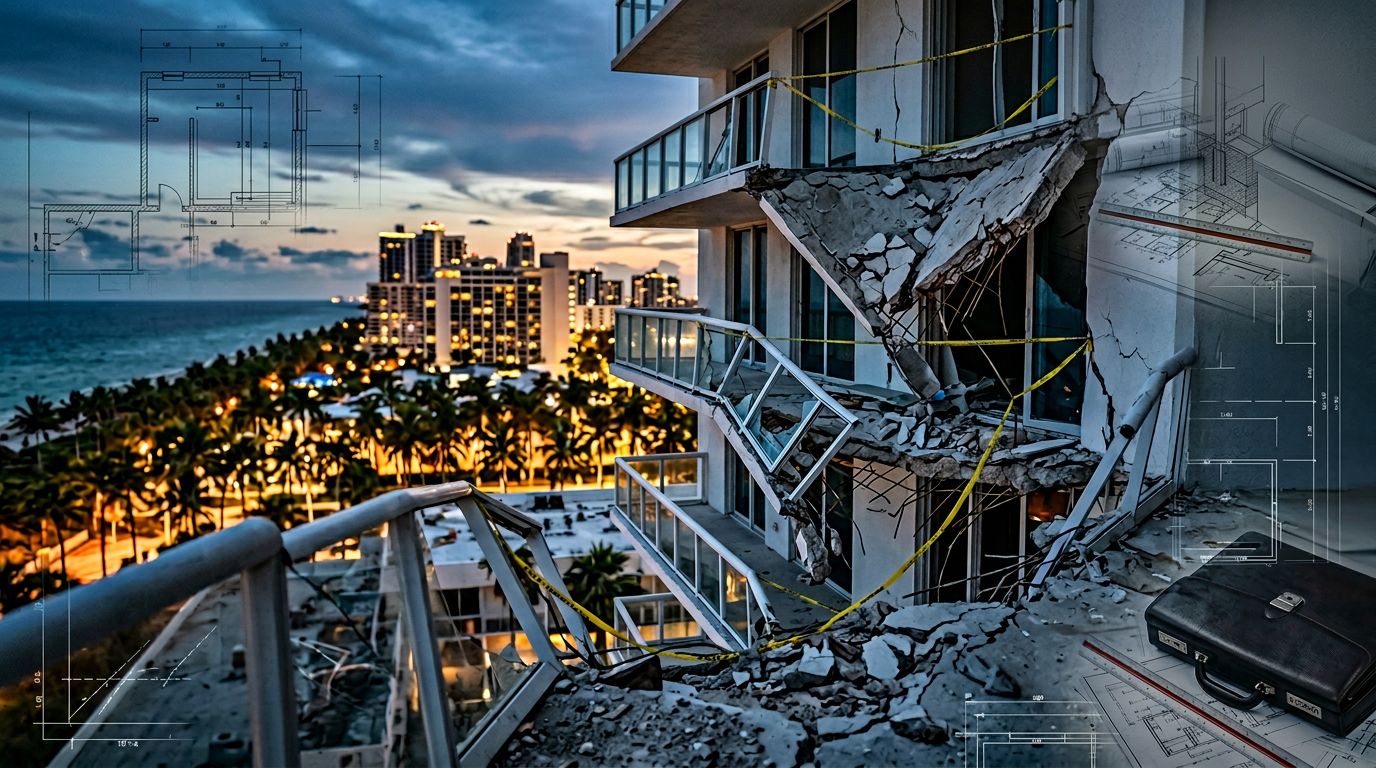
A Florida balcony collapse can turn a normal evening into an ambulance ride. In minutes, you’re dealing with pain, lost work, and a property owner who suddenly has “no record” of prior problems.
If you’re thinking about an injury claim, the fastest path to answers is usually evidence. Not opinions, not guesses, evidence that shows what failed, why it failed, and who had the power to fix it.
This guide explains how building code proof fits into Florida liability cases, what to gather right away, and a practical evidence checklist that helps engineers and attorneys prove what happened.
Why building code evidence matters after a Florida balcony collapse
In most balcony collapse cases, the legal core is simple: someone had a duty to keep the property reasonably safe, and they didn’t. The hard part is proving that failure with documents and facts that hold up under pressure. That’s where building code evidence can help.
A code violation doesn’t automatically guarantee you win. Still, code requirements often act like a measuring stick. They can show what safe construction and maintenance should look like, especially when a collapse involves rot, corrosion, loose connections, water intrusion, or overloaded framing.
Liability also depends on control, not just ownership. Depending on the property and the facts, responsible parties may include:
- A landlord or property manager who handled repairs and inspections
- A condo association responsible for common elements
- A contractor who performed work, repairs, or renovations
- A developer or builder (sometimes, depending on timing and claims)
- A hotel or short-term rental operator, when guests were invited onto the balcony
If you want a plain-language overview of how Florida courts look at property responsibility, start with Avard Law’s guide on Florida premises liability duty of care. It explains why “we didn’t know” often becomes a fight over inspection records, prior complaints, and maintenance history.
Building codes also matter because they shape what inspectors look for, what permits require, and what a reasonable owner should address. For current code context, Florida’s official process is tracked on the Florida Building Code 9th Edition (2026) development page. Even when a building is older, later repairs and alterations may trigger permit and compliance rules.
Finally, many collapses have a predictable theme: warnings were visible before the failure. Hairline cracks, spongy decking, rust stains, wood rot, or prior “temporary fixes” often show up in records long before the structure gives way.
What to document in the first 48 hours (before the scene changes)
After a collapse, the property owner’s first move is often cleanup and control. Railings get removed, boards get replaced, and the scene stops looking like the scene. That’s why early documentation matters so much.
Start with safety and medical care. Then, if you can, capture what will disappear.
Photographs and video should include wide shots and close-ups. Get the full balcony, the attachment point to the building, the underside if visible, and the ground area where debris landed. Also document lighting, warning signs (or the lack of them), wet surfaces, rust stains, and any visible rot. A short video walking the area helps show distance and context.
Next, lock down the paper trail. Ask for the incident report number, the manager’s name, and any security or maintenance contact info. If police or fire responded, write down the agency and approximate time.
For step-by-step help on obtaining reports quickly, Avard Law’s Florida slip and fall incident report guide translates well to balcony incidents because the same problem shows up: records “vanish” when you wait.
The scene is like a whiteboard after class. If you don’t photograph it quickly, someone erases it.
Also be careful with statements. It’s fine to report what happened. Don’t guess about causes, how long the defect existed, or whether you “should’ve noticed.” If you don’t know, say you don’t know.
One more early risk is the quick settlement call. Insurers sometimes offer fast money for medical bills, then slide in broad release language. If property damage is involved (phones, glasses, or other items), don’t sign away injury rights by mistake. This comes up often in mixed claims, and Avard Law flags common traps in its Florida property damage release guide.
Florida building code evidence checklist that supports injury claims
A Florida balcony collapse claim becomes stronger when you can answer three questions with proof: What failed, what standard applied, and who had notice or control.
The table below shows evidence categories that commonly matter, and what each one helps prove.
| Evidence type | What it helps prove | Where it often comes from |
|---|---|---|
| Permit and inspection history | Whether work was approved, inspected, or skipped | City or county building department records |
| Prior complaints and work orders | Notice of rot, leaks, loose rails, “soft spots” | Property management logs, condo association records |
| Photos before the collapse | Long-term deterioration, staining, visible sagging | Tenants, guests, listings, social media (save originals) |
| Post-collapse scene photos and debris | Failure point, missing connectors, decay patterns | Your phone, witnesses, first responders |
| Maintenance and vendor contracts | Who was responsible for repairs and when | Property owner, HOA, management company |
| Engineering evaluation | Causation, code comparison, load and connection analysis | Retained engineer, forensic contractor |
| Material samples (when preserved) | Wood rot, corrosion, fastener failure, moisture intrusion | Engineer, investigator, sometimes insurer |
| Surveillance video | Condition before failure, number of occupants, timing | Property owner, nearby businesses (request fast) |
Code-related proof is usually a mix of the Florida Building Code, local amendments, and manufacturer installation requirements. In practice, engineers often focus on:
- Load and connection capacity (ledger boards, anchors, welds, bolts, joist hangers)
- Waterproofing and drainage (because water plus time destroys wood and steel)
- Corrosion resistance in coastal areas, where salt air speeds metal loss
- Guardrail safety (height, spacing, attachment strength), since rail failure can cause falls even without a full collapse
For background on recent structural and flood related updates used by building officials, Miami-Dade provides a helpful summary document: Building, Flood & Structural Changes to the Florida Building Code (8th Edition, 2023). It’s not a substitute for an engineer, but it’s a solid reference for how Florida treats structural safety concerns.
If your collapse happened at a hotel, resort, or rental property, statutory duties may also matter alongside code issues. Florida’s public lodging and food service rules sit in Chapter 509, which you can review on Online Sunshine’s Florida Statutes Chapter 509 page.
Finally, don’t overlook timing. Video systems overwrite footage, vendors discard job notes, and employees change jobs. A prompt preservation request (through counsel) can keep key evidence from “accidentally” disappearing.
Conclusion
A Florida balcony collapse claim is only as strong as the evidence behind it. Early photos, incident documentation, permit records, and an engineering review often decide whether the case settles fairly or gets stalled for months. If you’re hurt, focus on treatment first, then protect proof before repairs rewrite the story. The sooner you act, the harder it is for the responsible parties to deny what failed and why.