
Florida Ceiling Collapse Claims and the Building Code Proof That Counts
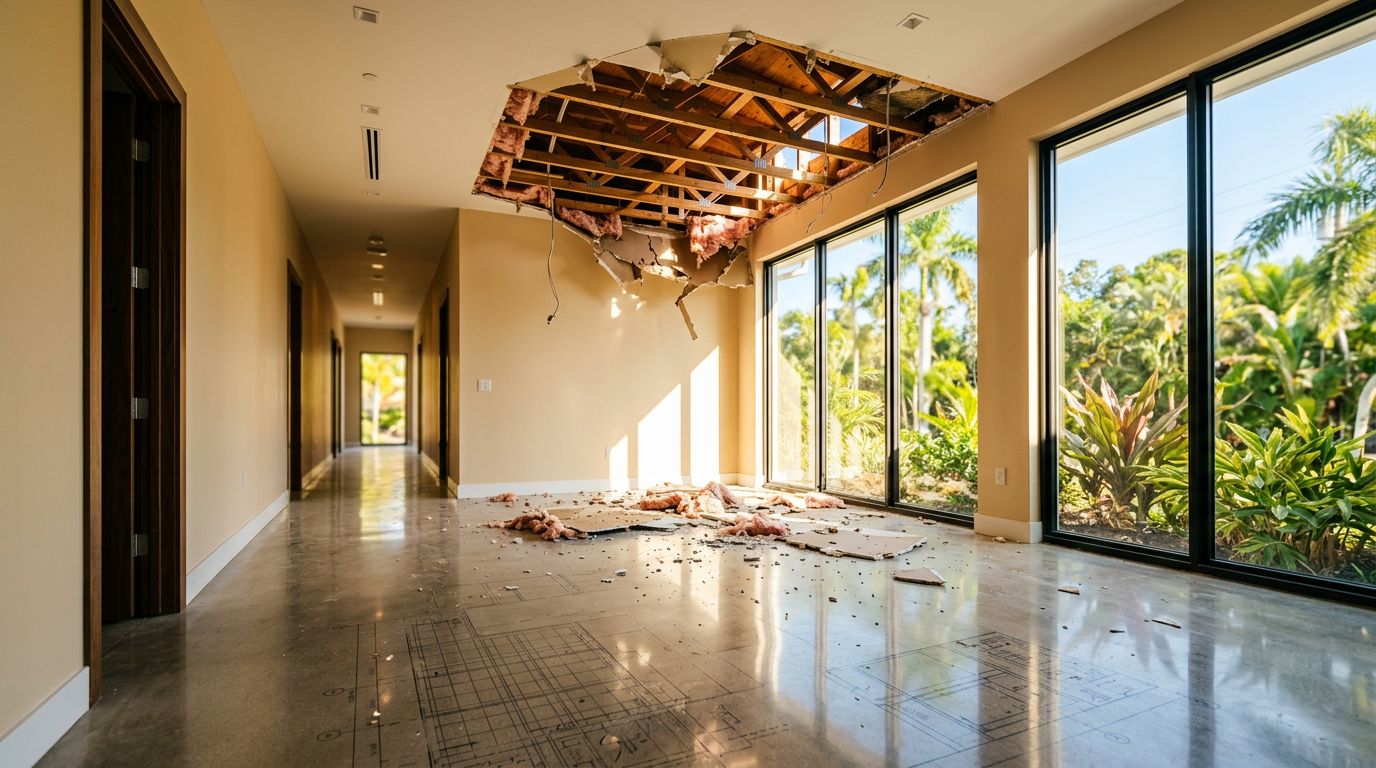
A ceiling can drop like a trapdoor. One second you’re walking through an apartment, hotel, office, or store. The next, drywall, plaster, insulation, or a heavy fixture is on top of you.
If that happened in Florida, your case may depend on more than your pain. Florida ceiling collapse claims often rise or fall on proof, what failed, who controlled the space, and whether the danger should’ve been fixed sooner.
That’s where building code evidence starts to matter.
A ceiling collapse claim is about more than the moment of impact
Most ceiling collapse cases fall under premises liability and negligence. The first legal question is usually simple: who had the duty to keep that property safe? It isn’t always the person named on the deed.
Control matters more than labels. A landlord, hotel operator, property manager, condo association, business tenant, or maintenance vendor may all share blame. If you want the broader rule behind that idea, Avard Law’s guide to Florida premises liability duty of care explains why control often drives liability.
Notice also matters. In plain English, did the owner know about the danger, or should they have known? A ceiling rarely fails out of nowhere. Water stains, sagging drywall, repeated leaks, bubbling paint, loose vents, falling dust, mold odors, and patchwork repairs often show up first. Think of it like a tire blowout. The rupture feels sudden, but the warning signs may have started miles earlier.
That point can make or break a claim. If tenants complained about leaks, if a hotel kept repainting the same stain, or if a store ignored a soft, bowed section overhead, those facts can show notice. On the other hand, a recent bad repair or hidden structural defect may shift attention to contractors, permits, and inspection records.
In many ceiling collapse cases, the fight isn’t over whether debris fell. It’s over how long the warning signs were there.
Because these cases involve structural failure, they often use the same proof logic found in Avard Law’s Florida balcony collapse evidence checklist. Photos, maintenance records, complaints, permits, and expert review usually matter more than anyone’s opinion after the fact.
Building code proof can turn suspicion into evidence
Building code proof is not a shortcut to a payout. A code violation does not automatically win a case. Still, it gives your claim a measuring stick. It helps show what safe construction, repair, and maintenance should have looked like.
As of April 2026, public reporting does not point to a Florida code change aimed only at ceiling safety in the coming Ninth Edition. Still, that does not leave injured people without standards. General structural rules, permit rules, and existing-building requirements still shape these cases. Florida has long tracked recurring construction problems in its report on common residential building code violations. Public collapse investigations also follow the same pattern. The Harbour Cay construction failure investigation shows how experts trace a failure back to support problems, weak connections, and construction mistakes.
This quick guide shows the proof that often carries the most weight:
| Evidence | What it can show | Where it often comes from |
|---|---|---|
| Scene photos and video | Water damage, sagging, failure point, fallen fixtures, debris pattern | Your phone, witness phones, first responders |
| Maintenance logs and work orders | Prior leaks, complaints, repeat patch jobs, notice | Landlord, hotel, management company, condo association |
| Permit and inspection history | Whether repairs or renovations were approved and inspected | City or county building department |
| Contractor invoices and repair records | Incomplete fixes, recent work, who touched the ceiling last | Owner, vendors, insurance file |
| Expert review | Why the ceiling failed and what standards apply | Engineer, contractor, forensic expert |
The strongest files usually show both the before and the after. Before means complaints, stains, repair history, and inspection gaps. After means debris, fixture parts, injuries, and the exact room conditions.
If you can do only a few things, get medical care first. Then photograph the whole room, the ceiling opening, fallen material, and any water marks. Ask for an incident report. Get witness names. Also request that the owner preserve video, repair records, and the broken materials. Once cleanup starts, the scene can change in hours.
Why owners and insurers resist ceiling collapse cases
Insurers often try to shrink ceiling collapse claims into “an unfortunate accident.” They may say the defect was hidden, the collapse was caused by a storm, or no one had enough warning to fix it. Sometimes they claim the building was old, so wear and tear excuses the result. It doesn’t.
Age alone is not a defense. Older buildings still need safe maintenance. Meanwhile, recent repairs can hurt the defense, not help it, if those repairs were sloppy or incomplete. A fresh paint patch over a long leak can look less like care and more like a cover-up.
Medical proof matters just as much as structural proof. Falling debris can cause concussions, neck injuries, shoulder damage, back pain, and cuts from glass or metal. Yet those injuries do not always peak on day one. If you wait too long to get checked, the insurer may argue the collapse was minor or your symptoms came from somewhere else.
Damages can include more than the first emergency bill. Lost income, future care, and pain also count. The same broad categories explained in Avard Law’s page on what compensation may include after a premises injury often apply in ceiling collapse cases too.
There is also a race against time. Wet drywall gets thrown away. Ceiling tiles get replaced. Video gets overwritten. The room that injured you can look normal by the next day. When that happens, records become your substitute for the missing scene. A strong claim is often built from the paper trail the owner hoped no one would request.
When the dust settles, proof matters most
A ceiling collapse feels sudden. A strong claim should not.
The best Florida ceiling collapse claims connect three points: the failed condition overhead, the records showing bad work or prior notice, and the medical proof of harm. Building code evidence does not replace your injury story. It explains why the ceiling fell, and who should answer for it.
When repairs hide the damage, documents and photos have to speak for you.