
Florida Cement Truck Crash Claims: What Proves You Weren’t at Fault
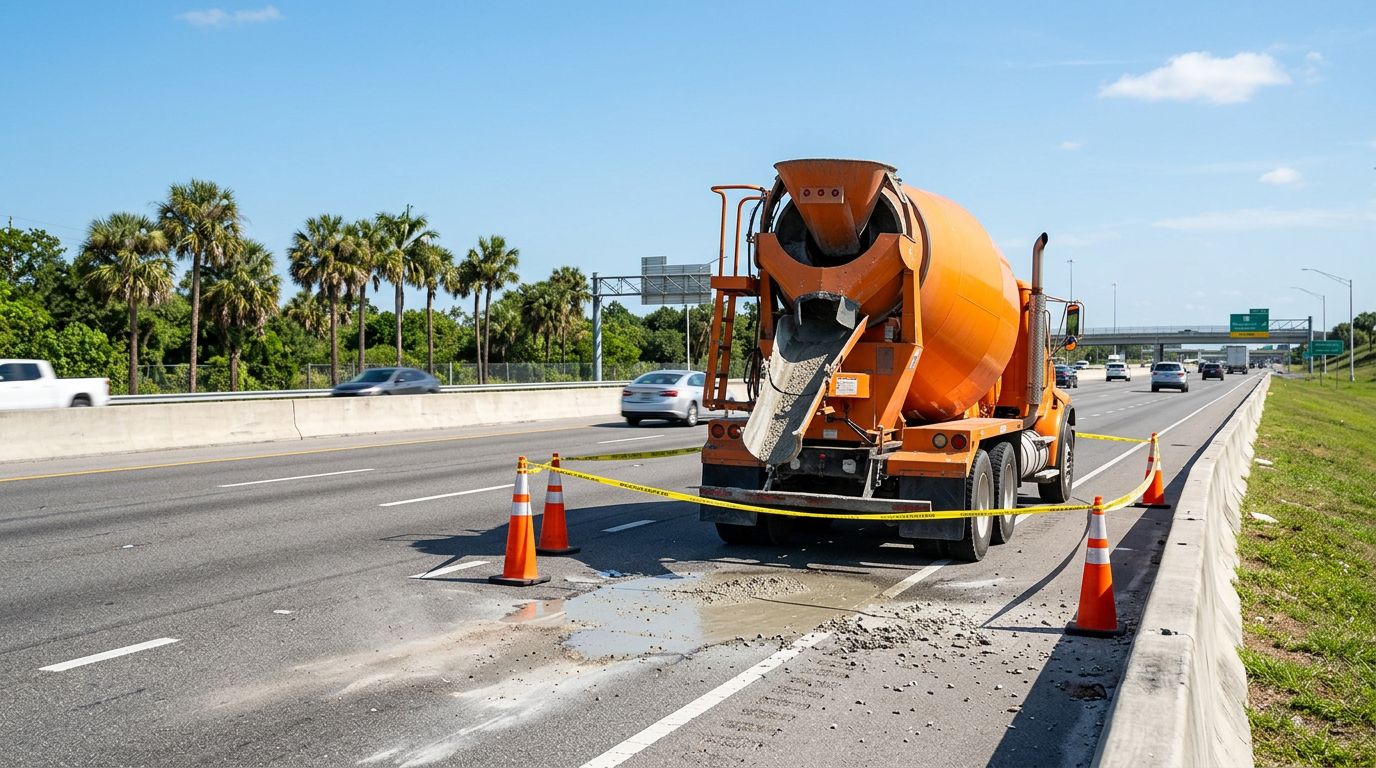
Wet concrete hardens fast, and so does the other side’s story after a wreck. In florida cement truck crash claims, the winner is often the side that locks down proof first.
If a cement truck hit you, forced you off the road, or triggered a pileup, blame may not be obvious from the first police report. These cases often involve a driver, a trucking company, a contractor, maintenance records, and fast-moving insurance teams. That makes early evidence far more important than guesswork.
Why cement truck crashes create tougher fault fights
A cement truck is not a normal passenger vehicle with a big logo on the door. It is heavy, slow to stop, hard to steer in tight spaces, and often works in active construction zones. Some mixers also back up often, swing wide, or leave debris in the road. That means a simple crash can turn into several arguments at once.
One issue is scale. Florida crash data still does not break out cement truck wrecks as a separate public category as of April 2026. These crashes usually fall under broader heavy truck reporting. So, each claim depends on the facts of that specific scene, not a neat statewide statistic.
Another issue is blame shifting. Insurers may argue that you followed too closely, changed lanes badly, or had time to avoid the truck. Florida’s modified comparative fault rule makes that serious. If the other side pushes most of the blame onto you, your recovery can shrink or disappear.
Florida also remains a no-fault state for basic injury coverage. Your own PIP may pay first. Still, a cement truck crash often causes injuries and losses far beyond PIP. When that happens, proof matters for the larger bodily injury claim, property damage claim, lost income, and pain-related damages.
If the wreck began when concrete chunks, gravel, or truck parts hit the roadway, the case can overlap with proving liability in truck shed debris crashes. That matters because debris disappears fast, and once it is swept away, so is part of your story.
The evidence that carries the most weight in florida cement truck crash claims
Think of a strong claim like a poured foundation. If the base is weak, everything above it starts to crack. The best proof usually comes from the scene, the truck, and your medical timeline.
This quick chart shows what usually matters most:
| Evidence | What it can show |
|---|---|
| Scene photos and video | Lane position, skid marks, truck angle, traffic flow, and sight lines |
| Truck identifiers | Company name, USDOT number, plate, and the right insurer |
| Witnesses and cameras | Whether the truck drifted, backed up, turned wide, or ran a light |
| Driver and company records | Hours, dispatch timing, inspections, maintenance, and drum load details |
| Medical records | When symptoms started and how serious the injuries are |
Start with wide photos, then move closer. Capture the full road, not only the dent. Include lane lines, the shoulder, debris, construction signs, weather, and every vehicle’s resting spot. Then photograph the mixer itself, including the cab, drum, chute, company markings, and any spilled material.
Video can be even better than still photos. A short clip may show wet concrete on the road, a backing truck without a spotter, or a mixer swinging across two lanes. Nearby businesses, dashcams, and traffic cameras may also help, but some systems overwrite within days.
If the truck, the scene, or the damaged parts change before they are documented, the defense gets a head start.
Truck records matter because cement truck cases are often won off the roadway as much as on it. A driver’s route, delivery schedule, inspection sheet, and maintenance file can expose missed checks, rushed deliveries, brake issues, or unsafe backing practices. If a tire failure or mechanical defect played a role, preserve that part before repairs begin. The same logic appears in evidence for commercial vehicle blowout accidents, where the failed part may tell the real story.
Your medical record also needs a clean timeline. Get checked quickly, even if pain seems mild at first. Neck pain, headaches, shoulder pain, and back injuries often show up after the shock fades.
How not-at-fault victims can show a clear timeline
Good proof is not only about what the truck driver did wrong. It is also about showing that your reaction was reasonable.
That usually means building a simple chain of events. Where were you? What was the truck doing? What happened first? What did you do next? The cleaner that sequence looks, the harder it is for an insurer to rewrite it later.
In many florida cement truck crash claims, the defense tries one of four themes. They say you were speeding, following too closely, changing lanes unsafely, or overreacting. Each argument depends on gaps in the evidence. A witness statement, dashcam clip, black box download, or damage pattern can fill those gaps.
Multi-vehicle wrecks create another layer of confusion. A mixer may stop short, tip, spill material, or block lanes, then several smaller vehicles collide afterward. In that setting, timing is everything. The order of impacts, crush damage, and braking marks can decide who started the chain. If your crash turned into a pileup, the issues often mirror truck-initiated multi-car pileup claims.
Your own words matter, too. Give the basic facts to police and your insurer, but do not guess. “Maybe I could have avoided it” sounds harmless in the moment. Later, it can sound like an admission. The same rule applies on social media. A casual post can give the insurer a clip to use out of context.
Keep every paper tied to the crash in one place. That includes towing bills, repair estimates, prescriptions, work notes, ride receipts, and follow-up care records. Those details do more than show cost. They show continuity, and continuity makes a claim believable.
Legal deadlines also come faster than many people expect after recent Florida law changes. Waiting can mean lost footage, repaired trucks, and missing witnesses.
A cement truck crash can feel chaotic, like getting hit by a moving job site. Yet the claim itself should be calm and methodical. Save the scene, protect the vehicle, document treatment, and lock down the timeline before someone else writes it for you.
The strongest takeaway is simple: proof beats assumptions. In florida cement truck crash claims, the facts preserved in the first days often shape the result months later.