
Drunk Driver Car Crash In Florida 2026 Evidence Checklist
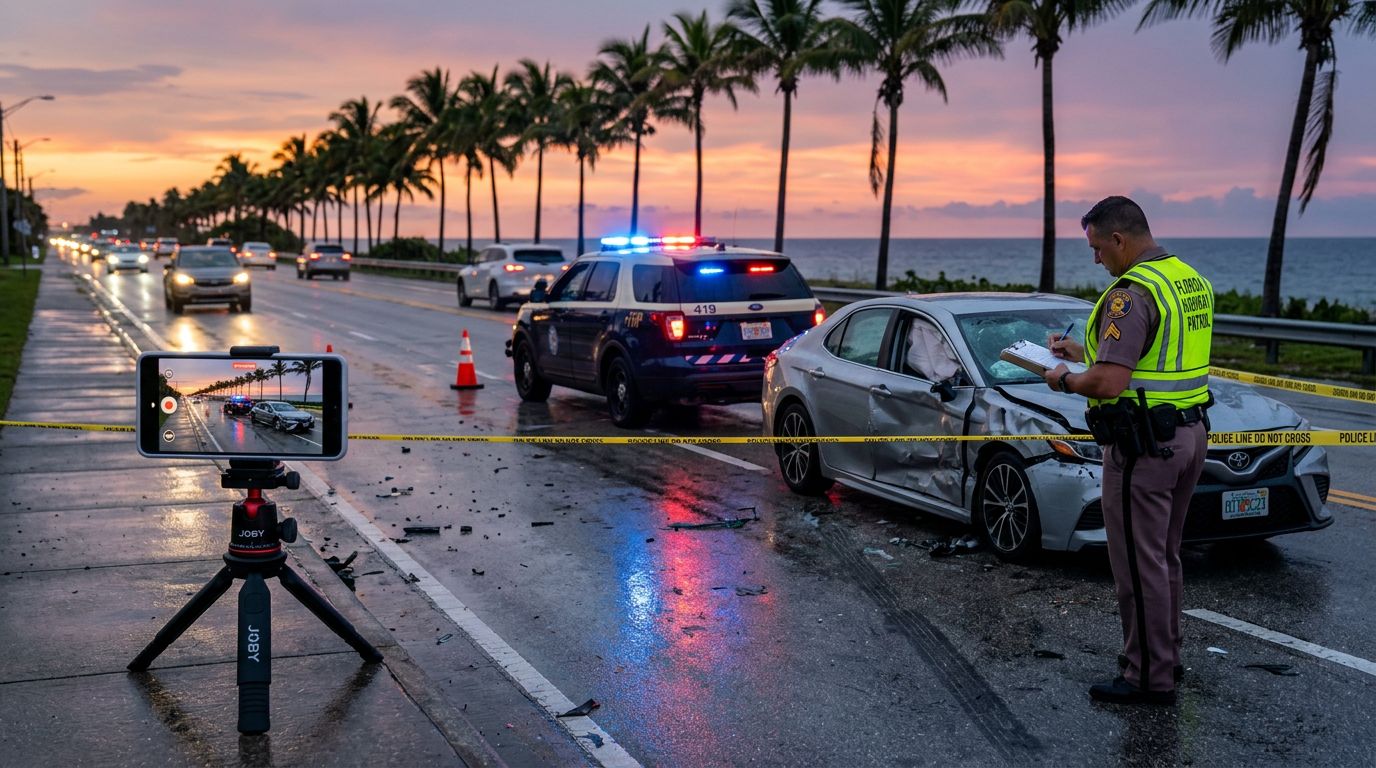
After a drunk driver crash, the most important facts don’t stay put. Tire marks fade, cameras overwrite, and witnesses forget details. Meanwhile, insurance companies start building their story fast.
If you want fair compensation, you need Florida DUI crash evidence that’s clear, dated, and hard to twist. This checklist focuses on what to gather yourself, what to request right away, and what an attorney can preserve before it disappears.
The first 24 hours: lock down scene evidence before it vanishes
Start with safety and medical care. Call 911, accept help, and don’t argue with the other driver. Still, if you can do it safely (or ask a passenger), collect proof like you’re freezing a moment in time.
Photos and video matter more than most people realize. Your goal isn’t “dramatic” pictures, it’s map-like context that shows lanes, signs, distances, and damage angles. If you want a practical shot plan built for real claims, follow Cape Coral crash scene photos. The same approach applies across Florida.
Focus on:
- Wide scene photos (both directions): lanes, turn arrows, stop bars, and the full intersection.
- Traffic controls: lights and signs from each driver’s viewpoint, not just close-ups.
- Vehicle rest positions: include both cars in one shot when possible, then each corner.
- Road evidence: skid marks, debris field, fluid trails, and gouge marks (add scale if you can).
- Lighting and weather: glare, rain, standing water, fog, or poor street lighting.
Witnesses can make or break a disputed case. Get names and numbers, then note where each person was standing. A short voice memo helps, because memory changes quickly after adrenaline fades.
Also, look for video sources immediately. Many systems overwrite in days. Check nearby gas stations, restaurants, neighborhood doorbells, and dashcams from stopped cars. If you find a camera, write down the business name, address, and where the camera points.
A DUI arrest helps, but it doesn’t replace crash proof. Liability still gets argued, especially if the insurer claims you “shared fault.”
Finally, protect your own credibility. Don’t post about the crash, your injuries, or nightlife plans. Insurance adjusters and defense teams look for anything that suggests you’re fine.
Florida DUI crash evidence that usually sits with police, labs, or the DMV
In 2026, DUI cases in Florida still rely on the total picture, not a single magic item. Officers use driving behavior, crash facts, field sobriety results, and chemical testing together.
Here’s the tricky part: some statements made during the crash reporting phase can be protected under Florida’s accident report privilege. The rule lives in Florida Statute 316.066. In plain terms, certain crash report communications can be limited in later criminal use, while DUI investigation evidence (like impairment observations and testing) may still come in. That line matters, and it’s one reason DUI crash cases can get complicated fast.
Chemical testing is often the centerpiece. Police may request a breath test, and refusal can trigger serious consequences. Florida’s implied consent system also connects to license penalties and administrative suspension rules. For background on how those suspensions work, see Florida DUI and administrative suspension laws.
In serious injury or fatal crashes, law enforcement may seek a blood draw as part of the DUI investigation. Timing, medical handling, and chain of custody can all affect how powerful that evidence becomes.
To keep things clear, here’s where key DUI-related evidence usually lives, and what to do about it.
| Evidence item | Who controls it | What you should do quickly |
|---|---|---|
| DUI arrest report and narratives | Law enforcement | Request through proper channels, save your copy, note any missing details |
| Body-worn and dash camera video | Law enforcement | Ask an attorney to request and preserve before retention limits hit |
| Breath test (or refusal record) | Agency records | Preserve paperwork given at arrest or release, note times and device info if provided |
| Blood draw results and lab records | Lab and medical providers | Preserve medical records, an attorney may subpoena full lab packet and chain-of-custody |
| Field sobriety test notes | Law enforcement | Get reports early, details can change across versions |
Even if the DUI criminal case moves slowly, you can’t wait to preserve evidence. Video overwrites, and records get harder to obtain once agencies follow routine retention schedules.
Injury and money proof: turning a DUI crash into a strong insurance claim
A drunk driver being impaired doesn’t automatically pay your bills. Insurance companies still look for reasons to cut value, delay, or push blame. That’s why your damages file needs to read like a clean timeline, not a pile of papers.
Medical evidence should start early and stay consistent. Go the same day if you can. Follow-up matters because gaps give insurers room to argue you weren’t really hurt, or that something else caused your pain.
Save:
- ER or urgent care notes, discharge instructions, and diagnosis codes
- Imaging reports (MRI, CT, X-ray), not just the images
- Physical therapy evaluations and progress notes
- Specialist referrals and restrictions (work limits, lifting limits, driving limits)
- Prescription records and pharmacy receipts
If you had prior back, neck, or shoulder problems, don’t hide it. Prior injuries are common, and they don’t end your case. The key is showing what changed after the crash, with clear before-and-after records. (A lawyer can also help frame this the right way in negotiations.)
Next, document work loss in a way an adjuster can verify. Ask your employer for a brief letter showing your job title, pay rate, dates missed, and any light-duty changes. If you’re self-employed, gather invoices, bank deposits, and a basic month-to-month comparison.
Florida fault arguments also matter in 2026. Insurers may claim you were speeding, distracted, or could’ve avoided the crash. Evidence that defeats those claims protects the value of your case. For a plain-English explanation of how fault can reduce or even bar recovery, read Florida’s 51 percent fault rule.
When it’s time to present your claim, organization increases pressure. Think of it like handing the insurer a labeled binder instead of a junk drawer. If you want a practical format, use the structure in Cape Coral car crash demand package. You’re showing two things: the other driver caused the crash, and the crash caused measurable losses.
The strongest claims tell one story from start to finish: scene proof, impairment proof, then medical and financial proof, all on a clean timeline.
Conclusion
A drunk driver crash can feel obvious, but “obvious” isn’t evidence. The best results usually come from fast action, preserved video, clear medical timelines, and a demand package that’s easy to verify. If you’re dealing with injuries, bills, or pressure from insurers, get help gathering and protecting Florida DUI crash evidence before it disappears.