
Florida ER Triage Malpractice When Waiting Turns Dangerous
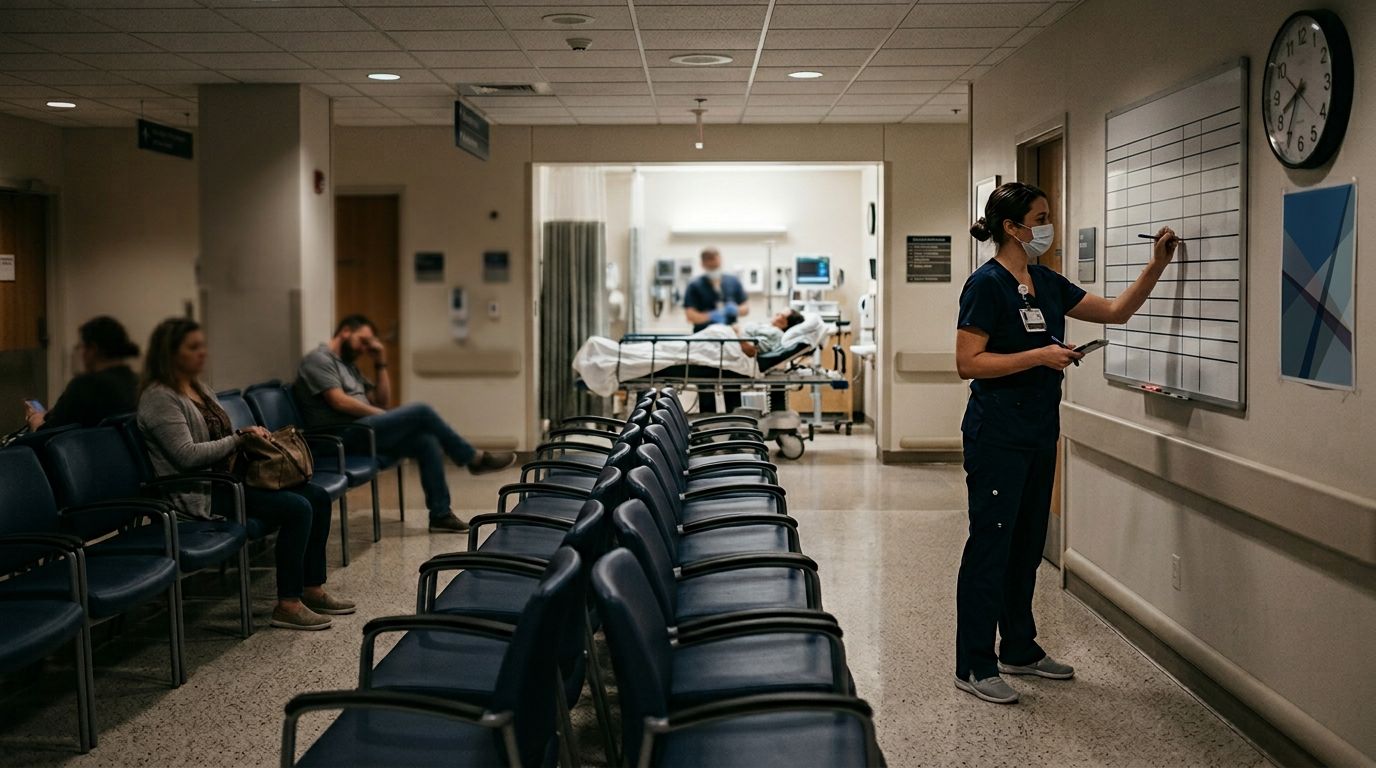
How dangerous can a waiting room be? Sometimes, more dangerous than people expect.
In Florida, crowded emergency rooms and long waits are common. Recent 2026 reporting puts the average wait to see an ER provider at roughly 155 to 161 minutes, which is among the longer waits in the country. Still, a long wait alone is not malpractice. ER triage malpractice turns on something more serious, whether hospital staff missed warning signs, failed to reassess a patient, or let a worsening emergency sit too long.
That distinction matters if a loved one had a stroke, heart attack, internal bleeding, sepsis, or another time-sensitive condition. When minutes matter, delay can change everything.
Why ER triage delays can become dangerous fast
Triage is supposed to work like air traffic control. The sickest patients land first.
When a patient arrives at the ER, staff usually check symptoms, vital signs, and visible distress. Then they assign priority. A sprained ankle may wait. Chest pain with sweating should not. Sudden weakness, confusion, or trouble breathing should raise alarms right away.
The problem is that triage is not a one-time event. A patient in the waiting room can get worse. Pain can spike. Blood pressure can fall. Breathing can change. If no one reassesses the patient, the original triage decision may become unsafe.
A long wait is frustrating. A dangerous wait after clear red flags may be negligence.
That is why many ER delay cases focus less on the clock and more on the missed signals. Did staff ignore abnormal vital signs? Did they dismiss classic symptoms? Did anyone respond when the patient told them the pain was worse or they felt faint? Those facts often matter more than the exact number of minutes.
No public 2026 data appears to track the exact number of Florida malpractice claims tied to triage delays. Even so, the legal risk is real. Hospitals know emergency patients can change quickly, especially when symptoms point to stroke, sepsis, heart trouble, or internal injury. A waiting room is not a safe holding area for a patient who needs active monitoring.
When a Florida ER triage delay becomes malpractice
Florida law does not punish every bad outcome. Medicine is hard, and emergency rooms make fast decisions under pressure. A valid claim usually depends on four core points: duty, breach, causation, and damages.
Duty is usually simple. If the ER accepted the patient for care, the hospital and its staff owed that patient a professional duty. The fight usually centers on breach and causation. In plain terms, did the staff fall below the standard of care, and did that failure cause added harm?
A broader Florida medical malpractice guide can help explain those rules. In triage cases, the same basic framework applies.
This quick comparison helps show the difference:
| Situation | Usually not malpractice | May support a claim |
|---|---|---|
| Busy ER wait | Patient was properly ranked and safely monitored | Staff missed obvious danger signs at intake |
| Time in waiting room | Symptoms stayed stable and rechecks occurred | No reassessment despite worsening symptoms |
| Bad outcome | Harm likely would have happened anyway | Earlier treatment likely would have changed the outcome |
The pattern matters more than the clock.
For example, a patient with mild stomach pain may wait hours without a legal claim. On the other hand, a patient with severe abdominal pain, a fast heart rate, low blood pressure, and vomiting blood is different. If staff leave that patient in the waiting room without prompt action, the issue is no longer simple delay. It may be negligence.
Many ER triage cases also overlap with delayed diagnosis claims. If a patient sat untreated until the real problem became obvious, the facts may look a lot like Florida misdiagnosis vs. delayed diagnosis. The law often asks the same hard question, would earlier recognition probably have led to a better outcome?
That is where many cases rise or fall. If the answer is yes, a claim may have real value. If the harm would likely have happened anyway, the case gets much harder.
What evidence matters after a dangerous ER wait
ER triage malpractice claims are built on records, timelines, and expert review. Memory helps, but documents carry the case.
Start with the intake record. It may show what symptoms the patient reported, what vital signs were taken, and how urgently staff ranked the case. Next, look at waiting room notes, reassessment entries, lab orders, scans, nurse charting, and the time a provider finally saw the patient. Even small gaps can tell a big story.
Many of the same FL standards for diagnostic malpractice also matter here. If a reasonably careful ER team would have escalated the case, ordered testing sooner, or moved the patient back immediately, expert testimony can help prove it.
If you suspect a dangerous delay, these steps can help protect the claim:
- Get complete records: Ask for triage notes, monitor strips, lab results, imaging, and discharge papers.
- Write the timeline down: Include arrival time, worsening symptoms, and what staff said.
- Seek follow-up care: Ongoing treatment can show how the delay affected the outcome.
- Talk to a lawyer early: Florida malpractice claims have deadlines and pre-suit rules.
Damages also matter. A claim is stronger when the delay caused clear added harm, such as loss of brain function after stroke, heart muscle damage, loss of limb, infection spread, longer hospitalization, extra surgery, or death. In other words, the delay must have done real damage, not just created fear or anger.
Conclusion
ER waiting is common, but unsafe triage is not something patients have to accept. In Florida, ER triage malpractice usually comes down to missed red flags, lack of reassessment, and proof that earlier action would have changed the outcome. If a loved one got worse while sitting in an ER waiting room, gather the records, protect the timeline, and get the case reviewed while the facts are still fresh.