
Florida Garbage Truck Accident Claims: Proof Checklist for Not-At-Fault Victims
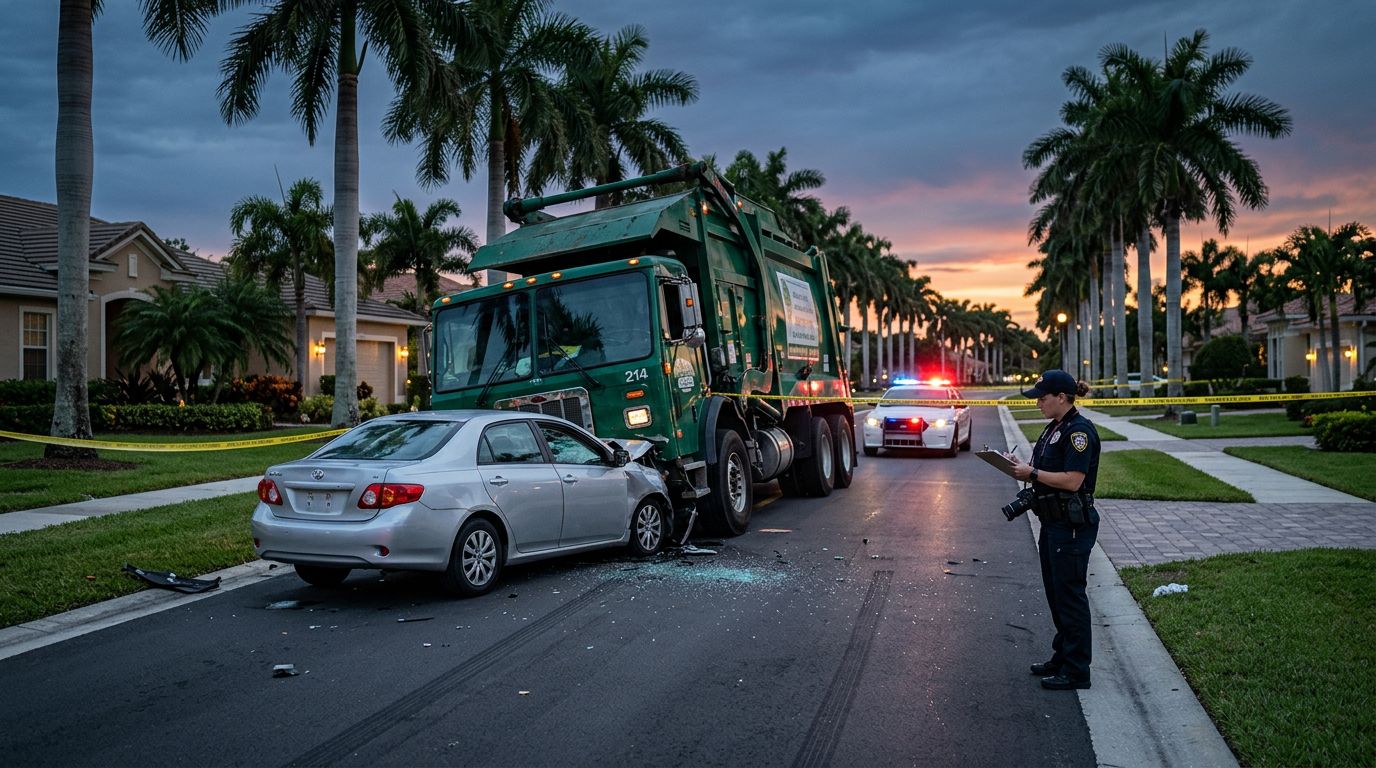
A garbage truck wreck can create two problems at once, injury and instant confusion. If you didn’t cause the crash, the best protection is proof gathered before the truck rolls away.
In a Florida garbage truck accident, video can vanish, route records can change hands, and damaged cars can disappear into repair shops. Start with the facts you can lock down now.
Why garbage truck crash claims get complicated fast
Garbage truck cases rarely stay simple. The truck may belong to a city, a county, a private waste company, or a contractor on a local route. That changes who controls the driver, the records, and the insurance.
These trucks also move in ways most drivers don’t expect. They stop every few houses, back up in tight spaces, swing wide on turns, and block lanes during pickups. A crash may happen while the driver is reversing, merging from a curb, or pulling out after a stop.
Because of that, blame fights start early. The other side may say you followed too closely, sat in a blind spot, or should have seen the truck stop. Meanwhile, the truck’s cameras, route logs, and onboard data may already be stored, erased, or handed to a claims office.
Unlike a normal car wreck, one sanitation truck can bring in a driver, a supervisor, a fleet shop, and a city department or private hauler. If a local government owns the truck, extra notice rules may apply. If a contractor owns it, the paper trail may run through more than one company.
Garbage trucks are heavy and often hit at awkward angles. Even when the body damage looks modest, neck, shoulder, and low-back injuries can be real. Don’t let an adjuster use the truck’s low speed or short route to downplay what happened.
Florida’s reporting rules matter from day one. The Florida crash guidance from FLHSMV explains when law enforcement should be called and what drivers should do at the scene. For a similar look at how fast service-truck evidence can disappear, Avard’s guide on saving proof after tow truck accidents offers useful context.
Public news reviewed through April 2026 did not show a reported garbage truck collision in Florida that month. That gives you no broad trend to lean on. Your claim will turn on the proof in your own file.
The proof checklist to build in the first 48 hours
Treat the crash scene like wet concrete. Once people move through it, the best marks fade.
Start with the items that are hardest to replace.
| Evidence | What to save | Why it helps |
|---|---|---|
| Wide photos and video | Lanes, curb line, debris, skid marks, weather, final positions | Shows how the truck and your car moved |
| Close damage photos | Every impact point, paint transfer, broken lights, crushed panels | Helps prove angle and force |
| Truck identity | Company name, city logo, unit number, plate, driver name | Connects the crash to the right defendant |
| Witness and camera sources | Names, numbers, nearby homes or stores with cameras | Breaks a blame dispute |
| Medical records | Same-day symptoms, follow-up visits, work limits | Ties your injuries to the wreck |
| Expense records | Towing, rental, repair, prescriptions, missed work | Proves losses with real numbers |
The pattern is simple, save what won’t wait.
Start wide, then move close. Photograph the whole road before you focus on the dent. Capture parked cars, lane lines, trash bins, traffic signs, and the truck’s final position. Then get close shots of the truck body, mirrors, warning lights, lift arms, and your vehicle damage.
Next, identify the truck. Many sanitation trucks carry a city seal or contractor name, but unit numbers can matter more than a logo. If the truck was backing, note whether anyone was outside spotting. If it stopped suddenly, write down whether hazard lights or warning lights were on.
Look fast for video. Doorbell cameras, apartment cameras, and nearby business systems often overwrite within days. Ask witnesses what they saw first, not who they blame. A short note that the truck backed into traffic or drifted wide can matter later.
Get checked out fast, even if the pain seems minor. Headaches, neck pain, and back symptoms often show up after the adrenaline wears off. You can request the report through the Florida Crash Portal, and FLHSMV says it may take up to 10 days to appear. If you need broader step-by-step help after a commercial vehicle wreck, Avard’s article on what to do after a truck crash in Cape Coral is a good starting point.
When the report arrives, read it closely. Check the truck number, company name, lane positions, and direction of travel. Small errors can echo through the whole claim if nobody catches them early.
Keep your photos, receipts, medical papers, and call log in one folder. Three mistakes hurt good claims fast: guessing in a recorded statement, repairing or selling the car before it is well documented, and signing a release that quietly closes the injury side of the case.
Records that often prove fault after the scene is cleared
Roadside proof is only half the case. Some of the strongest evidence sits inside company or government files.
A solid Florida garbage truck accident claim may turn on route sheets, dispatch records, GPS data, onboard video, maintenance logs, brake and backup alarm records, and post-crash inspection notes. Route records can show whether the truck should have been on your street at that time. GPS can pin down stops, speed, and backing movement. Maintenance files may reveal repeat problems with mirrors, lights, cameras, or brakes.
Training and supervision matter too. If the driver was new, rushed, or working a route with repeated backing hazards, that can help explain why the crash happened. Sometimes the problem isn’t only bad driving. It may be poor maintenance, weak safety rules, or pressure to finish the route too fast.
Damage patterns tell their own story. A crushed rear quarter panel may fit a wide-turn sideswipe. A square, low impact can support a backing collision. When a garbage truck starts a pileup, the order of hits becomes a key issue, which is why Avard’s guide to Florida chain reaction accidents can be useful.
Don’t assume the truck will stay untouched. Fleet shops repair lights, mirrors, and body damage fast. Once that happens, it gets harder to test whether a camera worked, a mirror was broken, or a warning light failed. The same rule applies to your car if fault is disputed.
If the truck belongs to a city or county, public records and notice rules can affect the case. If a private hauler owns it, there may be layers of contractors and insurers. Early legal action can help preserve the truck, the data, and the records before routine business wipes them out.
Your case won’t turn on one dramatic photo. It usually turns on a clean story backed by scene images, truck identifiers, prompt medical care, and records the other side can’t easily explain away.
Treat evidence like milk, not canned food. It expires fast. If a city, waste company, or insurer is already shifting blame, get legal help before the truck gets repaired and the paper trail goes cold.